Rotor (Crankshaft End) Threads

marshg246

VIP MEMBER
Joined
Jul 12, 2015
Messages
5,762
Country flag
This has been discussed before but AFAIK, never resolved.

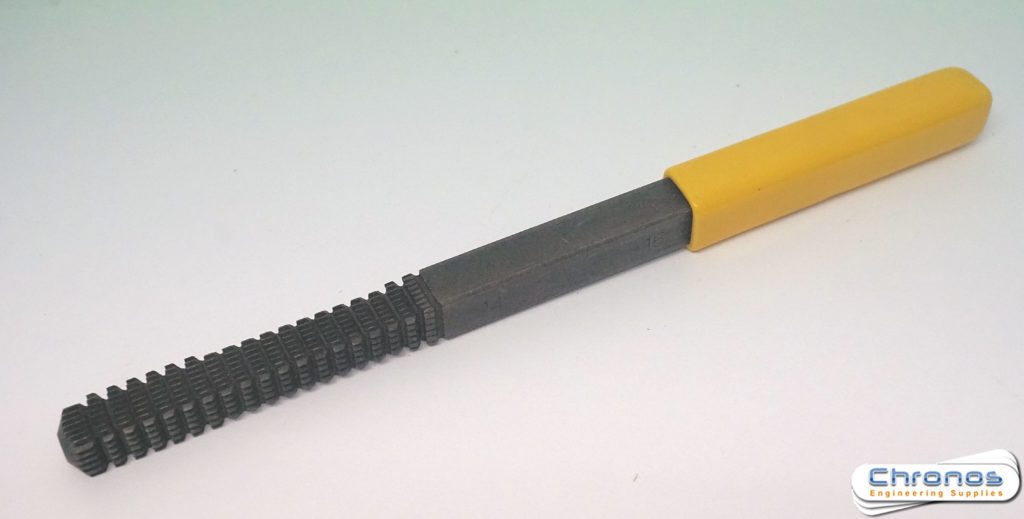
The threads on the end of the crankshaft measure 5/8" - 20 which is a UN (Not UNF, not UNC, but UN) standard. The UN specification is (best I can tell) uses 60 degree threads. I have a 5/8"-20 UN tap and die. The tap runs through a rotor nut with fingers so the tap seems correct. The crankshaft end I'm working on was dinged and after some time with a 20tpi thread "file" the rotor nut will thread part-way on with difficulty. However, I cannot get the die to start on the threads.

Ashley (AN) says that it is indeed 5/8"-20 but 55 degree threads.

So, I'm trying to decide whether to keep working with the UN die and if I can get it started, rethread it. If there is there some other die (or better, thread chaser) available for the crank end I would like to know as this comes up often.
 
Last edited:
That's what I used to get the nut to start (from a different supplier).
 
Will be very interested on the outcome.
Still considering turning it into UN.

The screws that hold the cover plates over the rocker spindles are 1/4 BSW which is the same as 1/4-20 (UNC) except that BSW is 55 degree threads and 1/4-20 is 60 degree threads. You can easily run a 1/4-20 tap through them and use 1/4-20 screws and 1/4 BSW will still work fine. I figured that out accidentally.

I suspect that if I can start the 5/8"-20 UN die that the original nut will work just fine since the 5/8"-20 UN tap will go through the nut using just fingers. Of course it's a little scary on an engine in the cradle nearly ready to run. So I'll test on a junk crank and see if the nut will take fully torque.

The 5/8"-20 UN Tap and Die were only $19 at Amazon: https://a.co/d/eAwUJLz
 
Tracy tools don't list a 5/8 x 20 Whit Form die so I don't know where you would get one but I suppose you could ask them.
Got a response from Tracy Tools. They say they can make one for huge money and they are sure no one makes one. They recommended just using the UN tap and die I have. I'll experiment to see if the crank and nut can still take 70 ft lbs (on a junk crank).
 
Sometimes I try a different new or used nut or two to see if that helps. And sometimes I just run the nut down and it frees up. ( If you don't have to wrench too hard) Sometimes a Dremel wire wheel helps to remove sone grit or old locktite. The starter bevel and few few threads is important to let it start to thread and if you measure the OD there might be part of the OD of the threads that is binding it up.

I've even make used nuts into thread chasers or bolts into a tap to clean out holes without making the holes bigger than they need to be with "real" taps . Sometimes it works a treat.
 
I've even make used nuts into thread chasers or bolts into a tap to clean out holes without making the holes bigger than they need to be with "real" taps . Sometimes it works a treat.
Its much easier grinding a length wise slot on a bolt to chase a nut than trying to cut a slot in a nut, although you could cut the nut in half, slot a slight angled groove in both halves of the nut, then weld it back together to use as a thread chase.... you're welcome..... 😏
 
Sometimes I try a different new or used nut or two to see if that helps. And sometimes I just run the nut down and it frees up. ( If you don't have to wrench too hard) Sometimes a Dremel wire wheel helps to remove sone grit or old locktite. The starter bevel and few few threads is important to let it start to thread and if you measure the OD there might be part of the OD of the threads that is binding it up.

I've even make used nuts into thread chasers or bolts into a tap to clean out holes without making the holes bigger than they need to be with "real" taps . Sometimes it works a treat.
Ya, me too. Been through that. My point of starting the thread:

1) What is the thread - want to update my fasteners database: https://gregmarsh.com/MC/FastenersList.aspx
2) Finding a tap and die or better, a thread chaser to match.

This is not the first bike I've bought in boxes that needed help with these threads. I already could force the nut on, but this bike is for sale and I don't do things like that to others.
 
Its much easier grinding a length wise slot on a bolt to chase a nut than trying to cut a slot in a nut, although you could cut the nut in half, slot a slight angled groove in both halves of the nut, then weld it back together to use as a thread chase.... you're welcome..... 😏
Just use a junior hacksaw, put blade through nut, put into handle, saw away !
 
The cut off blade of the grinder is thin and leaves a razor sharp edge on both sides of the slice with just a single swipe....

Then I would clamp the nut on the bottom of the crankshaft threads and weld one side of the nut back together being careful not to weld the crank....

Then I would use a vise grip on the nut and start out with only enough tension on the nut to make it drag a bit, using cutting oil and clearing chips after every pass.

You check the progress with a fresh nut to see if you are making any headway.... Keep using oil and keep tightening the vise grip after each pass.

Essentially you've made a cheap two fluted thread chaser that can cut both ways if you get a single clean slot with the cut off wheel. (unlike the image below which is a bolt I use to chase damper valve bodies...)

bolt thread chaser.jpg
 
Greg,

Maybe the thread on the end of the crankshaft is 5/8-20 British Standard Cycle. The thread angle is 60 degrees which is the same as the Unified Thread however the 5/8-20 UN thread cuts a little deeper than the British Standard Cycle thread. This might explain why you can run a 5/8-20 UN tap in the Crankshaft's nut without any resistance, however the 5/8-20 UN die would have to cut the threads a little deeper in the Crankshaft.


Peter Firkins
 
Greg,

Maybe the thread on the end of the crankshaft is 5/8-20 British Standard Cycle. The thread angle is 60 degrees which is the same as the Unified Thread however the 5/8-20 UN thread cuts a little deeper than the British Standard Cycle thread. This might explain why you can run a 5/8-20 UN tap in the Crankshaft's nut without any resistance, however the 5/8-20 UN die would have to cut the threads a little deeper in the Crankshaft.


Peter Firkins
Ashley (AN) says it's 55 degree and @L.A.B. implies Whit Form which is 55 degree so I'm thinking it is Whit Form. BSC is possible even though the standard series 1/4" to 1" is all 26tpi but there is a 20 tpi BSC series that I just learned about: https://www.jrcengineering.com/wp-content/uploads/2019/03/screw-threads.pdf but if they are 60 degree then the UN die should be right.

It will be a couple of days before I get back on this - working on the head right now.
 
Sometimes I try a different new or used nut or two to see if that helps. And sometimes I just run the nut down and it frees up. ( If you don't have to wrench too hard) Sometimes a Dremel wire wheel helps to remove sone grit or old locktite. The starter bevel and few few threads is important to let it start to thread and if you measure the OD there might be part of the OD of the threads that is binding it up.

I've even make used nuts into thread chasers or bolts into a tap to clean out holes without making the holes bigger than they need to be with "real" taps . Sometimes it works a treat.
 
It's best to leave most of the lead thread in front of the cut to help the homemade chaser get started
 
You could even grind a 55 degree cutter and chase the threads with a single point but that would require disassembling the crankshaft...... and a bit of skill..
 
Would an adjustable die help? it can be opened up so as not to cut the root diameter deeper. I think it would clean up the sides of the threads be being run on the threads with a slight busk and then a slight pull back. https://drillsandcutters.com/5-8-48...BX0YZODYbFrEGnU3lzmiYNRdF6VnwfIhoC1OAQAvD_BwE
Would slicing a nut in half, then clamping the two halves together with a vise grip in a good section of the threads, then run it off with the good threads setting the spacing of the threads?
 
Would an adjustable die help? it can be opened up so as not to cut the root diameter deeper. I think it would clean up the sides of the threads be being run on the threads with a slight busk and then a slight pull back. https://drillsandcutters.com/5-8-48...BX0YZODYbFrEGnU3lzmiYNRdF6VnwfIhoC1OAQAvD_BwE
Would slicing a nut in half, then clamping the two halves together with a vise grip in a good section of the threads, then run it off with the good threads setting the spacing of the threads?
Yes, but the die I have is not that kind and I haven't found one in 5/8"-20 UN.
 
Back
Top