Mike, Thanks for your info Just running in after rebuild so 6K a way off.Schwany,
I thought I should throw in my thoughts on your post. I have a stock 850 with Premiers and the d-port inserts on the exhaust. I don’t know if they are a plus or not at the high end above 6K but my bike could not run better as a daily rider in my opinion.
Mike

You are using an out of date browser. It may not display this or other websites correctly.
You should upgrade or use an alternative browser.
You should upgrade or use an alternative browser.
D ports and jetting
- Thread starter TBW
- Start date
George, what caused you to reduce idle speed ?I tried the d exhaust ports on my 850. No jetting change but had to reduce idle speed. They do something but hard to say if they increase power.
George
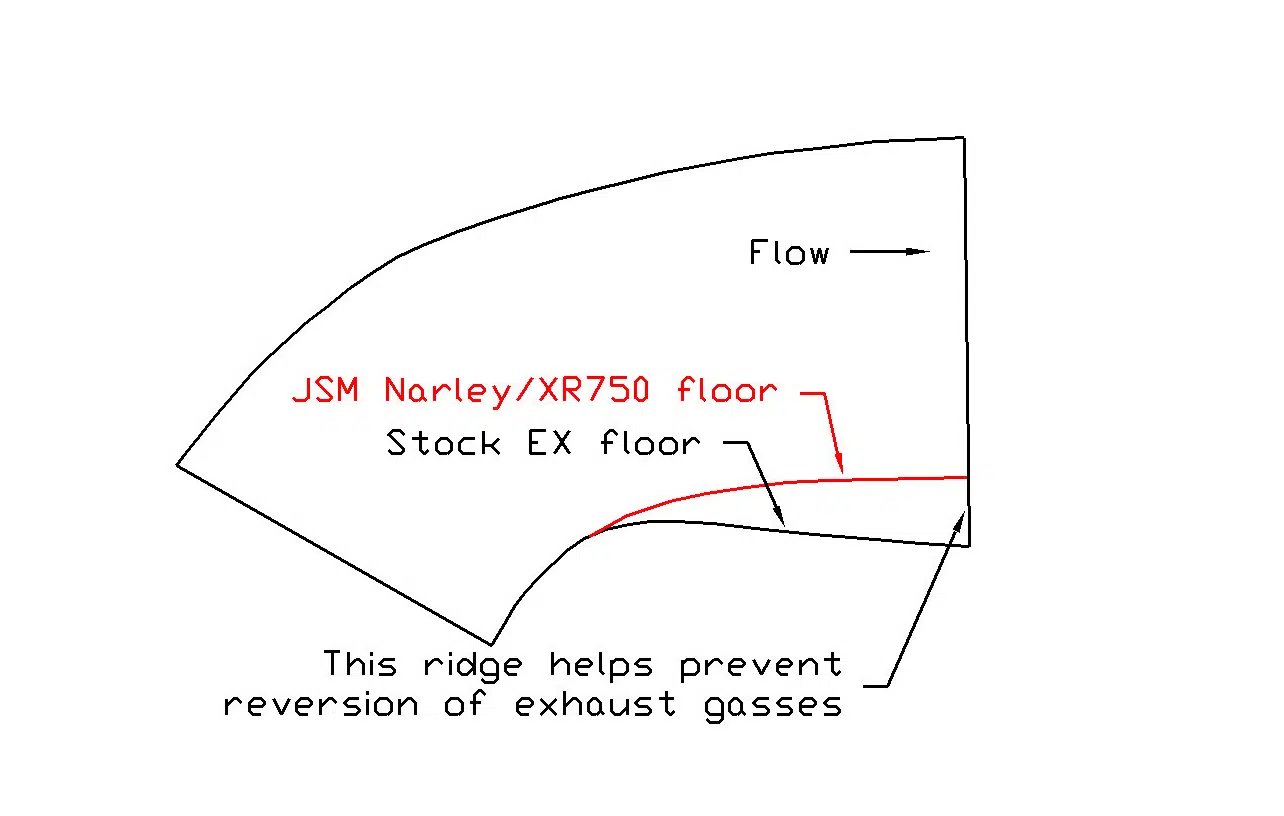
Jim, thanks for clarity. I’d thought they would speed up exhaust gas extraction (but in a different way) with associated increased charge volume and additional fuel requirements.The main change with the ex port floors is that they have an anti reversion effect. because of the step at the bottom of the port where it meets the ex pipe. Outbound exhaust gas have enough momentum to blast past the step smoothly, but low-energy return pulses at the bottom of the port hit the wall of the step and break up instead of re-entering the port and contaminating the combustion chamber. I don't know for sure if this has enough effect to require rejetting or not. In a highly tuned engine I think it would.
Hybridracer - the earlier twin carb XR750 had round ports. The cobra head ports didn't come in untill the mid/late 1980s and gave a signifitant HP increase. Now you see that shape in nascar motors.
At least the Alan Cathcart question got resolved

Hey Torontonian, I had same reaction to inlet tract sleeve…noticed better / faster pull - fitted before recent rebuild.All I can say on this subject is :
Very happy with the reduction intake tract sleeves . Perfect fit and 30 mm. performance attained .
The D-Port exhaust kit , not so much . Mostly the fit . A bit sloppy fit and then carbon built up between the floor insert sleeve area , so I will figure out a better way to make it work . Back to stock on that one and now happy . Blasted about today . All good .
My D ports fitted just fine FWIW.

Schwany
MEMBER
- Joined
- Apr 2020
- Messages
- 3,946

TBW
With all due respect and some excessive curiously, if these sleeves are working great, why ask about carburetor jetting?
To anyone else that might know, did maaseyracer ever put a 750 head fitted with these parts on a flow bench or a complete bike on a dyno before and after installing the sleeves to verify theoretical speculation?
With all due respect and some excessive curiously, if these sleeves are working great, why ask about carburetor jetting?
To anyone else that might know, did maaseyracer ever put a 750 head fitted with these parts on a flow bench or a complete bike on a dyno before and after installing the sleeves to verify theoretical speculation?
Hi Schwany, no explanation needed.TBW
With all due respect and some excessive curiously, if these sleeves are working great, why ask about carburetor jetting?
To anyone else that might know, did maaseyracer ever put a 750 head fitted with these parts on a flow bench or a complete bike on a dyno before and after installing the sleeves to verify theoretical speculation?
As mentioned, inlet tracts were fitted before D ports ( 250 miles prior “rebuild” -prompted by sudden oil pressure loss resulting in bore hone, new rings and shells thus preventing proper test. Oil pump seal…thank goodness for o8l pressure gauge!)
So was still breaking in / assessing Inlet tracts but noticed smoother pull during accel .
D ports fitted during this rebuild - I posed question on assumption of inlet and exhaust ports’ cumulative effect on carburettor and knowledge of the forum.
First shakedown /local test ride today and my “tuned” ears detect exhaust tone change as revs gently past 3000.
Schwany
MEMBER
- Joined
- Apr 2020
- Messages
- 3,946
Here's a steaming pile of BS based on a lot of tuning of various things. No real jetting info though. The reduced intake port sizes and reduced exhaust port sizes are going to make the 32mm MkII Amal carburetion (or any carburetion) a bit richer (less air in the AFR) I would think. I don't believe the theoretical increased velocity of smaller ports is going to make the tune leaner. That slightly richer fuel mixture combined with the bore hone, new rings, bearings, and fresh head gasket could contribute to making the Amals perform "smoother". The PW3 is probably responsible for the nice change in the exhaust note above 3000 RPM. Did you change the ignition timing as well? Nevermind... doesn't matter since this all seems like water under the bridge and you be done with it. I just felt like typing. 

maaseyracer
MEMBER
- Joined
- Apr 2015
- Messages
- 241
Your valve job and timing will vary your results. My experience with these was I needed to back off a bit on timing.
There should be different port sound with them, best i can describe it is that it sounds like the port is going faster. Time for torque, jet for horsepower, or that is at least what I was taught when tuning.
I have played with the port floors on the flowbench with my RH4 head and a test head, there is a good amount of difference. A good multi angle valve job makes these sing.
There should be different port sound with them, best i can describe it is that it sounds like the port is going faster. Time for torque, jet for horsepower, or that is at least what I was taught when tuning.
I have played with the port floors on the flowbench with my RH4 head and a test head, there is a good amount of difference. A good multi angle valve job makes these sing.

jseng1
MEMBER
- Joined
- Nov 2009
- Messages
- 3,520
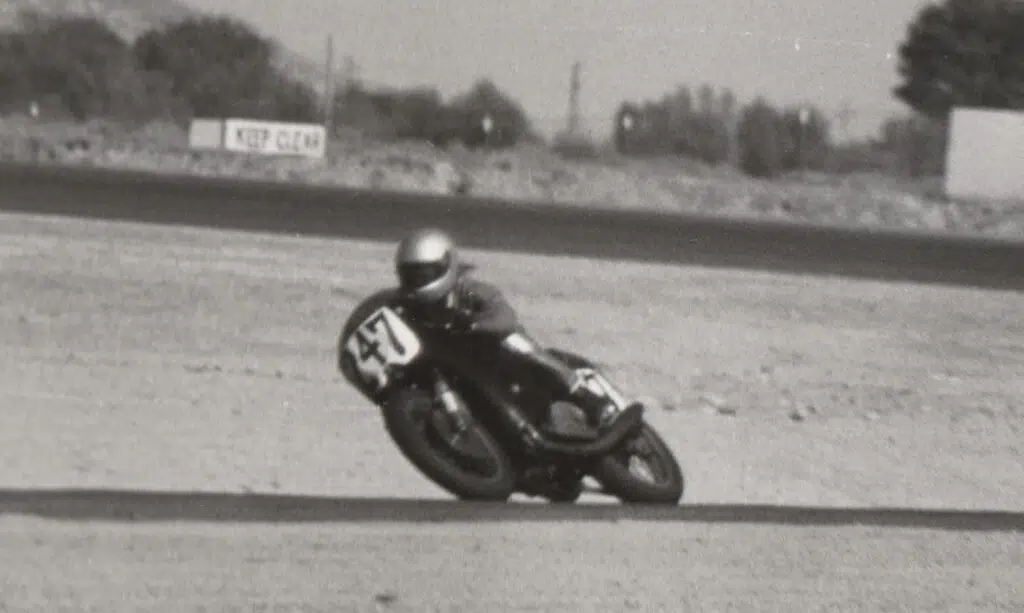
I did a lot of port work on my 1st 750 road racer and it was very fast. It breathed so well that it needed some serious rejetting. It required 320 main jets which a lot of people did not believe. I was still running 32mm Amals back then with a Combat cam. I followed CR Axtel's technique of raising the roof of the ports to give a more downward flow all around the intake valve instead of blowing across it.
Schwany
MEMBER
- Joined
- Apr 2020
- Messages
- 3,946
The old ways do work. Fred Barlow made some shaping changes on the intake side in the old 750 head I have. I made some changes on the exhaust side and it works well. Much better than a stock 750 Commando head I had on my engine while my pre-Commando head was across the pond getting ported.
Fast on a Norton 750 is relative. I know mine is faster than a stock one, and that is about it.
I've recently been watching some MotoGP races. Damn those kids are talented and fearless. And the bikes really are what I would consider fast. Yes there is something wrong with me. Call home and ask my wife. lol
Fast on a Norton 750 is relative. I know mine is faster than a stock one, and that is about it.
I've recently been watching some MotoGP races. Damn those kids are talented and fearless. And the bikes really are what I would consider fast. Yes there is something wrong with me. Call home and ask my wife. lol
Hi Schwany, no BS at all…so on yesterday’s gentle run I had to reduce the pilot airflow a tad as popping n banging at low rev/overrun which confirms you AFR assessment..low revs anyways.Here's a steaming pile of BS based on a lot of tuning of various things. No real jetting info though. The reduced intake port sizes and reduced exhaust port sizes are going to make the 32mm MkII Amal carburetion (or any carburetion) a bit richer (less air in the AFR) I would think. I don't believe the theoretical increased velocity of smaller ports is going to make the tune leaner. That slightly richer fuel mixture combined with the bore hone, new rings, bearings, and fresh head gasket could contribute to making the Amals perform "smoother". The PW3 is probably responsible for the nice change in the exhaust note above 3000 RPM. Did you change the ignition timing as well? Nevermind... doesn't matter since this all seems like water under the bridge and you be done with it. I just felt like typing.
Haven’t adjusted timing yet but this is next and ties in with Masseyracer’s post .
Don’t think PW3 necessarily responsible as exhaust note change only after D port fitting.
I’ll keep you posted
 .
.Massey, thinking you’re right re timing …Harder to start yesterday .Your valve job and timing will vary your results. My experience with these was I needed to back off a bit on timing.
There should be different port sound with them, best i can describe it is that it sounds like the port is going faster. Time for torque, jet for horsepower, or that is at least what I was taught when tuning.
I have played with the port floors on the flowbench with my RH4 head and a test head, there is a good amount of difference. A good multi angle valve job makes these sing.
Definitely different port / exhaust sound …almost like flow change…but too early to say as just started break in process.
That said will retard slightly n see where we go..
Keep ya posted

Schwany
MEMBER
- Joined
- Apr 2020
- Messages
- 3,946
Oh I figured you had it all done and the tune was good. Chasing a ruined tune is a waste of time for me, all I had to do was remove the D-Port sleeves to get back to my good tune.Hi Schwany, no BS at all…so on yesterday’s gentle run I had to reduce the pilot airflow a tad as popping n banging at low rev/overrun which confirms you AFR assessment..low revs anyways.
Haven’t adjusted timing yet but this is next and ties in with Masseyracer’s post .
Don’t think PW3 necessarily responsible as exhaust note change only after D port fitting.
I’ll keep you posted
Jim's JS02 cam and my SS cam I'm now running definitely produce a bump in power around 4K RPM and up, which changes the exhaust note. I thought the PW3 was similar to the JS02 power delivery wise. I have not tried a PW3 yet.
If you want to hear what I think a well tuned 750 Norton sounds like with a little bit of throttle applied, I posted a short video clip "Riding the P11 Rattler around the block" in the P11 forum. No restrictive sleeves of any kind were used. It's not a particularly good video or example of slow mature residential street riding with my nose in the air and my pinky finger up on my throttle hand. You will hear my big 4LS front brake squeak a little too when braking coming up to a stop light.


jseng1
MEMBER
- Joined
- Nov 2009
- Messages
- 3,520
The illustration shows the ex port floor. It does not restrict. It flairs open more gradually and efficiently to the pipe and inhibits reversion. In some cases you may have to change jetting to keep up with the increased flow and velocity. I didn't have to rejet but I use small body 33mm FCRs.
Thanks Jim. Definitely noticed some tone/pitch change as 3000 revs came in… going gently at the moment due break in. will keep you updatedThe illustration shows the ex port floor. It does not restrict. It flairs open more gradually and efficiently to the pipe and inhibits reversion. In some cases you may have to change jetting to keep up with the increased flow and velocity. I didn't have to rejet but I use small body 33mm FCRs.
Schwany
MEMBER
- Joined
- Apr 2020
- Messages
- 3,946
Everyone that has problems with exhaust gas reversion raise your hand. If you raised your hand, you probably have dual exhaust. I have a 2 into 1 exhaust I spent considerable time getting the right length to the collector and after the collector to get the best performance I could get out of the engine with the SS cam and at the time 34mm Mikuni carburetors. Turns out it works very well with the 35mm FCRs and no sleeves in the way. Also worked with the JS02 cam and 35 mm FCRs, but that cam setup is all back in a box now. If you know nothing about the advantage of a 2 into 1 exhaust properly set up try googling it, or maybe ask Steve Maney.

Torontonian
MEMBER
- Joined
- Dec 2009
- Messages
- 5,906

I will now be refitting both D Ports using hi temp silicone to the underside of both D port floors , after a good carbon cleaning out . As instructed .All I can say on this subject is :
Very happy with the reduction intake tract sleeves . Perfect fit and 30 mm. performance attained .
The D-Port exhaust kit , not so much . Mostly the fit . A bit sloppy fit and then carbon built up between the floor insert sleeve area , so I will figure out a better way to make it work . Back to stock on that one and now happy . Blasted about today . All good .
I tried a complete original Dunstall 2 into 1 into 2 system with Dunstall megaphones on the 850. According to the Dunstall ads, that system will make the bike 1 full second quicker in the quarter mile.
It slowed my 850 down on dyno hill. 111 km at top was reduced to 107, and that was after several main jet changes to optimize jetting.
It was louder but not faster, unfortunately.
Glen
It slowed my 850 down on dyno hill. 111 km at top was reduced to 107, and that was after several main jet changes to optimize jetting.
It was louder but not faster, unfortunately.
Glen

Fast Eddie
FULL MEMBER
- Joined
- Oct 2013
- Messages
- 23,391

I’ll add my random thoughts to the randomness…
Stock headers, without balance pipe, into non-muted peashooters work VERY WELL on Commandos. You gotta do well to improve on this.
2:1 pipes are a minefield of variables. It’s much easier to get wrong than right. And what works well with one cam may well not with another.
The Maney system is excellent. Steve spent many, many hours testing many, many variables on the dyno and he got it RIGHT. One of the big keys to its success is the 2:1 manifold design, so that is well worth studying.
Interestingly for a ‘race’ system, Steve’s pipe actually gives a much bigger mid range boost than it does a top end boost.
But how much of a boost is very dependent on other factors, in particular the cam. Steve’s pipe was designed for Steve’s cam, which is close to a 4S and has relatively long duration. Put a short duration cam into the same bike and the benefit of his 2:1 pipe reduce somewhat. I know from experience that they work very well with the JS #1 cam.
Lastly, with regards to jetting, I have found that the Maney pipe requires significant jet changes in order to realise the benefits, they actually require weaker settings than a 2:2. I have swapped peashooters for a Maney pipe on the dyno and seen zero improvement, then we corrected the fuelling and BOOM !!
Stock headers, without balance pipe, into non-muted peashooters work VERY WELL on Commandos. You gotta do well to improve on this.
2:1 pipes are a minefield of variables. It’s much easier to get wrong than right. And what works well with one cam may well not with another.
The Maney system is excellent. Steve spent many, many hours testing many, many variables on the dyno and he got it RIGHT. One of the big keys to its success is the 2:1 manifold design, so that is well worth studying.
Interestingly for a ‘race’ system, Steve’s pipe actually gives a much bigger mid range boost than it does a top end boost.
But how much of a boost is very dependent on other factors, in particular the cam. Steve’s pipe was designed for Steve’s cam, which is close to a 4S and has relatively long duration. Put a short duration cam into the same bike and the benefit of his 2:1 pipe reduce somewhat. I know from experience that they work very well with the JS #1 cam.
Lastly, with regards to jetting, I have found that the Maney pipe requires significant jet changes in order to realise the benefits, they actually require weaker settings than a 2:2. I have swapped peashooters for a Maney pipe on the dyno and seen zero improvement, then we corrected the fuelling and BOOM !!
Similar threads


- Replies
- 56
- Views
- 10,184


- Replies
- 2
- Views
- 842
