RGM 13mm master cyl upgrade

Status
Not open for further replies.
Here is the response from Roger who owns RGM, he is happy for me to post it.

Hello Simon, I have heard some "chatter" on this subject, basically I developed the re-line kits about twenty years ago, I have experimented with several methods and a variety of materials, the latest spec is now about five or six years old, I have personally re-lined approximately 400 master cylinders using this kit, and sold well over 1000 kits (to this spec). The original test bike is still here although it has stood a while unused/untouched following your e mail I went over and tried the brake, half expecting it to be rather sticky as they dont like being left unused, but, no problem, the brake worked perfectly with no amount of lever presure making any difference, certainly no fluid was by passing the end seal. The proof of the pudding is, as they say in the eating. Best regards, Roger

I am happy with this response and won't be losing any sleep over it.
 
Not impressed with the RGM kit so going to make my own 1/2" piston and sleeve

RGM 13mm master cyl upgrade
 
Rich_j said:
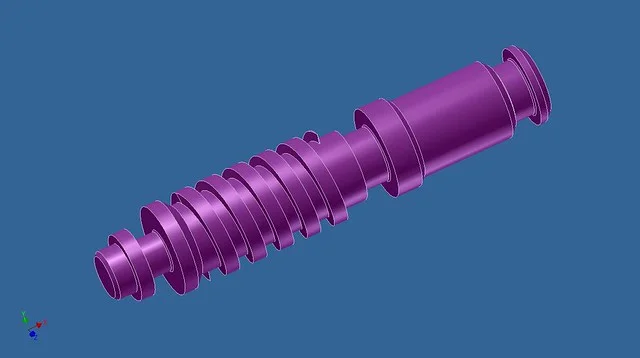
Not impressed with the RGM kit so going to make my own 1/2" piston and sleeve

RGM 13mm master cyl upgrade

Rich — Could you let us know where you will get your cup seals for this piston, please?

Also, I'm interested to know the reason for the spiral groove behind the cup seal?

Dave
 
daveh said:
Rich_j said:
Not impressed with the RGM kit so going to make my own 1/2" piston and sleeve

RGM 13mm master cyl upgrade

Rich — Could you let us know where you will get your cup seals for this piston, please?

Also, I'm interested to know the reason for the spiral groove behind the cup seal?

Dave

Seals are from a GPz500 single disc version. The whole mod is from the NOC NSW web site technical, well worth a browse broken link removed, I've changed a few dimensions though.

As to the spiral it's OD is the bearing surface of the piston, keeping it centred in the bore, the spiral allows brake fluid to flow past. The reason for it is a bit hard to explain in words and I don't have any good diagrams to post. When the piston retracts quickly the design of the piston allows the primary seal (at the spring end) to collapse so fluid can get past in the wrong direction. The OD of the shoulder the primary seal seats against is slightly smaller than the spiral OD by a few thou so the fluid can get past.
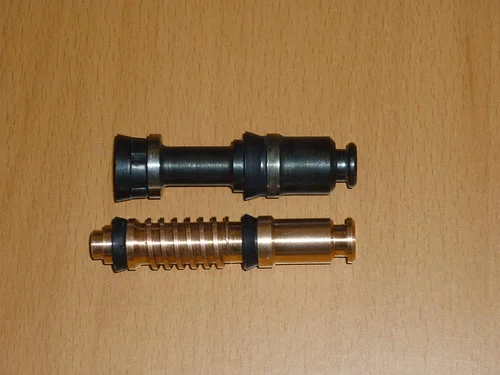
The original piston works in the same way except the shoulder the primary seal sits against is full diameter and is the piston bearing surface, fluid cannot get past the OD. There are 3 holes behind the seal which are blocked by the seal when the systems pressurised and open when the piston retracts.

The reason for the two different methods is down to the design of the primary seal. The Norton original is a large soft cup seal that sits against the end of the piston, the GPz500 has an annular lip seal that sits in a groove, putting holes behind it wouldn't work.
 
Last edited by a moderator:
Looking good there Rich.
Would you mind sharing how the sleeve is sealed and retained in the M/C?
Also, the colours in photos can be deceiving, is the piston bronze?
How's about the choice for sleeve material.
Do you think there is anything magic about the square thread depth to width ratio?
I ask because I will be doing mine on a 1947 Logan 200 which is not the most rigid.
Thanks, all the best.
 
AntrimMan said:
Looking good there Rich.
Would you mind sharing how the sleeve is sealed and retained in the M/C?
Also, the colours in photos can be deceiving, is the piston bronze?
How's about the choice for sleeve material.
Do you think there is anything magic about the square thread depth to width ratio?
I ask because I will be doing mine on a 1947 Logan 200 which is not the most rigid.
Thanks, all the best.

You should read this, Rich had it in a previous post.

http://www.nocnsw.org.au/brake.html
 
AntrimMan said:
Looking good there Rich.
Would you mind sharing how the sleeve is sealed and retained in the M/C?
Also, the colours in photos can be deceiving, is the piston bronze?
How's about the choice for sleeve material.
Do you think there is anything magic about the square thread depth to width ratio?
I ask because I will be doing mine on a 1947 Logan 200 which is not the most rigid.
Thanks, all the best.

The sleeve is stainless steel (316 or 304, not sure which) machined to a sliding fit and put in with Loctite high strength retainer, existing feed/return holes are drilled through at the original sizes. Piston is phosphor bronze (no idea what spec)
The square thread OD supports the piston. Ideally I would have preferred mine machined coarser to give wider bearing area but the machining is done as a favour at work and I left a bit of discretion in that area, can't complain it was free. Nothing magic about the thread ratio so long as the fluid can get along it.

Just rebuilt and bled the master cylinder, all went together very painlessly. So far so good, the brake goes on AND off (when it's parked).
Surprised, I was expecting a lot more give in the system with the smaller bore, but it feels pretty solid.

Time for a test run.
 
Test run done, still alive!

The sleeved master cylinder is replacing a Lockheed adjustable ratio racing master cylinder. The rest is a recently rebuilt standard caliper with a new standard disc which is still bedding in and a stainless braided hose.
First impressions are it's at least as good as what it's replacing in power (and that's with a shorter lever) but a lot better in putting the lever biting point at a nice distance from the grip for two finger braking which was a big problem with the other one and limited how well it could be set up.
Before that I had a 6pot Suzuki caliper fitted on 12" floating disc but frankly it was too ugly to live and for all the hardware wasn't much better.
I won't miss that big disc rattling at idle.

So far, real happy with the performance and even more pleased to get closer to a stock look.
 
Status
Not open for further replies.
Back
Top