Keihin small body FCR 33 carbs

Seems to be an available option


You’d probably be able to knock one up for yourself for pennies
Just did it today. I'll post a photo later, but details if you want to do similar.
Used the butt end of an old ss spoke (3.6mm dia) and linished it down to 3.2-3.3mm so that it slides neatly into the keihin bush. I further reduced the bottom 10mm to 2.5mm (same diameter as the Keihin plunger rod) so that it can reach the diaphragm. The bent "knob" of the spoke makes an ideal "handle".
The reason for the larger diameter in the upper part is that I found the standard 2.5mm rod to be a very sloppy fit in the bush.

So, given that I don't have a choke or enrichener circuit, when it's cold I give the pumper one manual squirt, which allows me to open the throttle about a 1/4 for first cold start. After that the pumper function is superfluous or worse, so not needed.
Cheers
 
Last edited:
Thanks for the reply Jim. 👍
Your plunger, with the brass knob. Is that something you made yourself or something readily available?

It's getting a bit cooler here now so I need to use mine, at start-up, more regularly.

My version is more complicated than yours - just a handle on the linkage. Keihin's garbage rubber boot is its weak link!
View attachment 120037
Cheers
Rob
Yes you can make one up yourself for cheap. You can alse remove the original lever if you want. This is for the 33mm FCR but it might fit the 35mm FRC just the same. See notes below:

PRIMER CHOKE

lengths in mm

silicone 19

2/32” dia SS wire 46

1/8” ID K&S brass (.015" wall) tubing sleeve 30

9/64” ID K&S brass (.015" wall) tubing sleeve 5

Brass top button 1/4” dia x 3mm drilled to 3/32” (fasten with red loctite)

exposed shaft under button to brass tube 23

bottom of silicone to brass tube 5

Bolt for eliminating accell pump 5 x 25 x .8

bushing to replace accel lever arm 12mm x 12 w 8+ hole


Get thin wall black silicone for spring back return of manual choke on ebay

"1/8" ID 3/16" OD 6.6 Ft Silicone Tube Black Industrial Silicone Tubing" Black would probably look better than the clear I had on hand.

Keihin small body FCR 33 carbs
 
Last edited:
Yes you can make one up yourself for cheap. You can alse remove the original lever if you want. This is for the 33mm FCR but it might fit the 35mm FRC just the same. See notes below:

PRIMER CHOKE

lengths in mm

silicone 19

2/32” dia SS wire 46

1/8” ID K&S brass (.015" wall) tubing sleeve 30

9/64” ID K&S brass (.015" wall) tubing sleeve 5

Brass top button 1/4” dia x 3mm drilled to 3/32” (fasten with red loctite)

exposed shaft under button to brass tube 23

bottom of silicone to brass tube 5

Bolt for eliminating accell pump 5 x 25 x .8

bushing to replace accel lever arm 12mm x 12 w 8+ hole


Get thin wall black silicone for spring back return of manual choke on ebay

"1/8" ID 3/16" OD 6.6 Ft Silicone Tube Black Industrial Silicone Tubing" Black would probably look better than the clear I had on hand.

Keihin small body FCR 33 carbs
Thanks very much Jim!
 
I've been working on a small body FCR33 twin carb. As far as I know this is the 1st and only time this 33mm FCR size carb has been installed on a Norton.
Jim, what's the advantage and disadvantage of the FCR33 compared to the CRS33 ?

Despite the smaller size of the FCR33 vs. the FCR35, I guess it's larger / longer than the CRS33? I am still looking for a set-up permitting the use of the "black box" air filter.

- Knut
 
The FCR33s are slightly smaller and lighter than the CRS33s. They are a nice tidy fit with plenty of clearance (unlike the 35mms) and the way your bike runs is just amazing. There is no bog out that you can experience with a larger 35mm FCR on a 750.

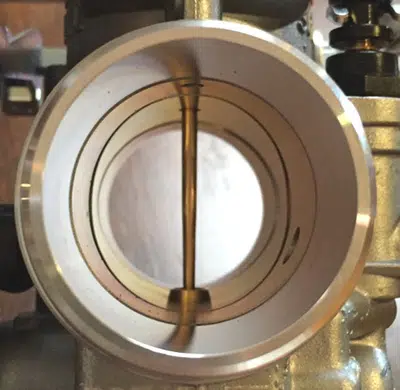
The CRS33s actually have slightly better flow at high RPM because they are the smoothest bore of any 33 carb available. The 33CRS has a more gradual and linear mid range throttle response whereas the FCR has more punch and instant response.

Smooth bore of the CRS33
Keihin small body FCR 33 carbs


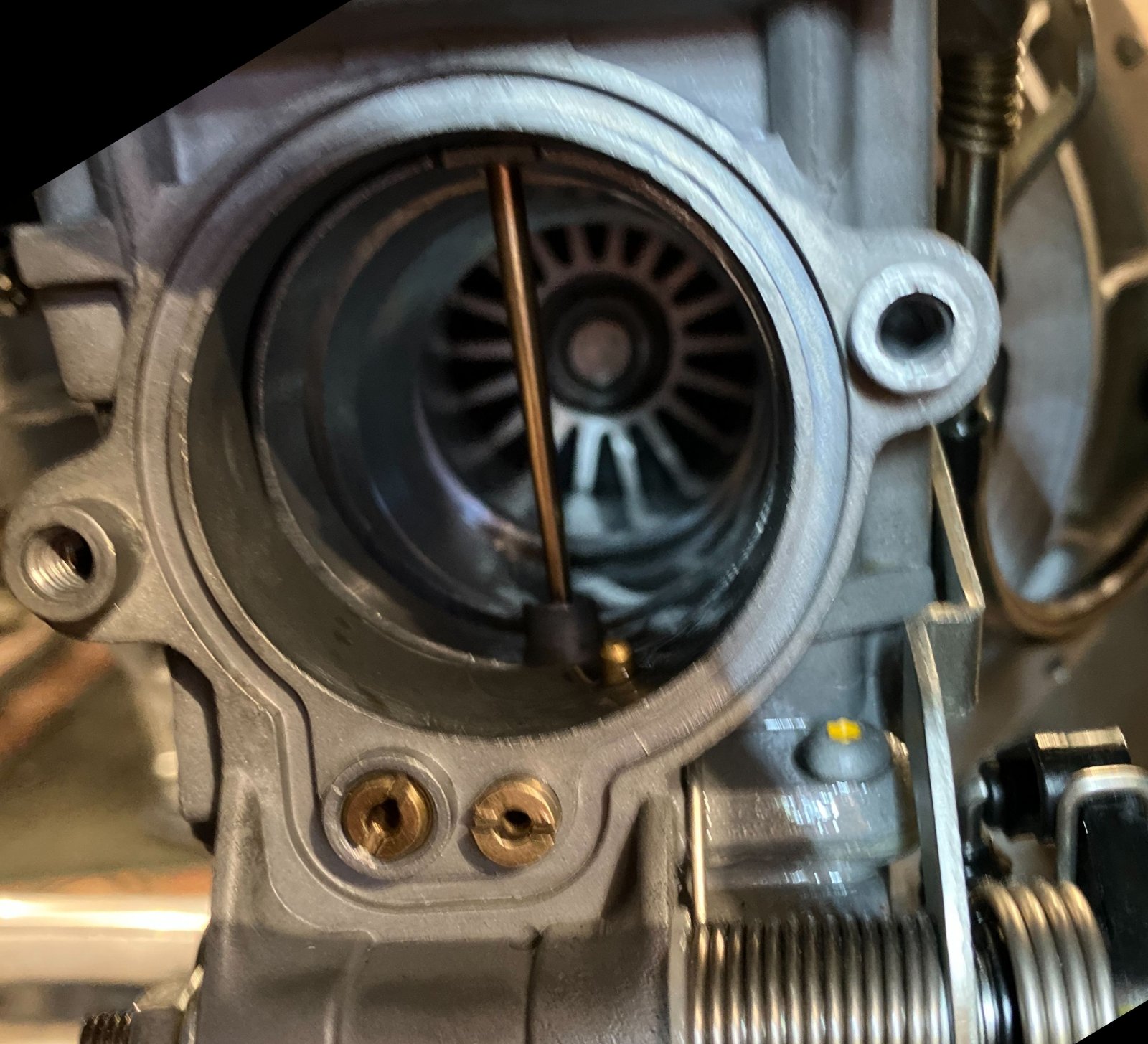
FCR33 bore with a slightly larger gap for the flatslide
Keihin small body FCR 33 carbs


Both the FCR and the CRS give an impressive WOT blast and a bit more noticable power than you get with other carbs - because of the smooth shape of the carb bore when wide open.

The CRS has a more traditional look and blends in with the classic Norton. The FCR has a wierd angle to the body and a busier futuristic look that says "all I care about is performance and looks be damned". And they are more expensive.

Here's the thin ham can from RGM but the regular ham can might fit the smaller FCR33s
Keihin small body FCR 33 carbs
 
Last edited:
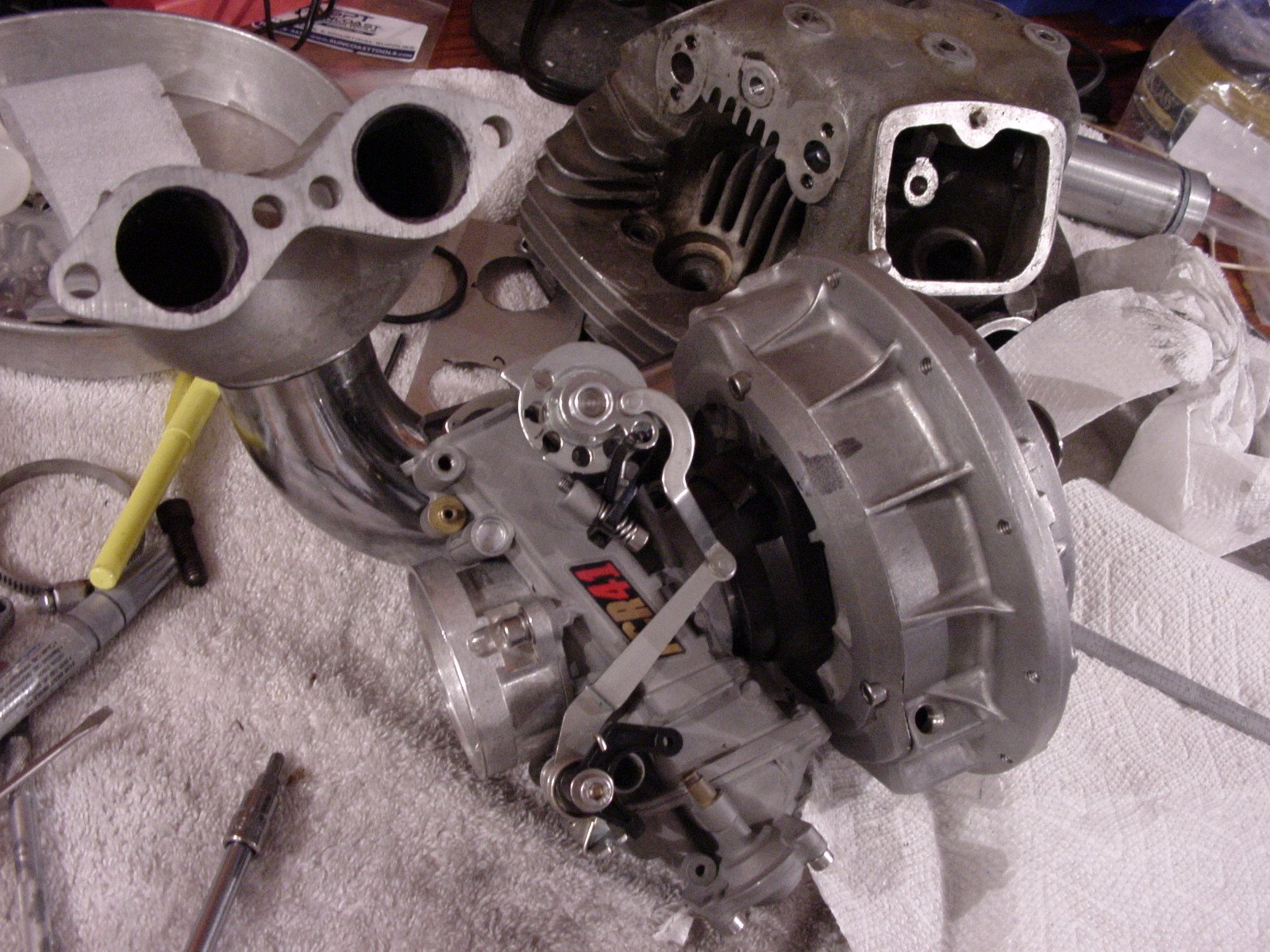
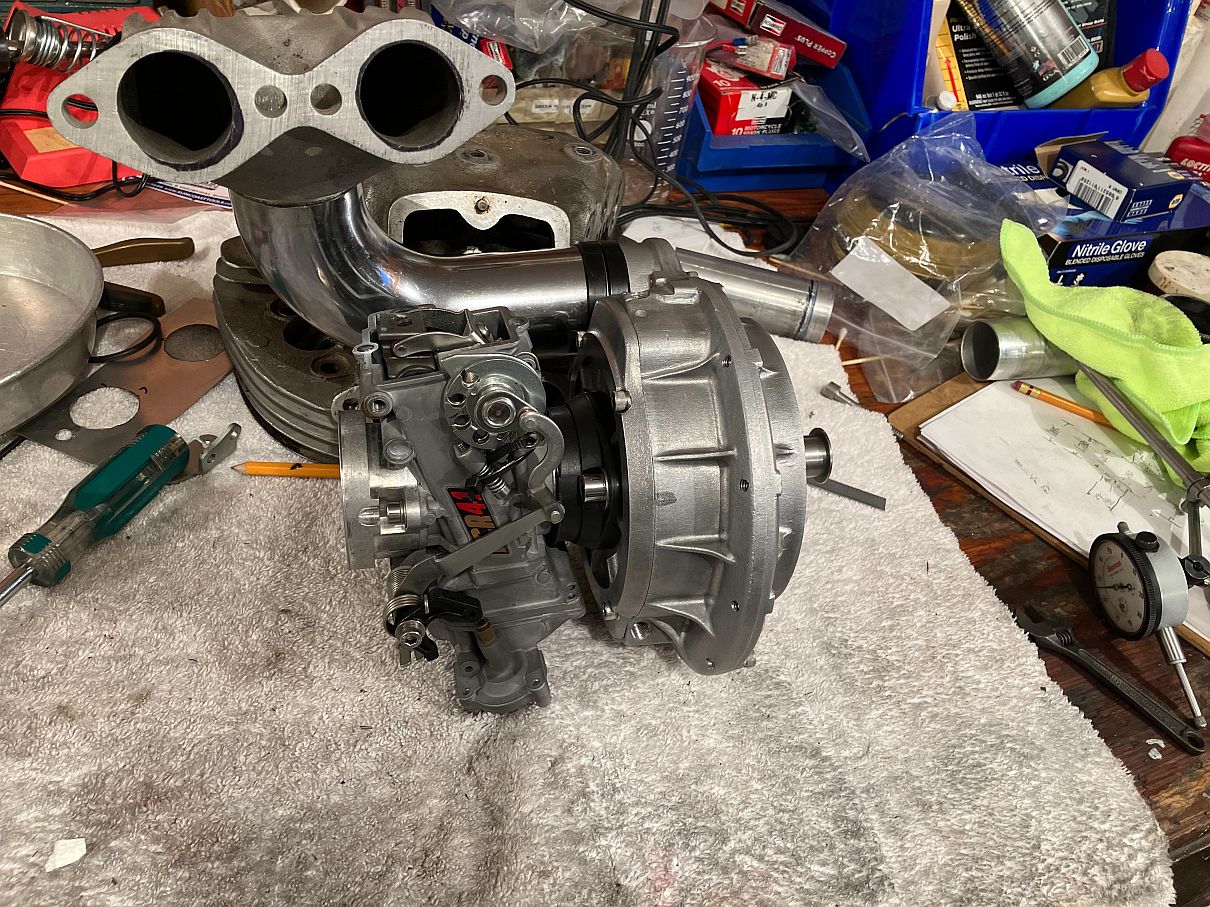
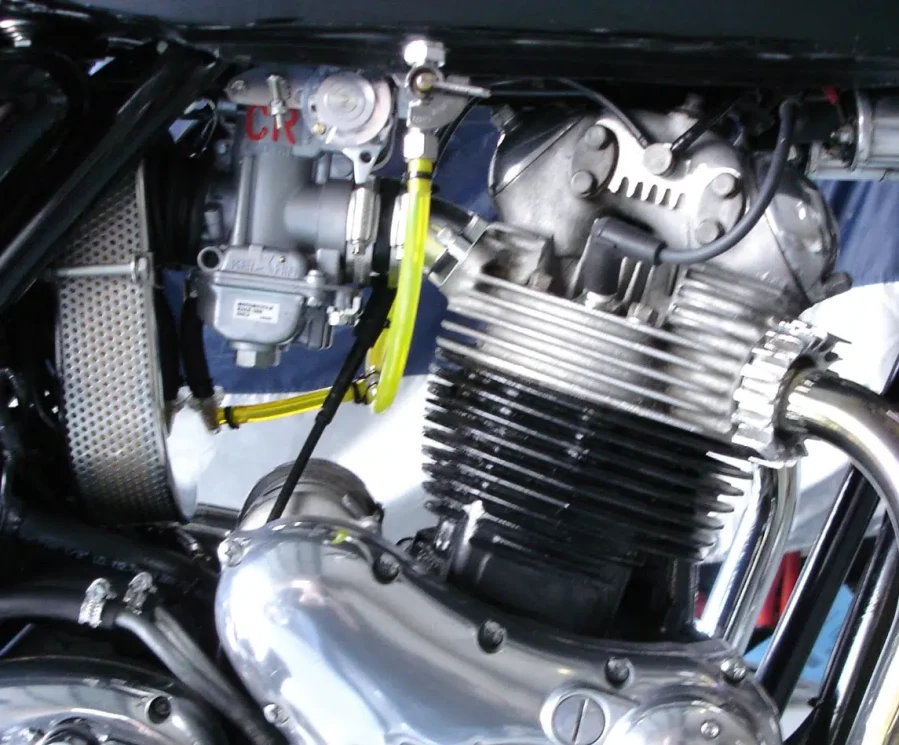
I've been working on a small body FCR33 twin carb. As far as I know this is the 1st and only time this 33mm FCR size carb has been installed on a Norton. Height is 6" and length w/o adapters is 2" so there is plenty of frame clearance. Seems to have very good throttle response in the mid range with immediate kick in. I'm experimenting with limiting the accellerator pump so it only squirts the first instant when you need it instead of wasting fuel. I've only had it running for a few days and I just have one set of carbs for now but so far everything is looking good.

Keihin small body FCR 33 carbs


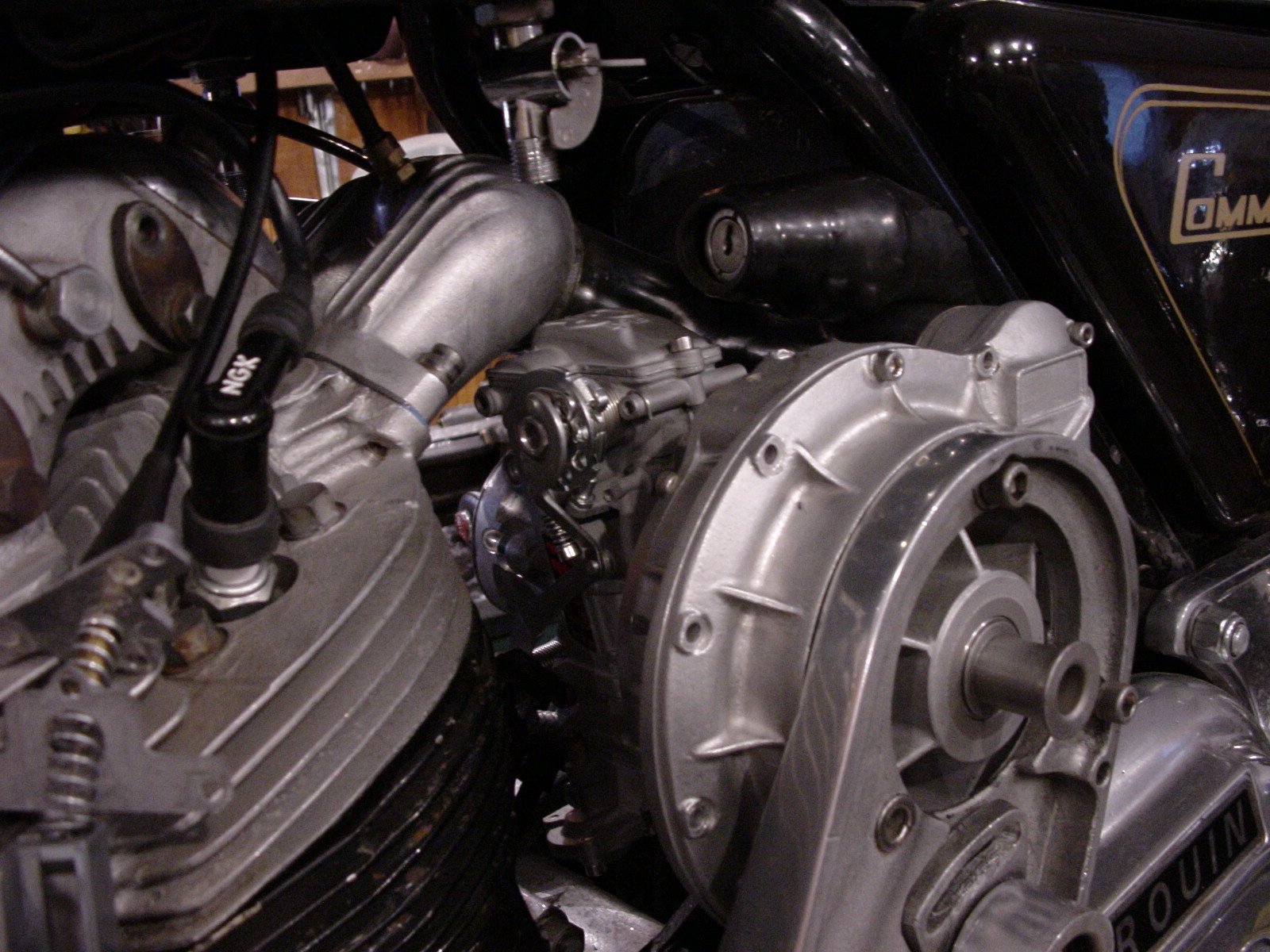
Setup on my test bike.
Keihin small body FCR 33 carbs
Hi there ,could you tell me the overall width of the carbs and does the left hand accelerator pump touch the right hand float bowl thanks Dougie.
 
Hi there ,could you tell me the overall width of the carbs and does the left hand accelerator pump touch the right hand float bowl thanks Dougie.
One accelerator pump plumbed to both carburetors, and it is on the timing side (right) carburetor. No clue about the width of the 33 FCRs. I have the larger 35mm FCRs. The carburetors are tied together as a unit and not installed separately.
 
Not everybody who rides a motorcycle knows how to use the throttle or the gearbox. It the bike is well-tuned, regardless of whether it is a two-stroke or a four-stroke, it should be necessary to feed the throttle on, in a controlled manner. When a motorcycle is being ridden fast - the gear-changes should be heard as a change of note - with NO PAUSE. I suggest that accelerator pumps and quick-taper needles are provided for inexperienced riders. They compensate for loss of vacuum - less vacuum means leaner mixture. If the mixture is leaned-off for better performance, without the pump - you might get a miss or a gasp when you need power.
 
without the pump - you might get a miss or a gasp when you need power.
That is the only part of your comment that makes sense to me. If I leaned out my carburetion to the point that the engine falls on its face anywhere in the power band my pistons would adhere to the cylinder walls at high RPM. That just me though, and arguably I probably don't belong here. lol
 
With most road bikes, the throttle can usually be whacked open. When they are like that, they are usually slower in acceleration. If midrange jetting is too lean, you will usually get a miss before you get detonation or seizure. Hotting-up an old road bike always presents reliability problems which modern bikes do not often have. With Commandos, we are living in the 1960s without engine management systems. With classic road-racing motorcycles, many changes need to be hidden - that is one of the things which kills development.
 
Just about every fixed jet car carburettor had an accelerator pump, the two main variable jet carbs used a hydraulic damper on the slide to do the same job by increasing the vacuum at the spray tube.
Amal type carbs have neither enriching device so will always fall over unless the mixture is over rich
 
not mine.......
Carborators
 
An SU carburetor was a car carburetor. They work well for road use, by providing constant vacuum. If you are seeking performance, tuning a normal carburetor might be better. A car motor is not usually used in the same way as a motorcycle motor. If a motorcycle is used in a way which requires performance, the usable rev range is usually much higher, and the gears are closer together. Very few cars have a power band which begins at 4000 RPM. The operating rev range of my Seeley 850 is between 5,500 RPM and 7000 RPM.
 
Back
Top