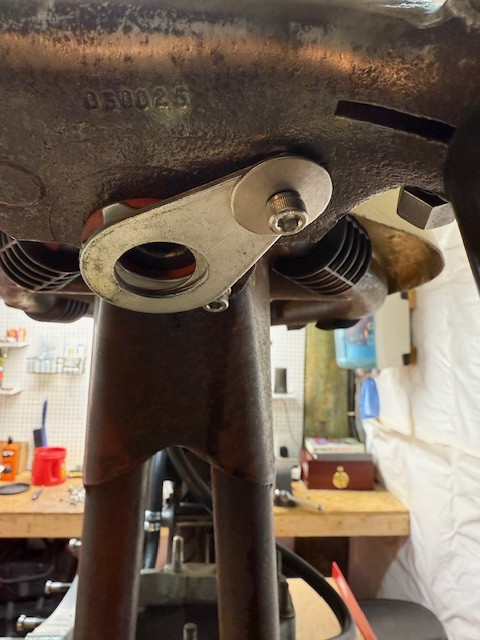
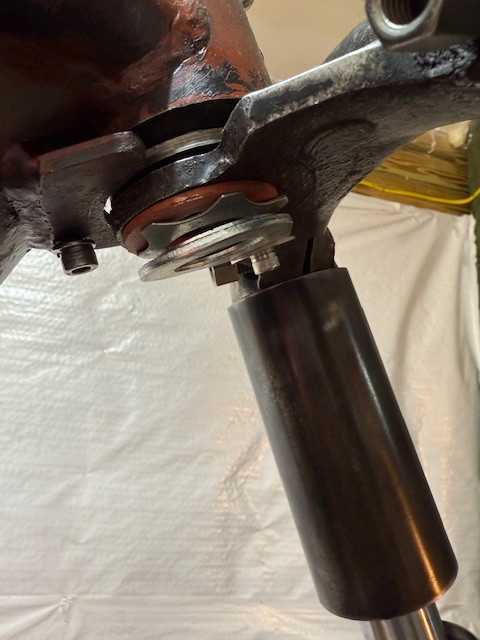
Featherbed steering damper

Joined
Aug 21, 2016
Messages
685
Country flag
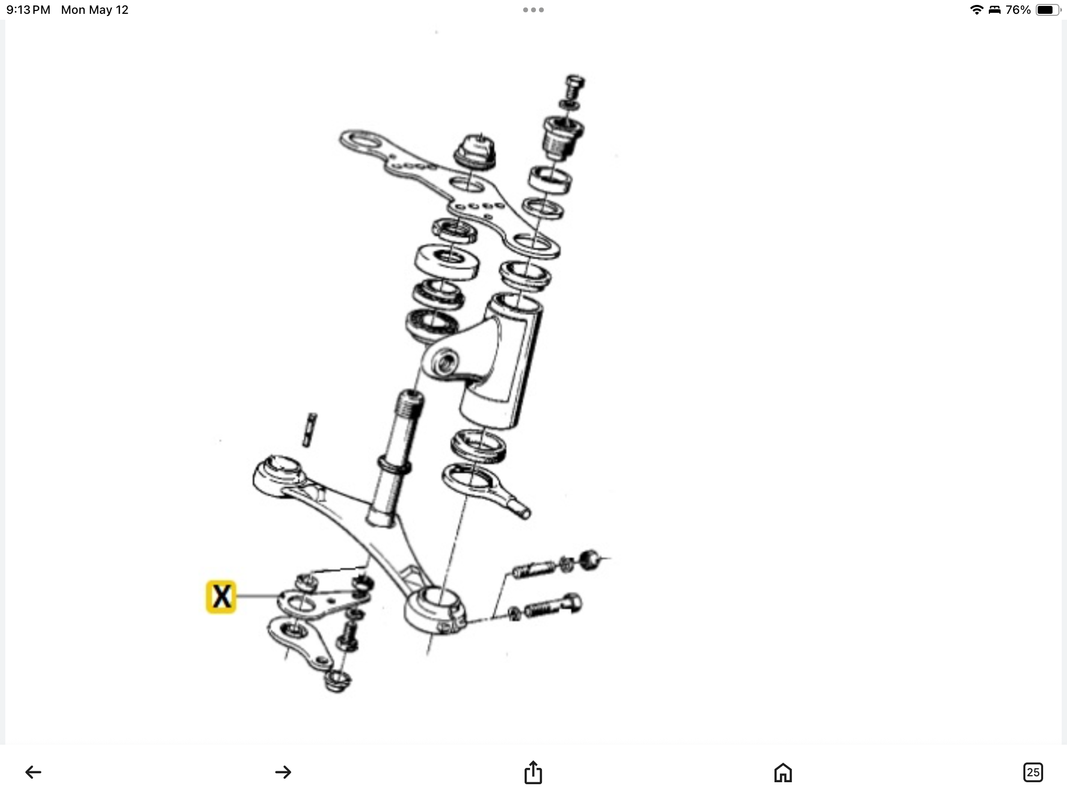
Does anyone have a diagram to show the correct way to install the washers for a vintage Ceriani Steering Damper?

I’m looking everywhere but I can’t seem to find a diagram that shows how to install it.

I know that it goes between the lower tree and the fork neck, but I can’t find the order of the washers and the proper way to install it.

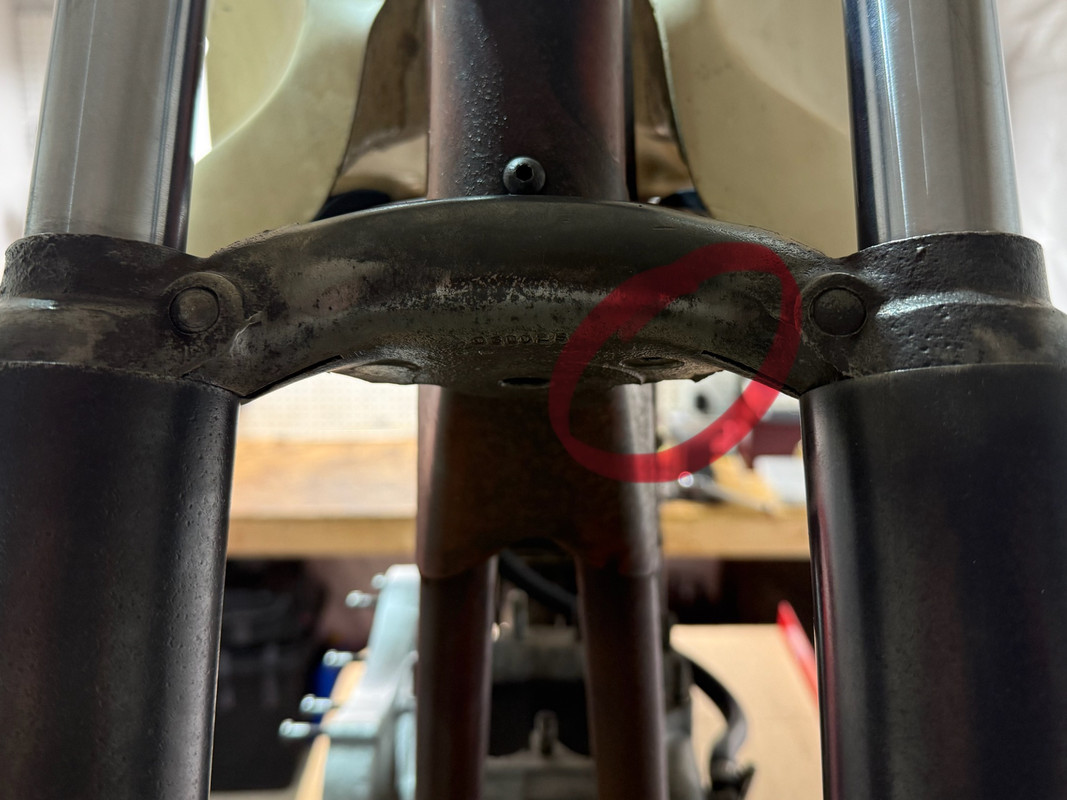
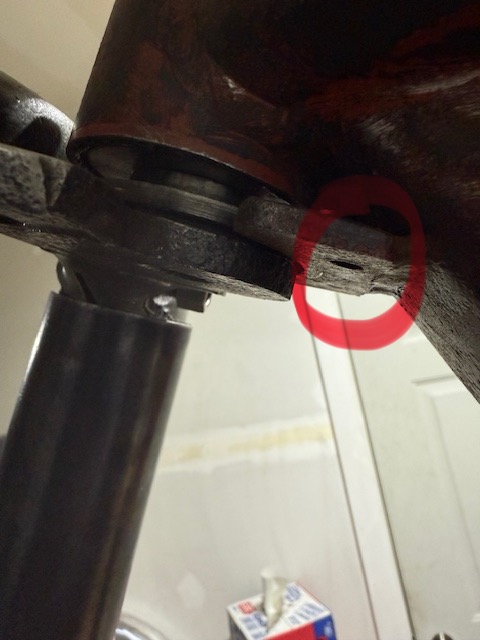
It’s a basic vintage compression damper. Does the bracket circled in red attach to the frame? Lower tree?
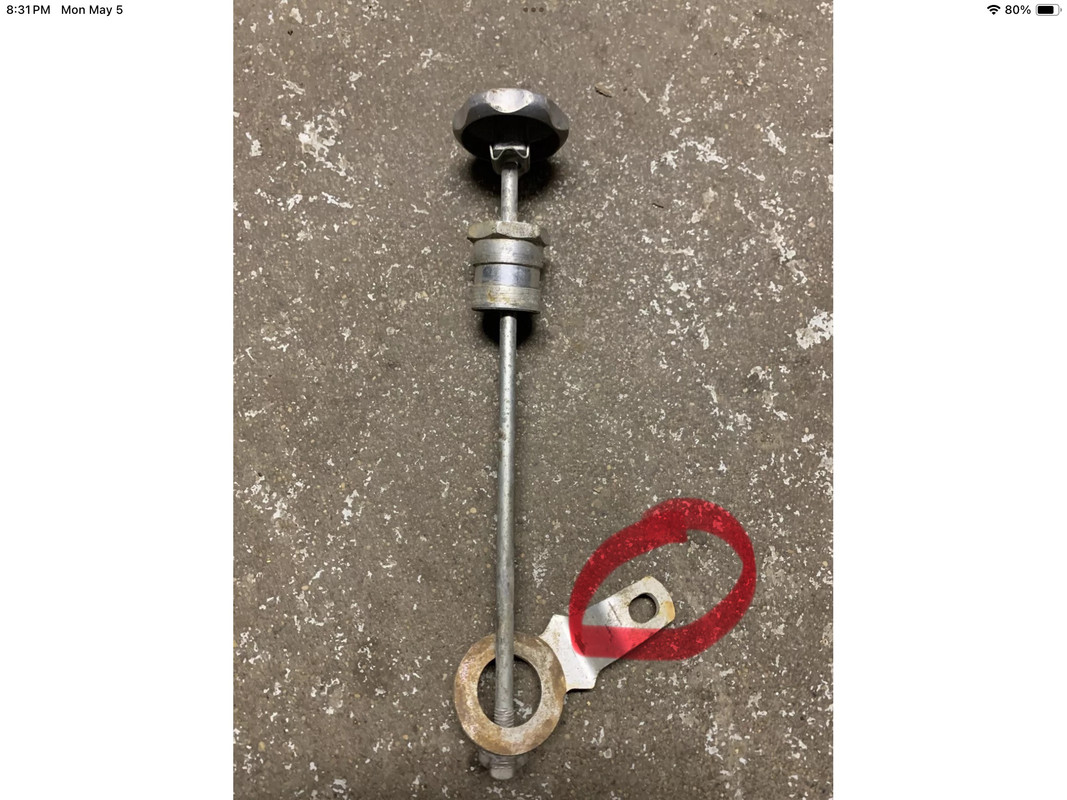
Featherbed steering damper

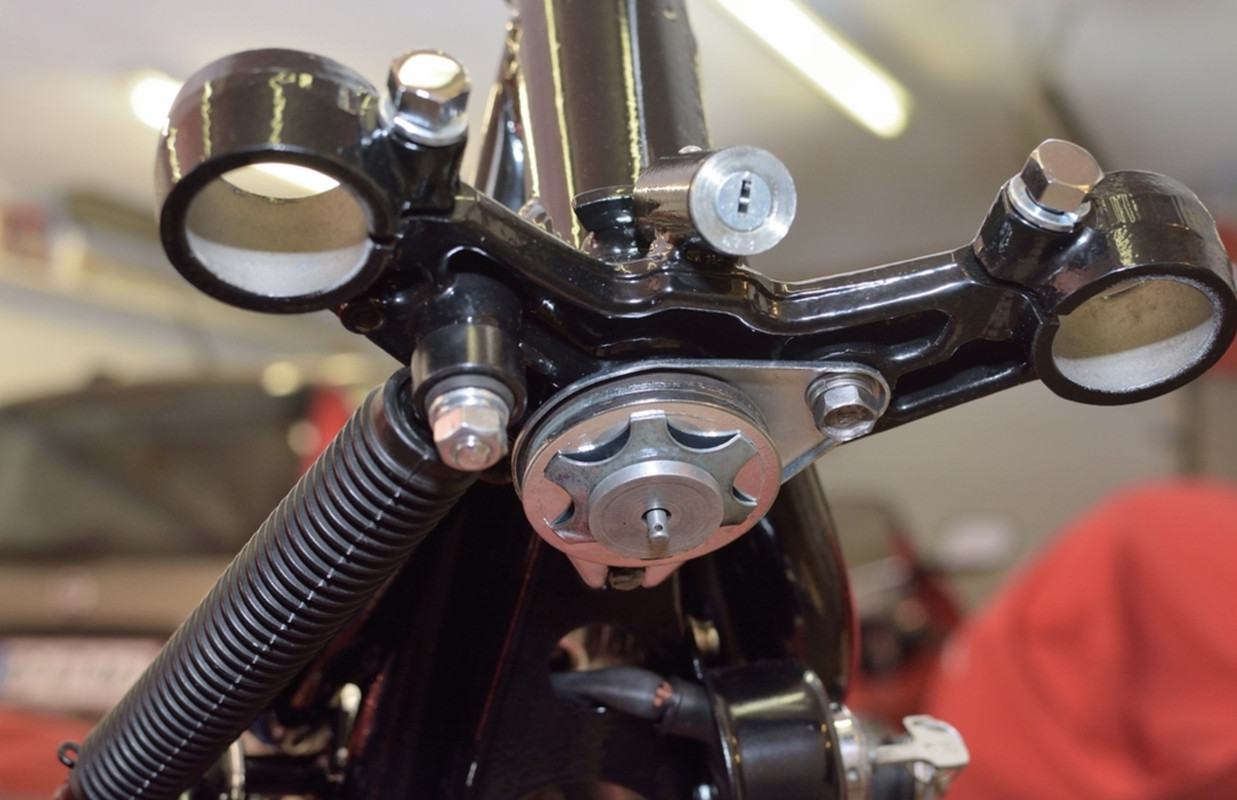
These holes are so big, they must go on the triple tree neck
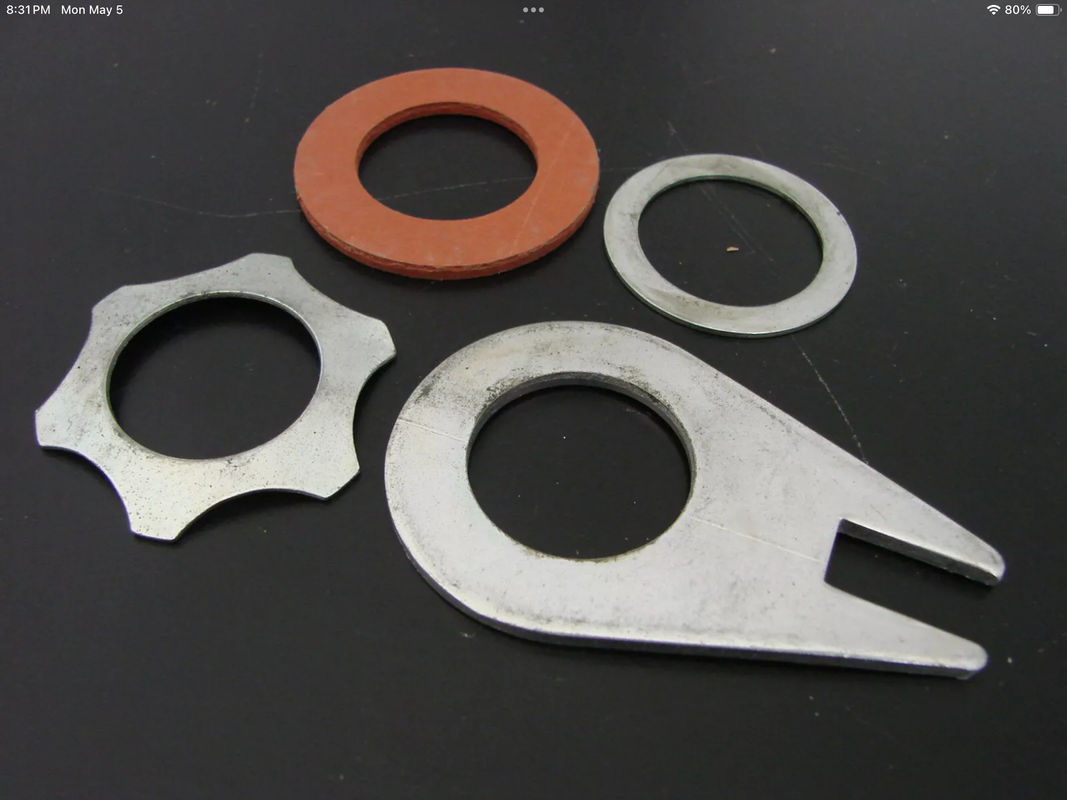
Featherbed steering damper

Any help???
 
Last edited:
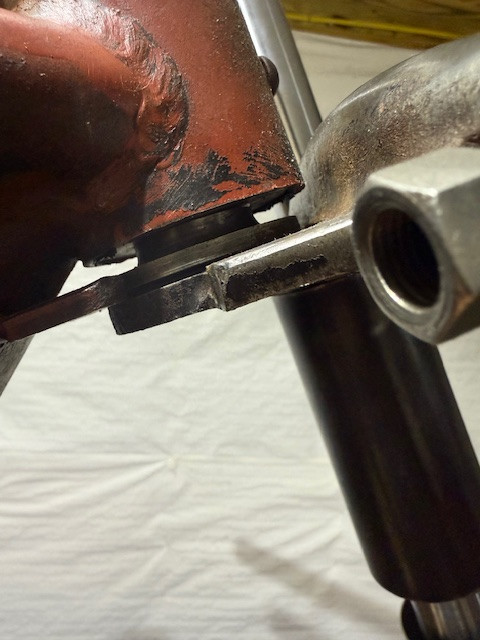
Maybe I’m getting closer. If I’m seeing this correctly, the damper goes underneath the lower tree, not between the lower tree and the fork neck, unless I’m wrong.

I could really use a diagram.

This is why I think it’s on the outside of the tree.

Featherbed steering damper

Featherbed steering damper
 
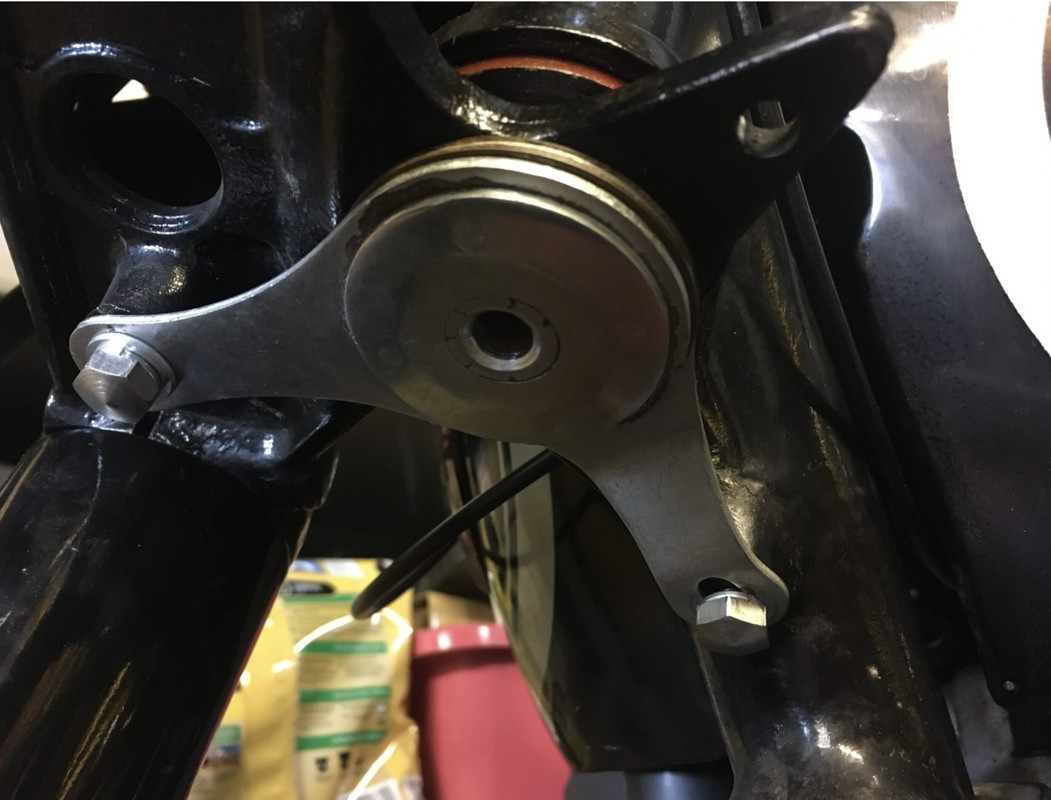
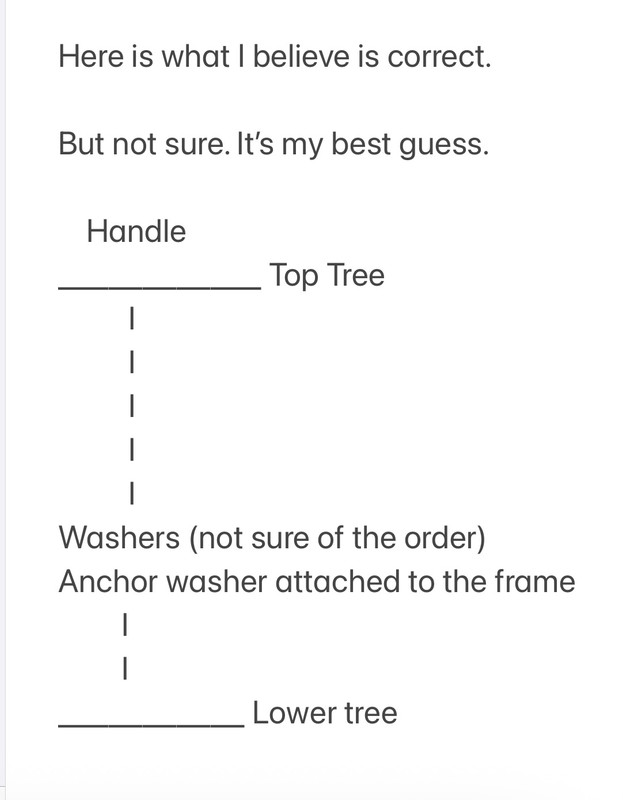
Here is my fork neck. It “appears” that the anchor washer may connect to the frame buy the threaded hole in the round circle.

Featherbed steering damper

Featherbed steering damper
 
I've never found any real use for a friction steering damper on a featherbed Norton. There was one on some early ones. The Manx has one, which I never use. If you don't have a sidecar, you probably will find no use for it.
Had one on a WD16H that was outright dangerous. It had a couple of degrees free movement before coming in effect. Without using it, the bike handled decent.
I think your latest picture is wrong. Every part (except the long rod) should be outside of the tree. Otherwise you introduce flexibility in steering. Free play in steering bearings is never good.
Anyway friction damping is always a poor solution compared to hydraulic damping. As static friction coefficient is higher than when moving.
 
Last edited:
On my Triton there was flat under the lower clamp for the friction disc to be held against, an the end of the pressure plate was bolted to a piece if flat between the frame tubes. It is dangerous to ride without a steering damper. The latest Manxes which raced competitively in Australia raced in about 1963. Some had a non-adjustable hydraulic damper. If a tank-slapper occurs with the hydraulic damper, the quicker the steering moves the more resistance it meets. The worst crash I had was due to a tank slapper. The scrutineers had forced me to remove the damper because it was not authentic for the period in an historic race..
 
I've never found any real use for a friction steering damper on a featherbed Norton. There was one on some early ones. The Manx has one, which I never use. If you don't have a sidecar, you probably will find no use for it.
Had one on a WD16H that was outright dangerous. It had a couple of degrees free movement before coming in effect. Without using it, the bike handled decent.
I think your latest picture is wrong. Every part (except the long rod) should be outside of the tree. Otherwise you introduce flexibility in steering. Free play in steering bearings is never good.
Anyway friction damping is always a poor solution compared to hydraulic damping. As static friction coefficient is higher than when moving.
Yeah it’s not right, but I think I figured it out.
 
On my Triton there was flat under the lower clamp for the friction disc to be held against, a the end of the pressure plate was bolted to a piece if flat between the frame tubes. It is dangerous to ride without a steering damper. The latest Manxes which raced competitively in Australia raced in about 1963. Some had a non-adjustable hydraulic damper. If a tank-slapper occurs with the hydraulic damper, the quicker the steering moves the more resistance it meets. The worst crash I had was due to a tank slapper. The scrutineers had forced me to remove the damper because it was not authentic for the period in an historic race..
I believe mine is an original vintage version except for the new washers, those are new.
 
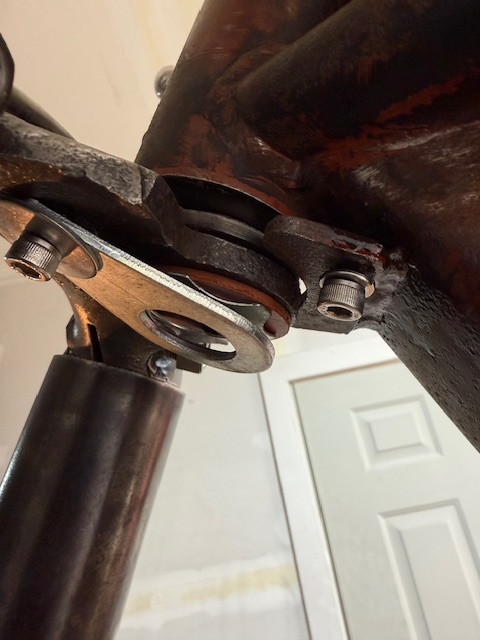
I think I figured it out. The center stem and handle aren’t here yet, but the washers are and I did a mock up. When the stem gets here, that has a bracket at the base to hold everything together.

Does this look right?

Featherbed steering damper

Featherbed steering damper

Featherbed steering damper
 
With the hydraulic steering dampers, the quicker the damper moves, the more the damping increases. So if a tank-slapper happens, the damper tends to straighten the bike. With a friction damper, the amount of damping does not increase in relation to the movement. Apparently Joey Dunlop used to adjust the hydraulic steering damper while he raced. Most bikes can be ridden without the damper, but most guys do not chirp the front tyre while braking. A blur of handle-bars is a joy to behold. If you ever see it - get your hands off real quick, and wait before carefully placing them on again. There is always plenty of time, when that happens - your brain speeds up.
 
Back
Top