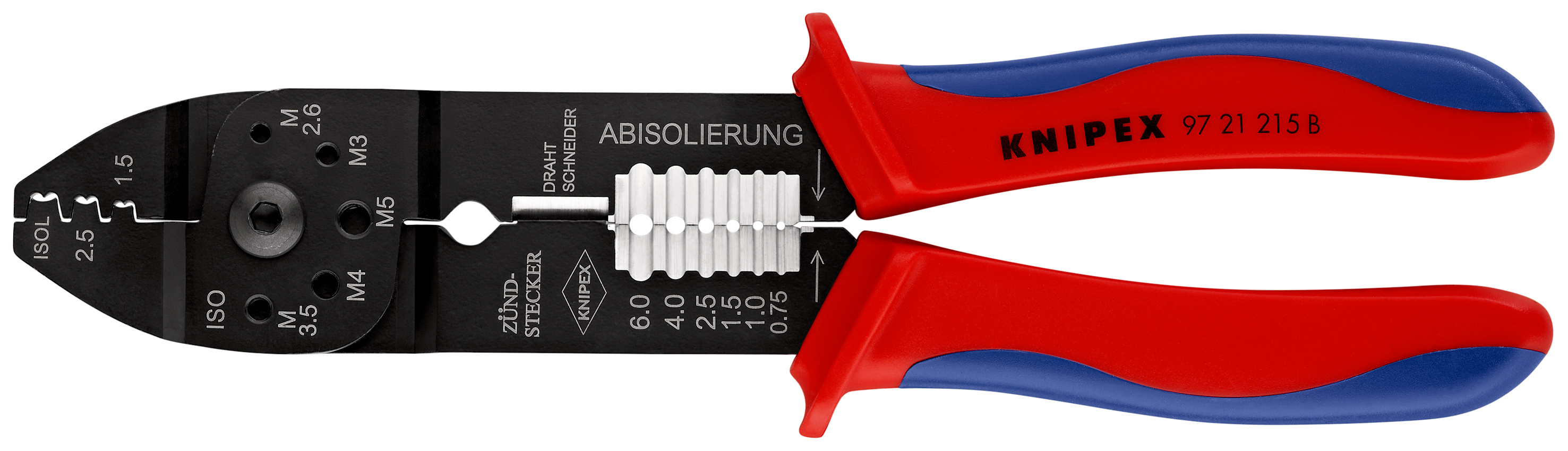
Crimp tool (2013)

Status
Not open for further replies.
This same discussion takes place in the house, boat, and car worlds.
I think most folks go for crimps because it is faster and takes less skill than soldering.
I suspect the codes mandate crimps to accomodate the need for speed/cost and the variable skill levels using the tools.
Getting a waterproof crimp is difficult unless you use marine grade connectors.
Many crimp on connectors are junk: flimsy gauge eyes, hard plastic insulators, etc. Most crimp tools are crap.
I have seen some horrendous crimp jobs. And some horrendous soldering jobs.
Done well, either will produce a serviceable connection.
My general preference is soldering because I feel I have more control over the process and know I will get a good joint.
 
I don’t think anyone is questioning the fact that solder gives a good / better joint.

The issue is that it hardens the copper wire either side of the joint. In a building etc this is of no concern, but on a vehicle, especially a vibrating old motorbike, it is a recipe for broken wires.
 
I built a 240v AC device recently, developer recommended not to use solder on wire ends going into screw connectors as they would loosen over time. He did not explain how but I took his advice.
 
I may have posted this before but on aircraft solder is almost universally a no-no now. It's nothing to do with speed or cost but rather proven problems with cracking that don't happen with crimping. Manufacturers will now specify the connector AND the tool.

Speaking of tools: That's where crimps have problems. A proper crimp is made with the correct tool that won't release until the correct pressure has been applied. The tools for common insulated terminals and splices that we may use is not terribly expensive anymore and even the 4 pin used on round or bullet connectors isn't terrible. Other than a roadside repair we should be using the right tools.
 
Recips and Nortons have the vibration commonality! I crimp and use shrink tube.
Just realized that I started this thread the day I retired! The days have RACED by! :-(
 
I built a 240v AC device recently, developer recommended not to use solder on wire ends going into screw connectors as they would loosen over time. He did not explain how but I took his advice.

This is called 'tinning the ends.' As explained in Reply #19, above, the solder creeps under the pressure of the crimp, or as in your case, a screw.. Creep is an actual technical term (at least in American English), or more rigorously called plastic deformation. In this regard, plastic refers to a materials property to "flow" when subjected to pressure. The process involves time and temperature as well. Another instance of creep, of interest to those on this Forum, occurs in head gaskets. Copper, has some tendency to creep, ESPECIALLY when soft, which is why I do not anneal copper head gaskets, preferring to trust the gasket mfgr has optimally heat treated the material to minimize creep.

HTH

Slick
 
Last edited:
what about hardening of said gasket due to sitting on the shelf?
 
For those of you that like the high-priced stuff, I've used the HERO ELECTRICAL products and they are the best so far...check out their website. Downside is that the crimpers are $135 and I could not find a price on their terminals (uninsulated). They take a lot less hand pressure and having thinner jaws makes it easier to fit the wire and crimp...twice per terminal. I really like the Hero products but the price is prohibitive for me. I've bought most of my tools, wire, and terminals from BRITISH WIRING and AUTOMOTIVE ELECTRICAL SUPPLIES in the UK and they work quite well.
Another thing..don't waste any money on bargain basement crimpers and supplies.
 
Here's what I use. Works great!!!
Crimp tool (2013)
 
Here is wot I use. No idea of where I got it at this point. Cost must have been near a 100USD.
Works great!
 

Attachments

  • Crimp tool (2013)
    crimp_tool_bullets_D38A1814.webp
    226.1 KB · Views: 196
  • Crimp tool (2013)
    crimp_tool_bullets_detail_D38A1815.webp
    245.5 KB · Views: 184
Here is wot I use. No idea of where I got it at this point. Cost must have been near a 100USD.
Works great!

I have the same one. I believe got it in a kit from the Bonneville Shop.
 
We do not see soldered connections on nearly all automotive wiring bundles. However it is seen in the circuit boards and their wire to board connections in automotive work.
 
For non insulated connectors ( i.e. not those horrible looking plastic coated things) I can thoroughly recommend the Knipex 97 21 215 B Crimping Pliers. No bells or whistles, but really a quality product (made in Germany) and perfect crimps every time.


Actually thinking about it, I can recommend all Knipex tools.
 
The one I bought from British Wiring is different from what they show now. It has hex crimp slots for 2 sizes. I stock bullets for 9 and 14 strand wires (not sure of the equivalent wire gauges). The crimper I have for non-insulated is Chinese and came in a box of assorted terminals. Works great. I much prefer those terminals, but sometimes a plastic insulated terminal is all there is (14 ga. and bigger). I have a ratcheting crimper for those.
 
A proper ratcheting crimper was game changer when I wired my XS650.

Up until that purchase, I could never produce a consistent crimp. Now it’s all factory quality crimps.

Add some shrink tubing and it really tidies everything up.
 
Status
Not open for further replies.
Back
Top