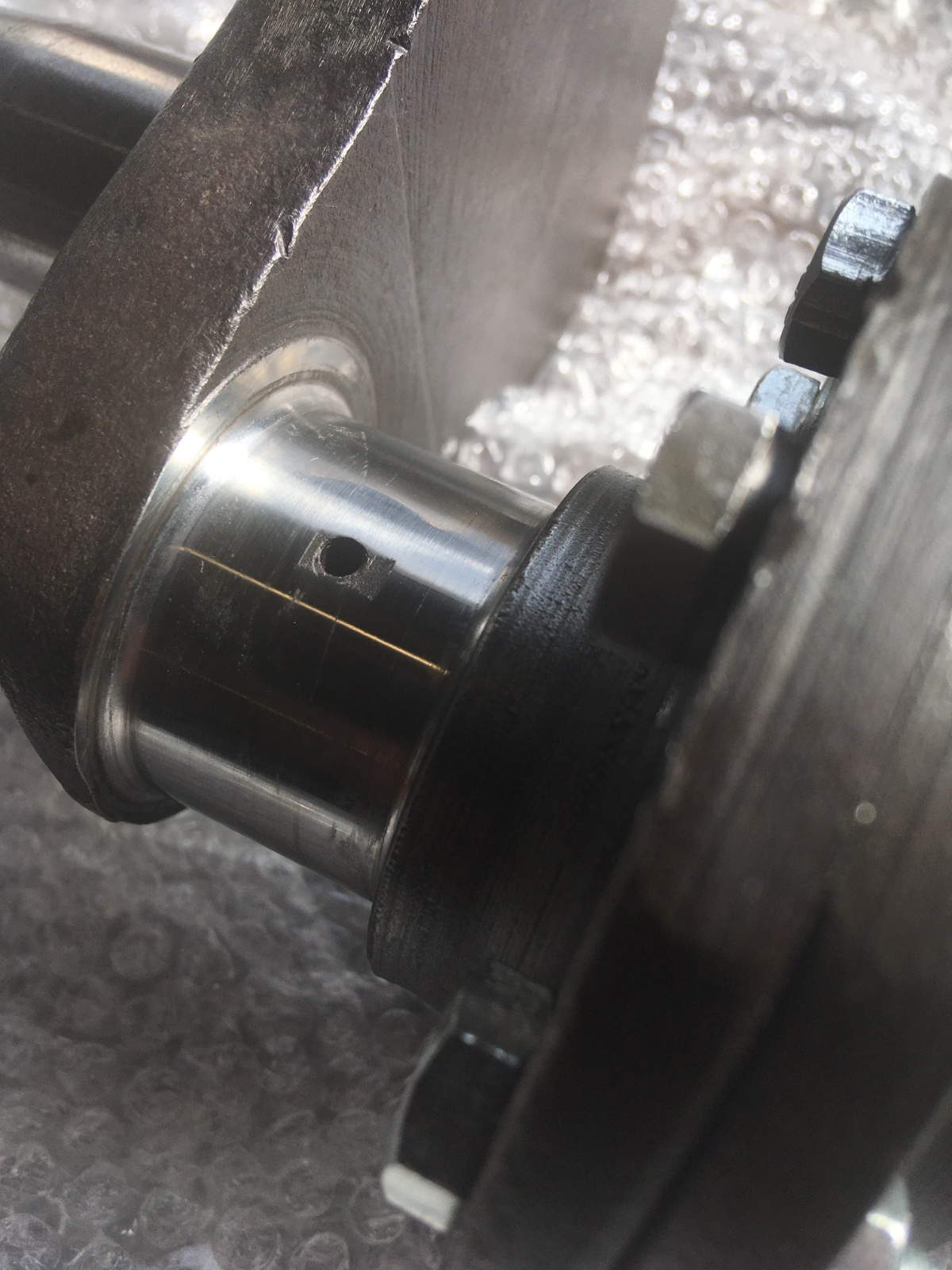
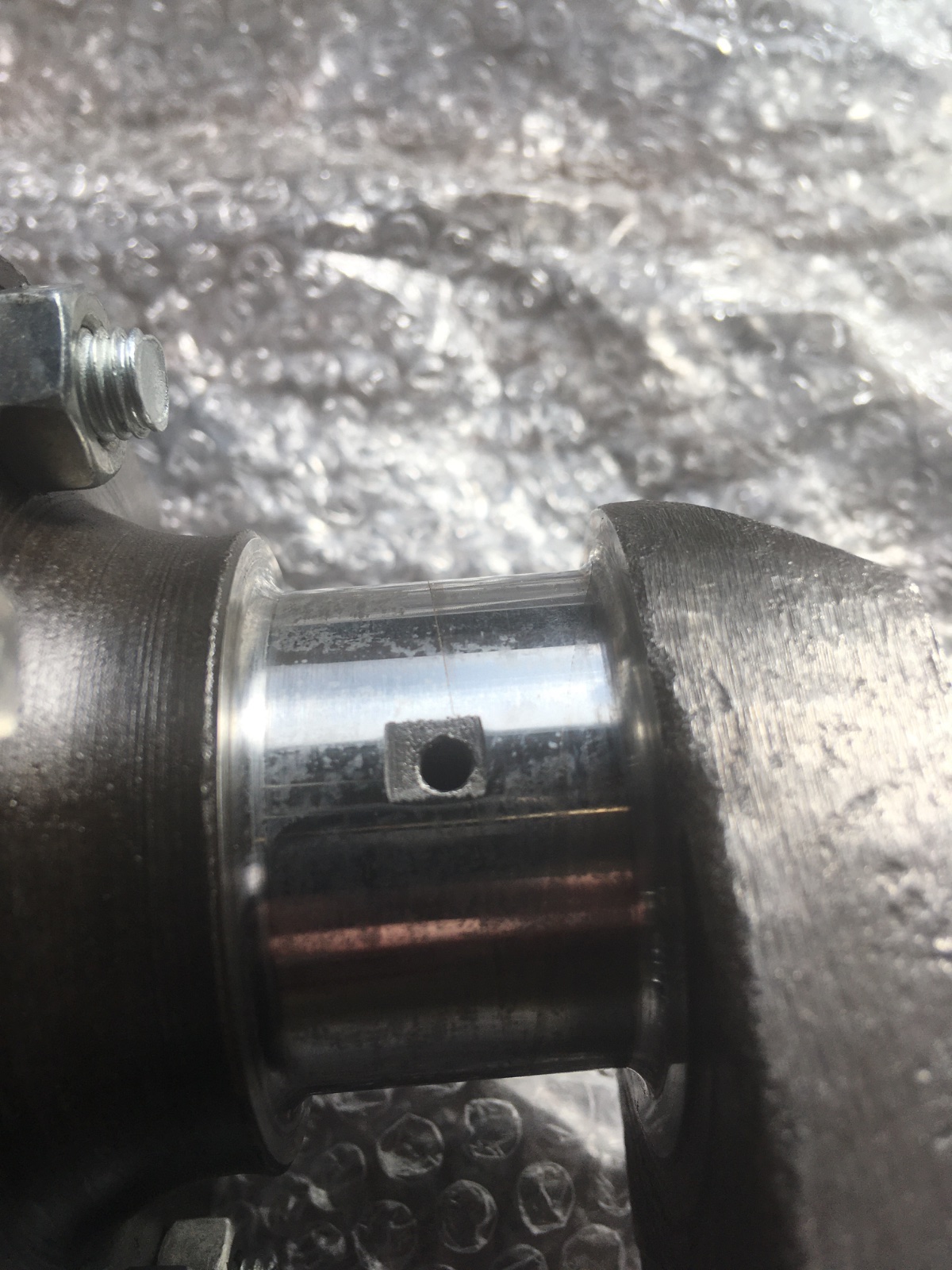
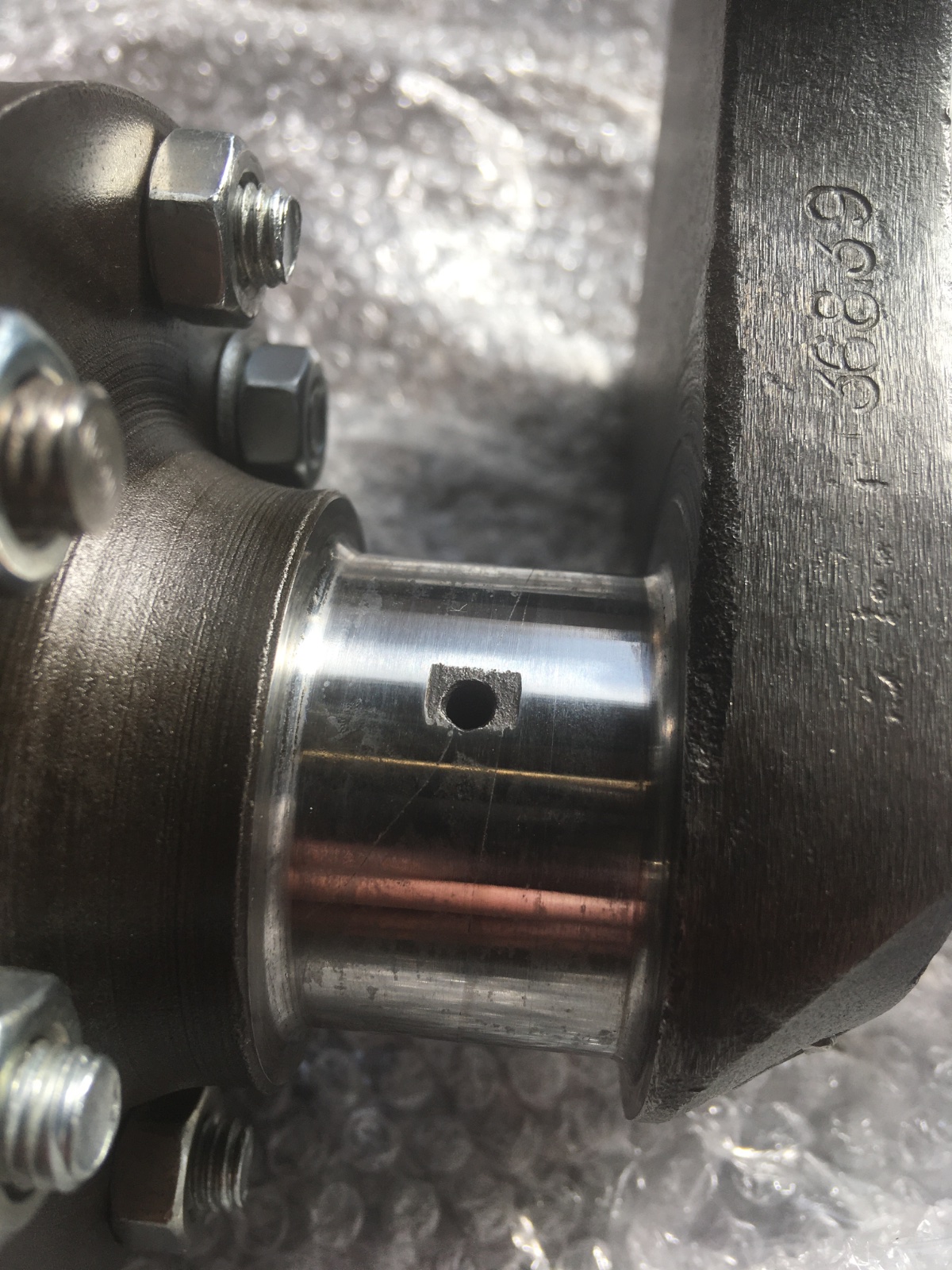
Crank pin oil holes

Peteyoung75

VIP MEMBER
Joined
Oct 5, 2024
Messages
74
Country flag
I’ve just had an 88 crank reground to -10. The square recesses around the crank pin oil holes are compromised by this. In my mind this is the equivalent of a poppet valve having too small a seat - there will be less oil able to flow out of the hole as the perimeter where it meets the bearing will be reduced. The worst are on the drive side (of course).
Any thoughts on this? Dare I take a file/slip stone/end mill/hammer to it to restablish these recesses or is it best left as is?
The bike did have a 6 start oil pump but I’m intending to change that to a 3 start as it was over oiling.
Cheers
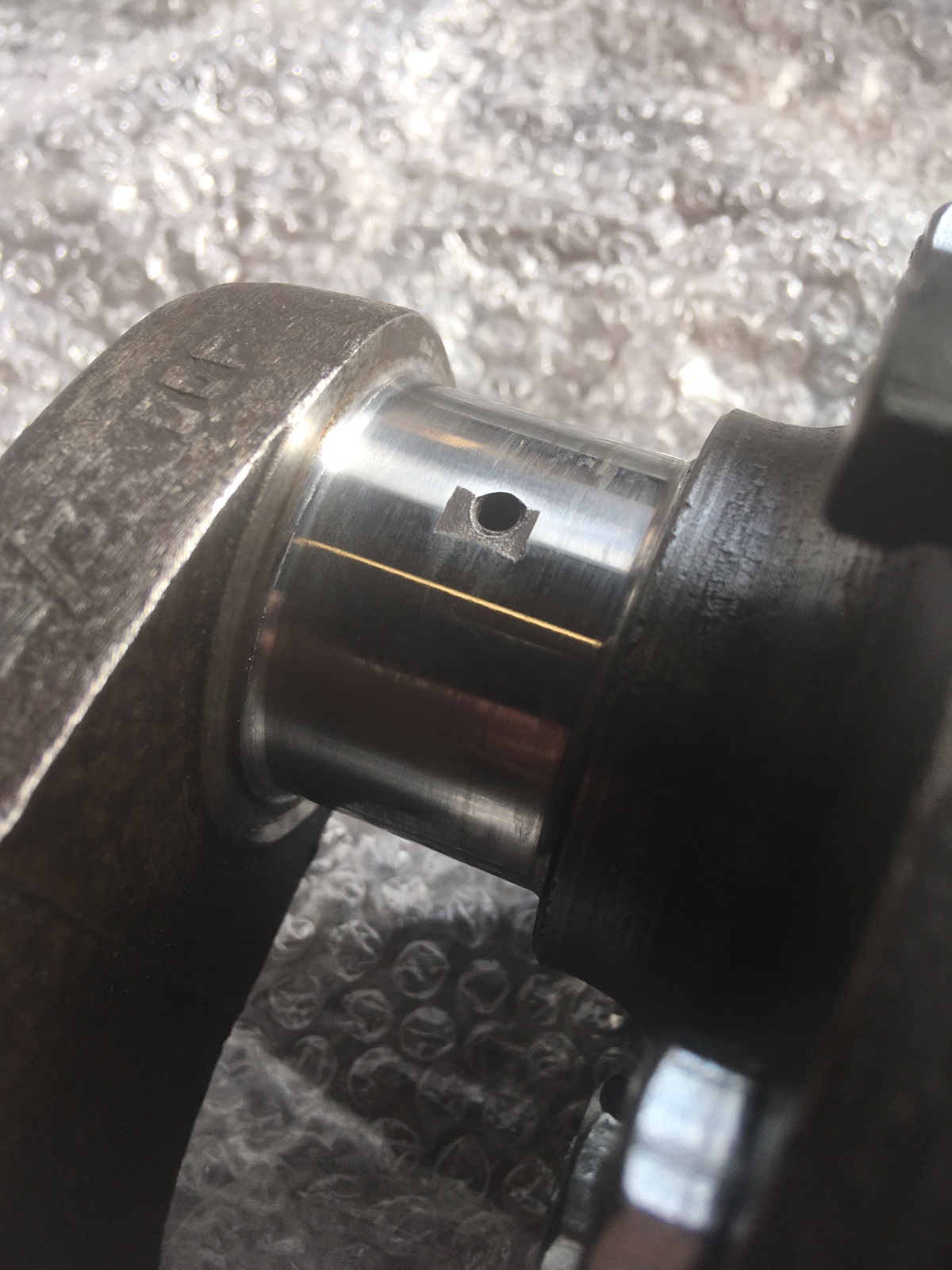
Crank pin oil holes
Crank pin oil holes
Crank pin oil holes
Crank pin oil holes
 
In a worn engine over oiling is just the lack of resistance to the oil flow because the clearances are too big, oil essentially goes straight to sump and the return side of the pump can't cope. Best diagnosed with the engine still in the worn state so you can try tricks such as turning off the head rocker supply for a test ride etc, fitting new crank end garter seal etc, refurbing the pump. Too late for that now so do you stay with 6 gear or go back, well the factory never did. Did you have the full 6 start setup in place with the turned around rockers etc or a 1/2 way house.
 
Funny how folks think differently,

for me over oiling would be too much oil being delivered to the head with inability for the oil to drain back to sump quick enough.

A shagged engine would for me benefit from over oiling - ie more flow to try and keep up with and hopefully overtake the oil flowing out of worn shells etc and with luck still have some oil pressure doing some good.

Re establishing the oil outlets fron the crank pins ? Don't see why a tickle with a stone to ensure the edges are smooth wouldn't be good, the main thing I'd say is that the width of the " recesses " are still there to help spread the oil fully over both sides of the shell bearing.
 
When the pumps condition is unchanged then the greater the flow the lower the pressure is. You can only get both if you increase the size of the pump or take a worn pump and refurb.
 
What I failed to say was that I’m changing a significant number of the engines components due to the old engine having too many issues and being the wrong one for the frame and exhaust. The parts from the old engine I am keeping are-

Barrels (resleeved and decked)
Camshaft
Pushrods
Oil pump
Magneto

The original head is the SS downdraught type which I’m slowly bushing the rocker spindles on. I have the earlier head (aluminium with larger inlet valve) and intend to fit that initially (need to find some pipes). It has good rockers and the scrolled spindles.
The original engine had plain spindles and a homemade adjuster for the high pressure feed to the head taken from the timing cover. I found this was pretty much fully closed in the previous owners attempt to stop the oil leaks, smoking etc (dare I say over oiling).
As it’s a 500 it has 1.5” big ends. I’ve read that for the smaller bikes with the 1.5” big ends and no oil jets from the rods that a 6 start pump is over kill and needs the supply to the head restricting if it’s a high pressure feed.
I don’t fancy spending hours (or miles) adjusting, checking and fretting about whether the head is getting the right amount of oil. I’d rather leave that up to the original design of the engine and the fact that 500cc and 1.5” journals is what it was designed for. I intend to go to a 3 start pump gear and take the feed to the cylinder head from the tank return.

I’m no expert (as you can tell) and just want to be able to ride the bike for a bit.

Anymore input on the crank pins?
 
Those relieved squares are not on the later cranks, just a ground circular chamfer that on my -30 750 is close to disappearing. As there is no burr and you want max journal surface area I am leaving as is with 4 plain shells so the oil hole in the rod is blanked. You only get a single spurt from the rod oil hole when the crank journal hole lines up but the hole in the top shell is exactly where you want the shell to be complete as the combustion pressure forces the rod downwards.
 
As kommando said, all you need is a mild chamfer on the hole, mostly just to clean up the burr left by a regrind.. This is a picture of a typical oil hole, in this case on a Commando race crank that I ran for years on my 750 race bike, and later in a 920 engine in my friends race bike. You can also find all sorts of opinions by Googling "crankshaft oil hole chamfers.":rolleyes:

Crank pin oil holes


And another one that I ran for years in a short stroke 750 race engine with no problems.

Crank pin oil holes


If you want to get fancy, you could do it with a tool like this, but most folks just hit it with stone in a die grinder.


Ken
 
I’ve just had an 88 crank reground to -10. The square recesses around the crank pin oil holes are compromised by this.
Hi Peter,
A couple questions: Do you intend to clean out your crankshaft after grinding and deburring?

Those joining bolts fitted to your crankshaft appear to be non-standard. If they are not fitting bolt, the grinding operation performed may have been vasted.
I think you should try to get NOS bolts and nuts (06.7535, 06.7553, 06.7533) or AN replacements.

- Knut
 
Hi Peter,
A couple questions: Do you intend to clean out your crankshaft after grinding and deburring?

Those joining bolts fitted to your crankshaft appear to be non-standard. If they are not fitting bolt, the grinding operation performed may have been vasted.
I think you should try to get NOS bolts and nuts (06.7535, 06.7553, 06.7533) or AN replacements.

- Knut
Yes, it’s been cleaned very thoroughly. Well spotted - some of the bolts are non standard and in the photos they are holding the crank cheeks together with the flywheel removed. These bolts are a better fit in the holes than the original set. I think they are 5/16” BSW from memory. I shortened and used two of the original bolts and also made a press fit dowel (with a bolt through the centre) to help align the cheeks during grinding. The original bolts were used at the top forming a triangle with the dowel. The crank has now been ground so no going back there.
 
Last edited:
As kommando said, all you need is a mild chamfer on the hole, mostly just to clean up the burr left by a regrind.. This is a picture of a typical oil hole, in this case on a Commando race crank that I ran for years on my 750 race bike, and later in a 920 engine in my friends race bike. You can also find all sorts of opinions by Googling "crankshaft oil hole chamfers.":rolleyes:

View attachment 124742

And another one that I ran for years in a short stroke 750 race engine with no problems.

View attachment 124743

If you want to get fancy, you could do it with a tool like this, but most folks just hit it with stone in a die grinder.


Ken
Thanks. The crank is currently bolted up for static balancing. I’ll de-burr those holes and strip and clean it again for final assembly once it’s balanced. Following the JS manual for this.
 
Back
Top