wet sump solution 2

jseng1

Basic
Joined
Nov 26, 2009
Messages
3,460
Country flag
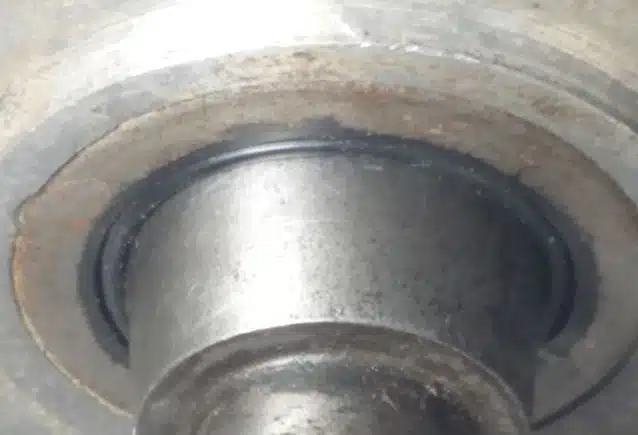
Got another call from a customer with a wet sumped Commando. The oil tank was empty and he was worried about starting it without oil pressure the first few seconds. I told him to add only a cup of oil and check the level later. Its also smart to add a 1/16" thick Oring between the sprocket and case so the main oil seal won't blow out. I'm running the O ring now in my test bike with no problems. Never use an anti sump valve unless its fool proof and connected to your ignition.

wet sump solution 2
 
When ever I have done rebuilds and replace the main seal I put on a smear of JB weld to the outside of the seal has worked for me and I have only blown out a main seal once from too much oil in the crank while starting it, that was over 40 years ago and since doing the JB weld trick haven't had that problem since, but then my Norton has only wet sump 3x in the 49+ years of ownership, if it wet sumps I just drain it before starting it and I have never had any problems with pulling the seal out when its needs changing.

Ashley
 
I've read zillions of posts about anti-wet sumping and researched it a lot. Mine is a 1973 750 Roadster (which has a '72 Combat crankcase from the factory - apparently they had the Combat cases left over and used them on '73 Roadsters).

MY first attempt to stop wet-sumping was to install a 1975 MKII timing cover that I had AMR in Arizona do it's anti wet-sumping fix (machining the cover to take a ball bearing and machining the oil pump to add an o-ring seal). That slowed, but didn't completely stop, the wet-sumping. Even after rechecking the AMR modification to be sure it was correctly installed, I saw the oil level in the tank drop over just a few days sitting in the garage.

What pushed me over the edge to deal with wet-sumping once and for all was discovering 1,000 ccs of motor oil in the primary case (it's supposed to have 200 cc) that had been forced past the left side main crankshaft oil seal by the excess crankcase pressure caused by the oil that had collected in the bottom of the crankcase. I replaced that main seal. Other posts describe this, including the fun part getting the alternator rotor off the crankshaft (puller and heat did the trick for me).

Here's what I've learned: these engines can accumulate excess oil in the sump in two circumstances: 1) when it is not running and oil from the tank seeps down into the sump (classic wet-sumping), and 2) also when it's running and the oil does not return to the tank fast enough (and collects in the sump).

The best way to fix #1 circumstance is to put a manual value in the oil line from the tank to the engine - BUT THAT OIL SHUT OFF VALVE MUST ALSO HAVE AN ELECTRONIC SWITCH that cuts power to the ignition when the manual valve is in the shut position. I used the Feked one https://www.feked.com/anti-wet-sump-oil-pipe-tap-with-switch-magneto-or-coil-ignition-systems.html, but the kingpin one looks good https://www.kingpincomponents.co.uk/product-page/oil-tap-with-cutout-switch. I wired the electric cut off switch on the valve in between the power wire to the coils and the coils. When the manual valve is closed and no oil can get to the motor, the electricity to the coil is also cut off so there's no way to start the motor until you open the manual oil valve and oil flows to the motor.

I added push on connectors in the wire from the electric cut off switch to the coil, so that, in the unlikely event that the electric cut off switch fails while I'm riding and cuts power to the coils, I can cut the electirc switch out of the system and temporarily re-connect the original power wire directly to the coil.

To fix circumstance #2, I replaced the original crankcase breather with a reed valve breather from Colorado Norton Works that fits the Combat crankcase I have https://coloradonortonworks.net/1972-breather-modification.html (I believe Colorado Norton Works also has reed breather valves that fit other crankcases.) They told me that this allows any oil in the sump to return very quickly to the tank, and (unless I misundetstood them) a reed valve breather is the only thing they now use to deal with wet-sumping. NYC Norton has a reed valve breather that fits crankcases that have a large sump screen on the bottom of the motor https://nycnorton.com/product/reed-valve-breather-kit/
 
Last edited:
I've had a high quality anti wet sump one way valve on my 71 for the last 20 years which has been performing without issue. Isn't observing oil returning to the tank before a ride proof enough of proper continuing oil circulation? Naturally a clean oil tank and yearly oil & filter changes also occur.
 
If the bike sits for a while just drain the oil before a start up, sitting a while the wet sump keeps everything nice and lubed, but my Norton take over 4 months to fill the sump so in a way is good when left sitting, so after my accident last December and my Norton is sitting I don't care if the sump fills with oil, takes a very short time to undo the drain plug no big hassle for me, but best solution is keep riding your Norton regularly and they don't wet sump, well mind don't anyway unless it sits for 4+ months.
No need for anti wet sumping devices that could fail or worry about.

Ashley
 
If the bike sits for a while just drain the oil before a start up, sitting a while the wet sump keeps everything nice and lubed, but my Norton take over 4 months to fill the sump so in a way is good when left sitting, so after my accident last December and my Norton is sitting I don't care if the sump fills with oil, takes a very short time to undo the drain plug no big hassle for me, but best solution is keep riding your Norton regularly and they don't wet sump, well mind don't anyway unless it sits for 4+ months.
No need for anti wet sumping devices that could fail or worry about.

Ashley
With all due respect, that doesn't sound like a solution, it sounds like the way you live with the problem.
 
With all due respect, that doesn't sound like a solution, it sounds like the way you live with the problem.
No problem at all in 50 years of ownership my Norton has only wet sump 3 times, so can't really see a problem there, but its ridden all the time for most of my ownership except now after losing my right leg from an accident last year this be the longest it has sat still while I recover, just over 5 1/2 months since the accident, and if its wet sump only takes 5 minute out of my life to drain it and put the oil back into the tank, while draining I do other checks before riding, so where is the problem.

Ashley
 
In the UK a Matchless owner put a spigot on his sump plate, then plumbed a car windscreen washer pump in a pipe that ran from the sump to oil tank. Before he started his bike, after it had sat for a long time, he operated the washer pump to take the excess sump oil to the oil tank, then he started the engine.
 
I've owned Commandos since my early '20's; I never heard of "wet sumping" until it was decreed as a "problem" on the internet. ;) I first heard of it right here on this site back around 2006. Somehow my Commando survived not knowing about it... :)
 
… Isn't observing oil returning to the tank before a ride proof enough of proper continuing oil circulation?
In a nutshell, observing oil returning to the tank simply confirms that oil is returning to the tank. Which means that the scavenge side of the pump is doing its job and that there is at least some oil in the sump for it to suck up.

It tells you nothing about pressure… or if the pressure relief valve is controlling pressure correctly... or if the crank end feed oil seal is sealing correctly… or if the oil pump oil seal is sealing correctly… or etc.
 
Last edited:
In a nutshell, observing oil returning to the tank simply confirms that oil is returning to the tank. Which means that the scavenge side of the pump is doing its job and that there is at least some oil in the sump for it to suck up.

It tells you nothing about pressure… or if the pressure relief valve is controlling pressure correctly... or if the crank end feed oil seal is sealing correctly… or if the oil pump oil seal is sealing correctly… or etc.
Absolutely correct! I've had the conical seal on my MK III split twice. Oil was dutifully returning to the tank but oil pressure was near zero as high pressure oil was simply dumping into the timing case and returning via the scavenge pump.

As for wet sumping: Yes mine will wet sump over the winter but not when just sitting for a month, at least not enough to worry about blowing the crank seal.
 
In a nutshell, observing oil returning to the tank simply confirms that oil is returning to the tank. Which means that the scavenge side of the pump is doing its job and that there is at least some oil in the sump for it to suck up.

It tells you nothing about pressure… or if the pressure relief valve is controlling pressure correctly... or if the crank end feed oil seal is sealing correctly… or if the oil pump oil seal is sealing correctly… or etc.
Fast Eddie - How do you check oil pressure and if the pressure relief valve is controlling pressure properly? Install an oil pressure gauge?

If you have a new MKII oil pump and oil pump to case gasket and oil pump to timing cover seal (MKII case) would it be safe to assume the pump is producing enough pressure and the only thing to check is the pressure relief valve?

What is the crank end feed oil seal? Is that different from the crankshaft main seals that keep oil out of the primary case and timing case?
 
Last edited:
How do you check oil pressure and if the pressure relief valve is controlling pressure properly? Install an oil pressure gauge?
Simplest is a tell tail light that goes off over 10 psi, you use a double banjo to add it in.


Oil pressure gauge needs an oil line, if that splits as per a split in the rocker feed line the pressure at the big ends drop.
 
Simplest is a tell tail light that goes off over 10 psi, you use a double banjo to add it in.


Oil pressure gauge needs an oil line, if that splits as per a split in the rocker feed line the pressure at the big ends drop.
Do I understand you correctly that, if a light goes off over 10 PSI, then it tells you you have over 10 psi - but it won't tell you if the pressure relief valve fails to relieve excess pressure (what ever psi that might be). Is there some maximum psi above which the pressure relief valve operates to keep the oil pressure from being too high?
 
Here's a curve ball for you all... The sump breather pumps the oil back to the tank most efficiently compared to breathers that are mounted higher on the crankcase. This is true because the port is submerged and the air pressure drives the oil out the breather port. Unfortunately, the crankcase pressure is greater because it has the extra resistance of pushing the weight of the oil and the resistance of pushing the oil though a restrictive orifice, so while it may be the sump breather that clears the crankcase the fastest, it's also the sump breather that would give the most initial pressure on the gaskets and seals on initial start up, potentially blowing out the primary side crankshaft seal, being the most likely candidate for being dislodged under pressure.

A breather that is above the oil level doesn't have to push oil. It pushes air. It doesn't pump the oil out as quickly as a sump mounted breather, but that's not a bad thing. The bad thing about a sump filled with oil is the pressure that the sumped oil creates, not the oil splashing around at start up...

I have dual reed breathers. I did the timing chest reed valve modification before the sump style breather ever existed and then added a reed valve on the early model camshaft port. I pay no attention at all to whether my bike is oil sumped or not because my crankcase breathes AIR, not oil, so the breather port/s are not blocked by oil and the pressure on my gaskets and seals should be much less than the sump breather's pressure at start up, when the crankcase is full of oil...
 
Here's a curve ball for you all... The sump breather pumps the oil back to the tank most efficiently compared to breathers that are mounted higher on the crankcase. This is true because the port is submerged and the air pressure drives the oil out the breather port. Unfortunately, the crankcase pressure is greater because it has the extra resistance of pushing the weight of the oil and the resistance of pushing the oil though a restrictive orifice, so while it may be the sump breather that clears the crankcase the fastest, it's also the sump breather that would give the most initial pressure on the gaskets and seals on initial start up, potentially blowing out the primary side crankshaft seal, being the most likely candidate for being dislodged under pressure.

A breather that is above the oil level doesn't have to push oil. It pushes air. It doesn't pump the oil out as quickly as a sump mounted breather, but that's not a bad thing. The bad thing about a sump filled with oil is the pressure that the sumped oil creates, not the oil splashing around at start up...

I have dual reed breathers. I did the timing chest reed valve modification before the sump style breather ever existed and then added a reed valve on the early model camshaft port. I pay no attention at all to whether my bike is oil sumped or not because my crankcase breathes AIR, not oil, so the breather port/s are not blocked by oil and the pressure on my gaskets and seals should be much less than the sump breather's pressure at start up, when the crankcase is full of oil...
So, on yours, the oil is returned to the tank by the oil pump and also by the sump mounted reed breather?
 
Fast Eddie - How do you check oil pressure and if the pressure relief valve is controlling pressure properly? Install an oil pressure gauge?

If you have a new MKII oil pump and oil pump to case gasket and oil pump to timing cover seal (MKII case) would it be safe to assume the pump is producing enough pressure and the only thing to check is the pressure relief valve?

What is the crank end feed oil seal? Is that different from the crankshaft main seals that keep oil out of the primary case and timing case?
You could fit a gauge to test the oil pressure.

Or you could strip and inspect the seals etc.

Or you could do what most of us do, if everything looks, feels and sounds ok… ride it.
 
So, on yours, the oil is returned to the tank by the oil pump and also by the sump mounted reed breather?
No, my oil returns only by the oil pump return line, but I have 2 reed breathers that are above the oil level of a potentially fully sumped crankcase and they only push air that at most has some oil mist mixed in with it from the turbulence of the crank spinning and throwing oil everywhere...

The sump mounted breather is low, and can be completely submerged. They definately do the best job of breathing once the sump oil is pumped out, but they need to clear the oil out before that's the case. Probably the only potential down side is a greater chance that you could blow your primary side crankcase seal out starting the engine with an oil filled crankcase. Not that that happens often or anyone who's seal is compromised has any clue what the actual cause would be, being that it's burried behind the rotor and sprocket...
 
No, my oil returns only by the oil pump return line, but I have 2 reed breathers that are above the oil level of a potentially fully sumped crankcase and they only push air that at most has some oil mist mixed in with it from the turbulence of the crank spinning and throwing oil everywhere...

The sump mounted breather is low, and can be completely submerged. They definately do the best job of breathing once the sump oil is pumped out, but they need to clear the oil out before that's the case. Probably the only potential down side is a greater chance that you could blow your primary side crankcase seal out starting the engine with an oil filled crankcase. Not that that happens often or anyone who's seal is compromised has any clue what the actual cause would be, being that it's burried behind the rotor and sprocket...
Thanks. I may have misunderstood Matt at Colorado Norton Works, but I thought he told me that the reed valve breather returns oil to the tank in addition to the oil pump return line - that it adds a second way oil can return to the tank. I understood him to say that adding a reed valve breather is now the only thing they do to manage wet-sumping. Put another way, that a reed valve breather will return oil to the tank so quickly that it doesn't matter how much oil may have collected in the sump when the bike is sitting, and when it's running, if the oil pump isn't keeping up returning oil to the tank, the reed valve breather picks up the slack. Again, I may have misunderstood him.
 
Back
Top