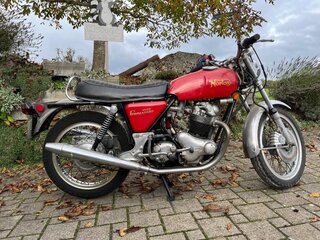
1972 Norton Commando 750 Combat – Gino Sassaroli Florence tuning – looking for history

simon b

VIP MEMBER
Joined
May 6, 2026
Messages
5
Hello everyone,

I recently acquired a 1972 Norton Commando 750 Combat Roadster with a fascinating and mysterious history, and I am hoping someone in this community might help me uncover more about it.

The bike:
• First registered 29 May 1972 in Schaffhausen, Switzerland
• Currently 45,000 km (35,000 km documented on official Swiss import form from 1985)
• Re-imported to Switzerland in 1985 via Motorcycle Gilg, Zürich
• Conserved in original unrestored condition since approximately 1991

The Sassaroli connection:
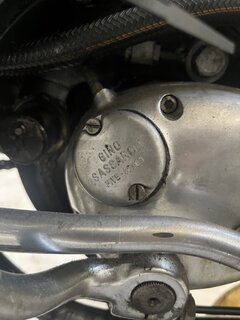
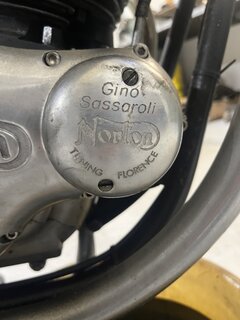
Two engine covers are engraved with:
• „Gino Sassaroli – Five Speed” on the gearbox cover
• „Gino Sassaroli – Norton Tuning Florence” on the primary cover

Tuning modifications present on the bike:
• 5-speed gearbox conversion, signed by Sassaroli
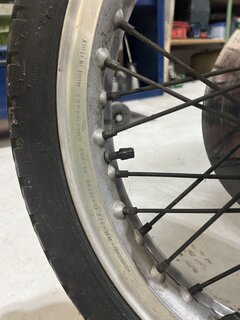
• Borrani Record RM 01 4403 aluminium rims, Made in Italy
• Amal 932 carburettors, 32mm
• Port polishing on cylinder inlet to 32mm
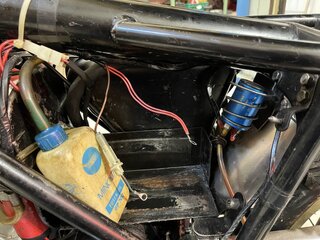
• Minolta bottle used as catch tank
• Open short air filters
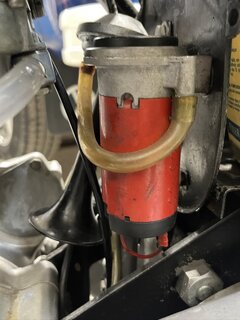
• Italian Stebel air horn with separate compressor

What I know about Sassaroli:
From Italian forums and Instagram I have found that Gino Sassaroli was a legendary Norton tuner and street racer from Florence. In March 2025, Boxer Art Firenze (Instagram: boxer_art_firenze) posted a photo with Sassaroli himself, confirming he built a Norton PR Special in 1974 together with Silvio Fabbretti in collaboration with the Norton racing department. Italian enthusiasts describe him as „mitico Sassaroli” and „Meccanico D.O.C.G” – the highest possible compliment in Italian craftsmanship culture.

My questions:
• Does anyone know Gino Sassaroli or his work in Florence?
• Has anyone seen this bike before, or know of its racing history?
• Who might have been the original Swiss owner who brought this bike to Florence for tuning?
• Did this bike ever race – in Italy or Switzerland?
• Does anyone know Motorcycle Gilg from Zürich and their possible connection to Italian Norton tuners?

I should mention that I am completely new to the Norton world and have only been discovering this fascinating scene for a few months. Any advice, corrections or additional information from more experienced members is very welcome.

Thank you very much.
 

Attachments

  • 1972 Norton Commando 750 Combat – Gino Sassaroli Florence tuning – looking for history
    Norton_750_Sassaroli_Engraving2.jpeg
    187.6 KB · Views: 133
  • 1972 Norton Commando 750 Combat – Gino Sassaroli Florence tuning – looking for history
    Norton_750_Sassaroli_Engraving1.jpeg
    208.7 KB · Views: 117
  • 1972 Norton Commando 750 Combat – Gino Sassaroli Florence tuning – looking for history
    Minolta.jpeg
    381.1 KB · Views: 93
  • 1972 Norton Commando 750 Combat – Gino Sassaroli Florence tuning – looking for history
    Horn.jpeg
    256.7 KB · Views: 97
  • 1972 Norton Commando 750 Combat – Gino Sassaroli Florence tuning – looking for history
    Borrani.jpeg
    227.8 KB · Views: 111
  • 1972 Norton Commando 750 Combat – Gino Sassaroli Florence tuning – looking for history
    Norton.jpeg
    559.5 KB · Views: 126
Judging by the foot peg rubbers and lack of damage due to a low side crash. I doubt the bike was raced. Some of the ways things were done way back when, did not do much good for performance. But if the top end was taken apart and inspected ,it would show what was really done for the good or bad. It is really nice to see the builders name on his work and the 5 speed engraving on the transmission cover. I always did similar things so in the future people would see what was done internally or that I did a head , top end or transmission repair. Also look for drain plugs and nuts and bolts for safety wire, A race bike would have many places where it was used.
 
Last edited:
Simon,

It is great you are about the history and are researching it. That adds so much to the bike and really gives it character.
Keep the Minolta bottle!

Nice to hear it had an air horn added. I put a Fiam air horn on my 1972 Fiat 124 Sport coupe. What a sound! It did require a bit of oil to be squirted into the
air pump input now and then!

Is it running? Or are you planning to get it running? Or tear it down to inspect condition?
If you answer this one, lots of great advice will arrive!
I have just rebuilt my engine with help from the forum and it is completely installed and the last step before starting will
be to pressure force oil into the oil passages. It is my first air-cooled engine rebuild and provided it does not seize up on me
due to error on my part, I will have learned and successfully applied the knowledge.

This forum is fabulous. It's the best technical resource in the world, a really caring bunch, much help given (with patience with newcomers like me) and great sense of humour.

Dennis
Vancouver
 
Judging by the foot peg rubbers and lack of damage due to a low side crash. I doubt the bike was raced. Some of the ways things were done way back when, did not do much good for performance. But if the top end was taken apart and inspected ,it would show what was really done for the good or bad. It is really nice to see the builders name on his work and the 5 speed engraving on the transmission cover. I always did similar things so in the future people would see what was done internally or that I did a head , top end or transmission repair. Also look for drain plugs and nuts and bolts for safety wire, A race bike would have many places where it was used.
Thank you very much for your detailed assessment – that is really helpful!

I have now checked all visible bolts and nuts on the engine and there are no safety wire holes.

However, I keep asking myself – why would someone in the early 1970s go through all the effort and expense of having a specialist like Sassaroli install a 5-speed gearbox, port polish the cylinders, fit Borrani racing rims, add a catch tank, if they never intended to race or at least compete in some way? All of these modifications together suggest a very specific purpose.

I would love to hear your thoughts on this.

Best regards,
Simon
 
Simon,

It is great you are about the history and are researching it. That adds so much to the bike and really gives it character.
Keep the Minolta bottle!

Nice to hear it had an air horn added. I put a Fiam air horn on my 1972 Fiat 124 Sport coupe. What a sound! It did require a bit of oil to be squirted into the
air pump input now and then!

Is it running? Or are you planning to get it running? Or tear it down to inspect condition?
If you answer this one, lots of great advice will arrive!
I have just rebuilt my engine with help from the forum and it is completely installed and the last step before starting will
be to pressure force oil into the oil passages. It is my first air-cooled engine rebuild and provided it does not seize up on me
due to error on my part, I will have learned and successfully applied the knowledge.

This forum is fabulous. It's the best technical resource in the world, a really caring bunch, much help given (with patience with newcomers like me) and great sense of humour.

Dennis
Vancouver
Thank you Dennis, what a warm welcome!

The Minolta bottle will definitely stay – it is one of my favourite details on the bike!

To answer your question: the engine is actually running. I have already cleaned the carburettors, installed new floats and fuel lines. However I noticed that one cylinder runs cold while the other runs hot, and there are some misfires and kickback. I also have oil leaks and oil in the ignition timing area.

My plan is to install a TriSpark electronic ignition, replace the cam seal and timing cover gaskets, and replace the timing chain and tensioner. I want to keep the engine in the frame for now and only open it further if necessary.

I am looking forward to any advice the forum can offer!

Best regards,
Simon
 
why would someone in the early 1970s go through all the effort and expense of having a specialist like Sassaroli install a 5-speed gearbox, port polish the cylinders, fit Borrani racing rims, add a catch tank, if they never intended to race or at least compete in some way?
Because it was common to have Cafe Racers at the time, bikes that looked and drove like a racer but were kept on the road and never raced. Dunstall did the same in the UK, they raced bikes but also made lots of parts for road going bikes owners could use on their Cafe Racers.

 
... the engine is actually running. I have already cleaned the carburettors, installed new floats and fuel lines. However I noticed that one cylinder runs cold while the other runs hot, and there are some misfires and kickback. I also have oil leaks and oil in the ignition timing area...
Sounds like the carbs are not COMPLETELY clean. They might require an ultransonic cleaning and/or heated cleaning solution soak to thoroughly clean the internal transfer passages. There is a procedure whereby you drill thru the casting to get to the internal passageway, then plug when done (last resort).

I shouldn't assume, so I have to ask whether you check the valve lash adjustments? Those are important to proper fuel/air flow.

Oil in the timing area means it's time to replace the cam nose seal.

Thread re: drilling to clean-
 
Thank you very much for your detailed assessment – that is really helpful!

I have now checked all visible bolts and nuts on the engine and there are no safety wire holes.

However, I keep asking myself – why would someone in the early 1970s go through all the effort and expense of having a specialist like Sassaroli install a 5-speed gearbox, port polish the cylinders, fit Borrani racing rims, add a catch tank, if they never intended to race or at least compete in some way? All of these modifications together suggest a very specific purpose.

I would love to hear your thoughts on this.

Best regards,
Simon
Why?

Because they do !

They did then and they still do now !!
 
Great you have it running.

Some suggestions...

1) Either take out the oil tank and clean it or, at least inspect it with a bore scope when it is drained.
You may have sludge in there depending on its past life. And the sludge may not just be on the bottom.
Sludge caked on can be deceptive so if you don't see bare metal, scratch tank inside with something and you may find it is caked on sludge
that looks metal grey.
There is a mesh filter as part of the large banjo nut on the rear of tank that you can take out
and also check

2) There are two oil sump drain plugs. The small one gets out the oil. The large one is a mesh filter for the oil intake
to the scavenge pump that sends oil back to the tank via the filter. It would be an idea to inspect the mesh

3) replace the oil pump output seal when you have the timing cover off. It will likely be rock hard after so long.

4) replace the crankshaft oil seal that is in the timing cover when you have the cover off. Yours will likely be rock hard

5) replace all oil lines and fuel lines. Yours will likely be brittle

I installed a TriSpark when I got my bike. It is a great piece of kit. Should you need advice on it, do reach out.

Dennis
 
2) There are two oil sump drain plugs. The small one gets out the oil. The large one is a mesh filter for the oil intake
to the scavenge pump that sends oil back to the tank via the filter. It would be an idea to inspect the mesh

There's no mesh sump filter on a '1972' model.
 
...
However, I keep asking myself – why would someone in the early 1970s go through all the effort and expense of having a specialist like Sassaroli install a 5-speed gearbox, port polish the cylinders, fit Borrani racing rims, add a catch tank, if they never intended to race or at least compete in some way? All of these modifications together suggest a very specific purpose.
...
In the 1970s I replaced the original 30mm carbs with 32mm, opened and polished the ports, fitted alloy rims, and a catch tank, and a Dunstall 2-1-2 exhaust, just so the bike rode better when crossing the alps with my girlfriend and 75kg of camping gear. I didn't put in a 5-speed gearbox but would have done if I could have afforded it.

And I have no interest whatsoever in racing (or any sport really)

I still have the bike, and I'm building a new, more powerful engine for it, just because I can.
 
However, I keep asking myself – why would someone in the early 1970s go through all the effort and expense of having a specialist like Sassaroli install a 5-speed gearbox, port polish the cylinders, fit Borrani racing rims, add a catch tank, if they never intended to race or at least compete in some way? All of these modifications together suggest a very specific purpose.
Maybe to bring it kicking and screaming up to the local Ducati standards?
 
Thank you all – this really puts things in perspective! I was perhaps too focused on the racing angle.

The point about Café Racers makes perfect sense, and the personal story about crossing the Alps with camping gear and a girlfriend is absolutely brilliant.

I will stop assuming it was raced and simply enjoy the fact that someone loved this bike enough to invest so much care and craftsmanship into it.
 
Sounds like the carbs are not COMPLETELY clean. They might require an ultransonic cleaning and/or heated cleaning solution soak to thoroughly clean the internal transfer passages. There is a procedure whereby you drill thru the casting to get to the internal passageway, then plug when done (last resort).

I shouldn't assume, so I have to ask whether you check the valve lash adjustments? Those are important to proper fuel/air flow.

Oil in the timing area means it's time to replace the cam nose seal.

Thread re: drilling to clean-
Thank you for the detailed advice!

I have already ordered an ultrasonic cleaner and the appropriate cleaning solution to clean the carburettors thoroughly again. Hopefully that will solve the problem with the cold cylinder.

The valve lash has already been checked and adjusted correctly.

I have also already purchased a new cam nose seal which is ready to install together with the TriSpark electronic ignition that I have just ordered.
 
Thank you for the detailed advice!

I have already ordered an ultrasonic cleaner and the appropriate cleaning solution to clean the carburettors thoroughly again. Hopefully that will solve the problem with the cold cylinder.

The valve lash has already been checked and adjusted correctly.

I have also already purchased a new cam nose seal which is ready to install together with the TriSpark electronic ignition that I have just ordered.
There is a special tool ( that came in an OEM tool kit) to install the cam seal. So get one if you don't have it I would also get the oil pump "conical" seal and a crank end oil seal. I always use OEM Andover Norton parts. It pays to buy a complete gasket kit. They used to be fairly inexpensive and then you get everything you will need and get quality items. You have a choice of a copper or fiber flame ring head gasket when you order one.

I put a catch can on my Combat (Just because I can) Actually because I had to delete the ham can OEM air cleaner when I put an E start on the bike.

I have a manual shut off oil valve and an oil pressure gauge kit I made. It is not a good idea to let a Combat wet sump. And because I can use it, I have never seen a trace of oil in the catch can.
 
Thank you very much for your detailed assessment – that is really helpful!

I have now checked all visible bolts and nuts on the engine and there are no safety wire holes.

However, I keep asking myself – why would someone in the early 1970s go through all the effort and expense of having a specialist like Sassaroli install a 5-speed gearbox, port polish the cylinders, fit Borrani racing rims, add a catch tank, if they never intended to race or at least compete in some way? All of these modifications together suggest a very specific purpose.

I would love to hear your thoughts on this.

Best regards,
Simon
Doing major upgrades to the motor make for a more fun bike to ride, more torque brings on the power quicker, a souped up road bike is better than stock and if done right can be very reliable for street/road riding and a lot better response up in the tight twisties, just doing minor work like cam, ports work on the head, better pistons, open exhaust, ignition system and carbs jetted for the work done and a 5 speed box gives you that extra gear where it's needed and lighter alloy wheels make for better handling.
Pull your carbies down and soak them in a tub of vinegar will loosen any crap in the carbs and do the poke in the pilot jet, can be a bit tricky to get all the crap out as with one cylinder running colder than the other might be a slight blocked pilot jet passage.
Could be a fun bike for the street/road.

Ashley
 
Back
Top