baz
VIP MEMBER
- Joined
- May 26, 2010
- Messages
- 8,685

Yes he says it's cracked between bearings in reply 4Is the case cracked between the two bearings?

Yes he says it's cracked between bearings in reply 4Is the case cracked between the two bearings?
Yes he says it's cracked between bearings in reply 4


"On the bright side, the gearbox isn’t suffering from that crack between the bearings"The way I read post #4 he says they are NOT cracked. "isn't suffering....".
At least as far as he knew at that time.
Am I reading this wrong?
The undampened torque pulses may also be the root cause.Almost every Commando gearbox with some mileage will show that kind of wear.
Caused/aggravated by a heavy clutch. If you want to be nice to your gearbox, make the clutch as light as possible. Switch to a belt drive and fibre plates.


That means he should also check the state of his rear hub/cush rubbers!The undampened torque pulses may also be the root cause.
- Knut

That's called super finishing!"In the case of the original question, that gear is good - that's a metal flaw that was there when the bearing was cut and the mating bearing is perfect."
Any (better) images?View attachment 122789View attachment 122790

Looks a lot like these:@stuck amals stopped by to see me yesterday.
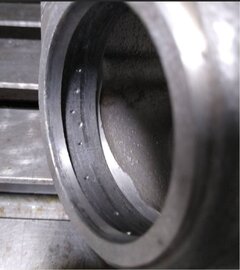
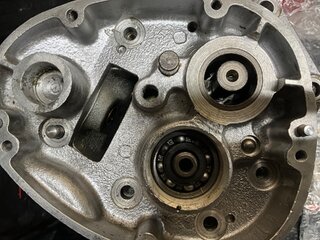
His case has no crack between the bearings. However, a gorilla worked on it at some time in the past. The dreaded ball bearing was in it and in shocking good shape (of course, not going back in). The hole for the layshaft bearing showed gorilla damage and will require some cleanup and bearing fit compound.
The sleeve gear bearing hole is not as tight as it should be but at least not gorilla damaged. The sleeve gear had two bushings, but both were all the way inward and worn so the sleeve gear could rock on the shaft quite a bit - probably what made the sleeve gear bearing looser than it should be.
All gears and bushings inspected. Replaced the sleeve gear with a good used one and replaced twobearingsgears with a good used. In the case of the original question, that gear is good - that's a metal flaw that was there when thebearinggear wascasecut and the matingbearinggear is perfect. Edited out the "auto complete" mess I missed while writing.
Checked the main and layshafts for straightness - both are some of the best I've seen - no measurable bend.
it's called spalling.That's called super finishing!

I don't follow what you are saying - there is no wear/damage/mark on the mating gear and only one tooth has the "damage" in the gear shown. The "damage" at the bottom between the teeth next to the tooth in question it is never touched by a gear tooth, so it is inconsequential.Looks like it all takes place at the root of the tooth where clearances are less and pressures are greatest. In tje OPs picture the wear is at the top of the tooth. In either case, a manufacturing defect in one cant really explain identical wear in the tooth in meshes with.


So the load is being transmitted through a small area on the teeth of the gear ? I cannot remember if there are spacers in the Norton box. A gearbox explosion and lock-up usually means a crash. So do not get it wrong.I don't follow what you are saying - there is no wear/damage/mark on the mating gear and only one tooth has the "damage" in the gear shown. The "damage" at the bottom between the teeth next to the tooth in question it is never touched by a gear tooth, so it is inconsequential.
I’m sorry for not responding earlier. I would like to thank Marsge for spending a couples hours going over the gearbox for me. I will be assembling the g/b after Christmas. It will quite a while before this project is ready to ride though.@stuck amals stopped by to see me yesterday.
His case has no crack between the bearings. However, a gorilla worked on it at some time in the past. The dreaded ball bearing was in it and in shocking good shape (of course, not going back in). The hole for the layshaft bearing showed gorilla damage and will require some cleanup and bearing fit compound.
The sleeve gear bearing hole is not as tight as it should be but at least not gorilla damaged. The sleeve gear had two bushings, but both were all the way inward and worn so the sleeve gear could rock on the shaft quite a bit - probably what made the sleeve gear bearing looser than it should be.
All gears and bushings inspected. Replaced the sleeve gear with a good used one and replaced twobearingsgears with a good used. In the case of the original question, that gear is good - that's a metal flaw that was there when thebearinggear wascasecut and the matingbearinggear is perfect. Edited out the "auto complete" mess I missed while writing.
Checked the main and layshafts for straightness - both are some of the best I've seen - no measurable bend.

From what I read 250 to 300 degrees is the maximum for aluminum.