

Tornado
VIP MEMBER
- Joined
- Dec 5, 2017
- Messages
- 5,365

Interesting on my FB feed today....

1. Setup
Vehicle (say motorcycle) is moving forward at 100 kph relative to the ground.
The wheel is rolling without slipping.
That means the point of the wheel in contact with the ground has zero velocity relative to the ground.
---
2. Wheel motion
Think of a wheel as doing two motions at once:
1. Translation: the whole wheel (center) moves forward at 100 kph.
2. Rotation: the wheel spins such that the bottom point cancels out the forward motion and becomes 0 kph relative to the ground.
---
3. Speeds at different points
Center of wheel: moves at 100 kph forward.
Bottom point: rotation gives -100 kph (backward relative to center) + 100 kph (forward from translation) = 0 kph relative to ground.
Top point: rotation gives +100 kph (forward relative to center) + 100 kph (forward from translation) = 200 kph relative to ground.
So the velocity around the rim relative to the ground looks like this:
Bottom = 0 kph
Center = 100 kph
Top = 200 kph
---
4. Why it works
The math comes from rotational kinematics:
v_\text{point} = v_\text{center} + \omega \times r
Where:
(because no slip: tangential speed = center speed)
At the bottom, vectors oppose each other → cancel → 0.
At the top, vectors align → add → 200.
---
 So the picture is exactly right: when the bike is doing 100 kph, the top of the wheel is doing 200 kph relative to the ground, and the bottom is doing 0.
1. Setup
Vehicle (say motorcycle) is moving forward at 100 kph relative to the ground.
The wheel is rolling without slipping.
That means the point of the wheel in contact with the ground has zero velocity relative to the ground.
---
2. Wheel motion
Think of a wheel as doing two motions at once:
1. Translation: the whole wheel (center) moves forward at 100 kph.
2. Rotation: the wheel spins such that the bottom point cancels out the forward motion and becomes 0 kph relative to the ground.
---
3. Speeds at different points
Center of wheel: moves at 100 kph forward.
Bottom point: rotation gives -100 kph (backward relative to center) + 100 kph (forward from translation) = 0 kph relative to ground.
Top point: rotation gives +100 kph (forward relative to center) + 100 kph (forward from translation) = 200 kph relative to ground.
So the velocity around the rim relative to the ground looks like this:
Bottom = 0 kph
Center = 100 kph
Top = 200 kph
---
4. Why it works
The math comes from rotational kinematics:
v_\text{point} = v_\text{center} + \omega \times r
Where:
(because no slip: tangential speed = center speed)
At the bottom, vectors oppose each other → cancel → 0.
At the top, vectors align → add → 200.
---


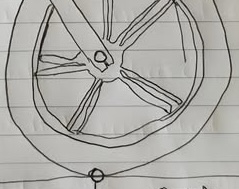


 My point is what's outside whatever definition you use?


