Making an oil pump for a Jawa DOHC engine

Charkmandler

VIP MEMBER
Joined
Nov 6, 2023
Messages
68
Country flag
As mentioned in the thread about mounting the Speedway engine in a featherbed frame I will need to change the oil pump.

Current oil pump setup
The std oil pump is a pilgrim pump that delivers minimal oil that is sufficient for the short races a speedway engine does. Sandwiched in-between the pilgrim pump and the timing case is a geared return pump.

Issue
Delivering something around 1/2 a pint an hour there is not enough oil to remove heat from the big end etc in longer races. On a mild day, warming the bike for 20 mins, a 1 mile hill climb left the oil colder than it was when pre heating the oil before starting. I have been unsuccessful at finding out what some of the Australian racers with Jawa engines are using for oil pumps.

I’ve looked at fitting a BSA round pump B31 / Goldstar on a mount and this would work well although look terrible. The issue is that these pumps are rare and new ones are out of my budget. So my plan is to use some new Norton oil pump gears and make up a pump body. Making a cutter to cut the blind holes that does not chatter could be challenging. Easy machining in a lathe with a jig but it would be better made on a mill for practical reasons.

My question is, does anyone know the flow rates of the 3/16” feed gears for the single compared with the 1/4” twin feed gears. I would like to take clean oil from the feed and split it between the big end and the DOHC rather than taking the cam feed from the return. I do not feel the single gears will have the capacity for this.

Has anyone suggestions for cutting the semi blind holes for the gears (3/8” holes in the middle) accurately achieving a tight clearance round the diameter of the gear and not getting chatter marks on the bottom of the hole I.e. side of the gear. This would be easy with a CNC mill but I only have a manual mill.

Any other suggestions?
Thanks, Mark
 
The pre unit BSA pump is prone to seizure so I would be looking for an alternative pump so the Norton pump is the right route. The flow rate is determined by the gearing to the crank, hence why Norton went from a 3 start to a 6 start gear to double flow rates. Assuming a roller big end bearing this will create no back pressure to operate a pressure relief valve. On the BSA unit singles where they had shell bearing and roller bearing big ends according to the model they fitted pumps with 3/16 width feed gears to the roller big ends and 1\4 width to shell bearing big ends. You can calculate the flow rate from first principles.

Volume between gear teeth.

Number of teeth

Gearing ratio to crank

RPM

I will look at my mill tooling and a pump later.
 
The pre unit BSA pump is prone to seizure so I would be looking for an alternative pump so the Norton pump is the right route. The flow rate is determined by the gearing to the crank, hence why Norton went from a 3 start to a 6 start gear to double flow rates. Assuming a roller big end bearing this will create no back pressure to operate a pressure relief valve. On the BSA unit singles where they had shell bearing and roller bearing big ends according to the model they fitted pumps with 3/16 width feed gears to the roller big ends and 1\4 width to shell bearing big ends. You can calculate the flow rate from first principles.

Volume between gear teeth.

Number of teeth

Gearing ratio to crank

RPM

I will look at my mill tooling and a pump later.
So does the 3 start turn the pump three times crank speed or what is the ratio?
 
Last edited:
If you have access to machining facilities, I would consider a Gerotor oil pump only. You will find them in BMW and most japanese bike engines.

- Knut
 
So does the 3 start turn the pump three times crank speed or what is the ratio?
The gear ratio of a 3-start Norton worm gear is 14:3, meaning the crankshaft (or worm) need to turn 14 revolutions to make the worm gear wheel at the pump turn 3 revolutions. Similarly, the 6-start worm gear set ratio is 14:6 . Please remember the speed ratio is the inverse of the tooth ratio, so in the latter case, 14 crankshaft revolutions produce 6 oil pump shaft revolutions.

A Gerotor oil pump drive taken off the camshaft gear wheel will have a total gear ratio of 2:1, and the capacity for even a small disc will be many times that of a Norton gear pump. This fact was utilized by Norton on the JPS F750 race bike in 1974.

- Knut
 
Last edited:
Good question, never considered it, bit busy as just back from hols so if you have the parts you may be able to test and answer that before I can.
 
The gear ratio of a 3-start Norton worm gear is 14:3, meaning the crankshaft (or worm) need to turn 14 revolutions to make the worm gear wheel at the pump turn 3 revolutions. Similarly, the 6-start worm gear set ratio is 14:6 . Please remember the speed ratio is the inverse of the tooth ratio, so in the latter case, 14 crankshaft revolutions produce 6 oil pump shaft revolutions.

- Knut
That’s positive then as drive from the Jawa engine is from the magneto so two crank rotations to one oil pump rotation — just over double that of the3 start. This means there will be excess feed that I can bleed off for the overhead cam using clean oil rather than oil from the return. I’ll be fitting a filter on the return.
 
That’s positive then as drive from the Jawa engine is from the magneto so two crank rotations to one oil pump rotation — just over double that of the3 start. This means there will be excess feed that I can bleed off for the overhead cam using clean oil rather than oil from the return. I’ll be fitting a filter on the return.
Number of rotations is one parameter - oil pump technology is another, and third - size of the pump.

For a poorly finned engine like the Jawa, which does short runs on Methanol by design, your prime heat sink will be oil. You need a high capacity oil cooling system. The engine needs to be modified accordingly.

- Knut
 
Last edited:
This means there will be excess feed that I can bleed off for the overhead cam using clean oil rather than oil from the return.
That's exactly how I have reconfigured my roller bearing B44 but with the addition of a 40 thou dia hole restriction in the rocker feed so the bias of flow is still for the big end for cooling.
 
Do you have a std type pressure release valve?
No, I took it out as its never activated as a roller big end generates no back pressure. So with no back pressure, unlike a shell bearing, you only see maybe 5 or 6 psi on a cold engine before it drops even lower when warm. I then used the chamber to fit a feed to the rockerbox, after blocking the route for any excess oil created by the valve opening to be dumped to the sump. As the valve on a roller bearing big end never operates,as it was set to 50 psi, there was never any oil dumped to the sump anyway.
 
Last edited:
Has anyone suggestions for cutting the semi blind holes for the gears (3/8” holes in the middle) accurately achieving a tight clearance round the diameter of the gear and not getting chatter marks on the bottom of the hole I.e. side of the gear.
I cut recesses for an X ring to stop the oil moving from the feed side to the return side that contributes to wet sumping when the bike is parked up.

Making an oil pump for a Jawa DOHC engine


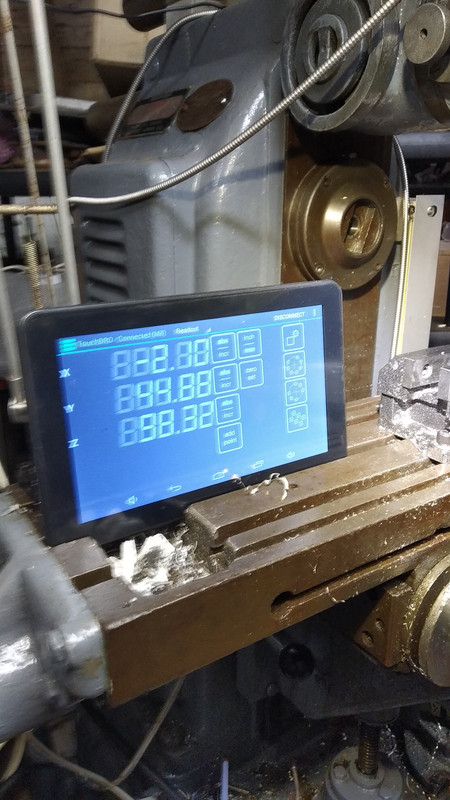
My mill from 1942 has DRO fitted which allows accurate adjustment of the table position. Together with effective locks on X and Y axis of the table means once the correct position has been found the cut is accurate as backlash is eliminated by the locks and the DRO shows any movement of the table as the locks are applied. If the table moves as the locks are applied you can slightly unlock, move the table again and then fully apply the lock. The glass scales feeding the DRO are good for 5 micron accuracy.

Making an oil pump for a Jawa DOHC engine


Using a new or freshly sharpened cutter also helps.
 
Last edited:
I like that x-ring!

For the shaft bores, reamers will reliably give a more accurate hole with a better finish.

As for the counter bores for the gears themselves, are they a nominal size? Other than diameter, I'd also be concerned with chip evacuation. If you don't have a reasonably high pressure coolant system on your mill, perhaps compressed air blasting down the hole for your final cut(s)?

For end mills, more flutes = stiffer, with a better finish and smaller chips, but chip evacuation can become a problem between flutes (especially in a slot or blind hole), and theoretically less accurate. Probably accurate enough though.

A boring head will almost always chatter when you hit the bottom, no matter how short the bar is. Maybe hogging out material with an end mill, and only finish passes with the boring head, stopping just shy of the bottom of the bore?

Or a boring head for material removal and a custom ground end mill to your prescribed diameter (if not nominal) for the final cut, but maybe not worth the cost? But... maybe worth the cost?

That's the best part about machining! If it works, it works, and a million ways to make it work.

Sounds like a handful of practice bores are in the future...
 
I like that x-ring!

For the shaft bores, reamers will reliably give a more accurate hole with a better finish.

As for the counter bores for the gears themselves, are they a nominal size? Other than diameter, I'd also be concerned with chip evacuation. If you don't have a reasonably high pressure coolant system on your mill, perhaps compressed air blasting down the hole for your final cut(s)?

For end mills, more flutes = stiffer, with a better finish and smaller chips, but chip evacuation can become a problem between flutes (especially in a slot or blind hole), and theoretically less accurate. Probably accurate enough though.

A boring head will almost always chatter when you hit the bottom, no matter how short the bar is. Maybe hogging out material with an end mill, and only finish passes with the boring head, stopping just shy of the bottom of the bore?

Or a boring head for material removal and a custom ground end mill to your prescribed diameter (if not nominal) for the final cut, but maybe not worth the cost? But... maybe worth the cost?

That's the best part about machining! If it works, it works, and a million ways to make it work.

Sounds like a handful of practice bores are in the future...
The x ring is a good idea.
I have a DRO so accurate setup is fairly easy. Initially I'll take most of the material out with an end mill and then I'm going to try a boring bar with a flat (90 degree) end. Any sign of chatter at the bottom and I'll finish by turning the cutter by hand. I've done this before in a similar case and it works well for one offs.
If I can't make it work in the mill I'll make a jig for the lathe that will accommodate positioning for the two bores. Turning the bores and bottoms will not be a problem in the lathe.
I'll be making the bodies out of aluminium so cutting will be easier.
 
Do you really want to utilize the Norton oil pump, even though there are inherently better pump designs and samples available?
I am curious to see how you intend to integrate a Norton oil pump at the Jawa engine!

- Knut
 
Do you really want to utilize the Norton oil pump, even though there are inherently better pump designs and samples available?
I am curious to see how you intend to integrate a Norton oil pump at the Jawa engine!

- Knut
Modern pumps will flow way more oil than I can put though the small hole in the mainshaft, not easy to open out as it's hardened, so most of the oil being pumped will end up being diverted into the crankcase. I've also struggled to find a modern oil pump I can adapt to fit to the outside of the timing cover - any suggestions I'll be happy to look them and they could be potentially easier to work with, especially if I can just fit an entire pump with just an adapter plate between it and the timing case.

The Norton gears are from the Model 50 / ES2 are in the ball park for the correct flow and return the Jawa being a similar motor. As in one of the posts above, running at 1/2 engine speed they will be feeding more oil than the original single pump.

The drive will be from the end of the magneto so half engine speed as with the original pilgrim pump.
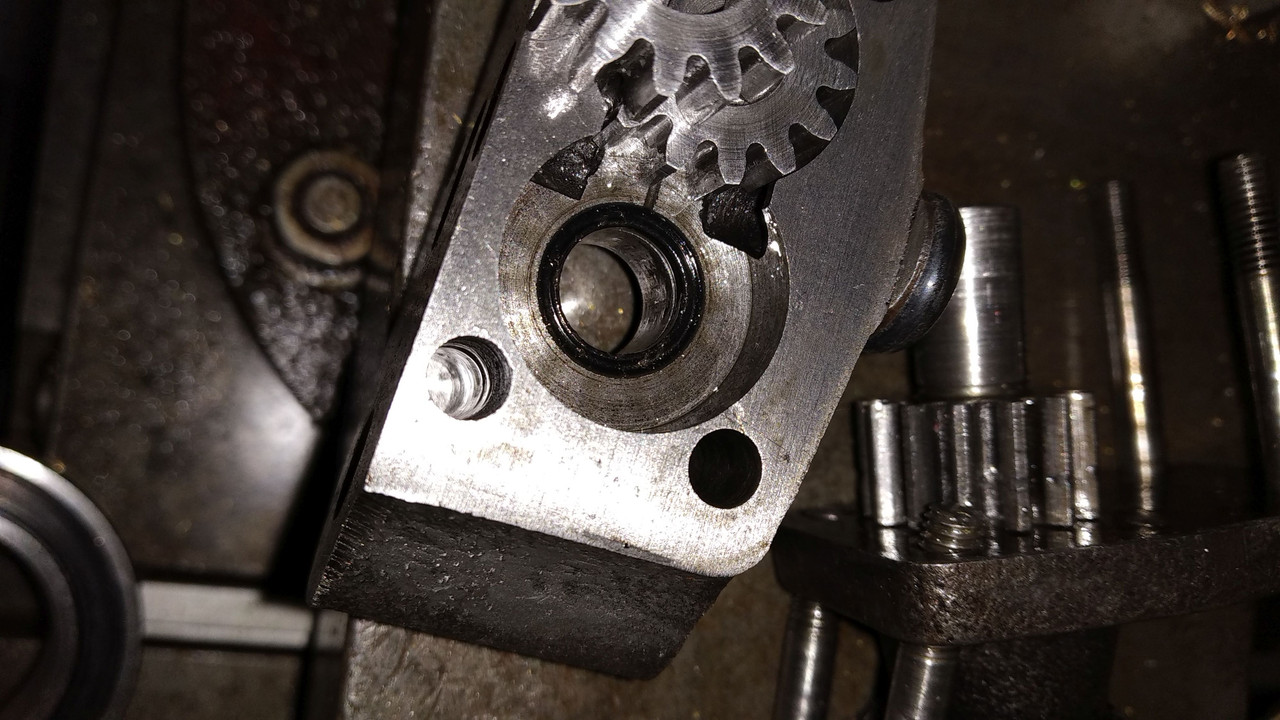
The pump body will be two sections plus a cover plate. Attached is a photo of the return pump that speedway services supply to sandwich between the pilgrim pump and the timing side. Basically I'll make two of these, one for the feed gears and one for the return. These will bolt together to the timing cover along with a cover plate. There will be an O ring between each section.

I looked at fitting a Triumph plunger pump driving from the end of the magneto via an Oldham coupling with an eccentric drive on one end. In many ways this would be easier (especially not having to make a pump) the only issue is enclosing the pump (being mounted externally) and then feeding oil to the eccentric and moving block at the top of the pump. A cover would need to be oil tight, collect the lubricating oil for the pump drive without leaking. Again any suggestion for this...

The bottom line is I need to flow more oil round the engine for cooling and would like to do it as simply as possible. Making a pump seems the simplest way but I'm open to suggestions.
 

Attachments

  • Making an oil pump for a Jawa DOHC engine
    Jawa timing case.jpg
    894.3 KB · Views: 113
  • Making an oil pump for a Jawa DOHC engine
    OIl Pump on Jawa Timing Case.jpg
    757.2 KB · Views: 114
There are Morgo rotary pumps, gear pumps to replace the Triumph plunger pumps.


However they come with a warning as the improved flow means the PRV is operated a lot more frequently and the drain to sump hole needs opening out to cope with the increased oil needing to get to the sump. For a road Triumph they are overkill and will likely create more issues than solve them.

They are designed for shell bearing big ends, so would need gearing down to suit a roller big end.
 
There are Morgo rotary pumps, gear pumps to replace the Triumph plunger pumps.


However they come with a warning as the improved flow means the PRV is operated a lot more frequently and the drain to sump hole needs opening out to cope with the increased oil needing to get to the sump. For a road Triumph they are overkill and will likely create more issues than solve them.

They are designed for shell bearing big ends, so would need gearing down to suit a roller big end.
Yes way too much oil flow and also out of my budget. The XR400 pump has a feed and return side and is also for a roller big end but they are not cheap to buy. It is also self contained with a circuit for pressure release. It's finding one to look at to assess whether it could be converted.
 
It's finding one to look at to assess whether it could be converted.
That is always the issue when trying to adapt what already exists over making from scratch. I have a box full of parts bought as possible candidates based on the pics and what I could gleem from forums but I also have bought some that fitted with little adaption saving hours of machining. I am plus overall, well I hope I am ;) .
 
Yes way too much oil flow and also out of my budget. The XR400 pump has a feed and return side and is also for a roller big end but they are not cheap to buy. It is also self contained with a circuit for pressure release. It's finding one to look at to assess whether it could be converted.
I dont get it. Are you not contradicting yourself? In #16 you recognized the need for a voluminous oil flow for cooling, while here you claim a Gerotor oil pump (Morgo) delivers "way too much oil flow".

I suggest you do your homework and calculate the oil flow needed (get outside help if needed). Oil flow to the roller big end will be a tiny fraction (less than 10%) of the total oil flow. Pressure and volume flow division is reached by inserting nozzles in the respective oil lines.
Maybe Jawa (the works) can assist you? Good luck!

- Knut
 
Back
Top