Powder coated barrel

  • Thread starter Thread starter nortonspeed
  • Start date Start date
Status
Not open for further replies.
Steve, I'm not arguing the fact that dark colors absorb heat better from visible light in a partial vacuum.
We're arguing if a Norton with black cylinders runs cooler than white (or maybe silver) ones.
Portillo's is right down the road BTW.
 
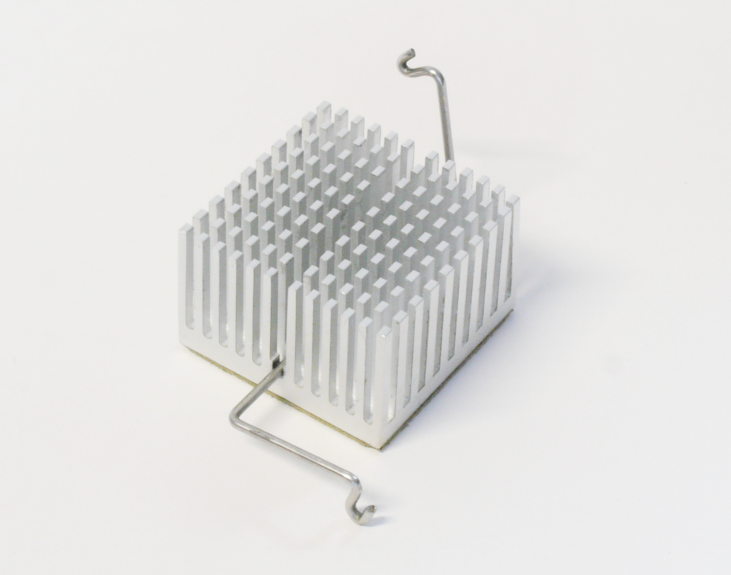
This scientist disagrees....anybody ever see a white heat sink? Or white barrels on an aircraft engine, or white auto radiator? Or a white SR 71 Blackbird?

Powder coated barrel


OK, this was fun. Going to bed.
 
Unread postby mschmitz57 » Sat Dec 20, 2014 7:41 pm
Steve, I'm not arguing the fact that dark colors absorb heat better from visible light in a partial vacuum.
We're arguing if a Norton with black cylinders runs cooler than white (or maybe silver) ones.
Portillo's is right down the road BTW.

Ugh guess I'll have to pull rank as only court qualified science expert handy to re-state the facts. Unless a special thin heat coating It don't mater what ya paint the barrel with for 4 reasons...
one, barrel don't get hot enough to glow enough for the color to matter
two, barrels gets hot enough paint color don't matter as the heat production and flow is enough to reach same equilibrium white or black or red or yellow
three, barrel is not the main heat expelled by radiation or convection or condition
four, any paint thats not special thin heat transparent will hinder heat flow out rather more than if just bare or unplated metal.

i've made hot fires in fairly thin powder coated sheet metal out doors fire places to see the licks of flames showing through in active real time shapes in black or red or ugly rusted ones. What ever color coat just make it thin so nothing to worry about.
 
If our engines were satellites needing nuclear heat radiator or roofs of cars white or black definitely detectable but they ain't. Norton made decent provision for wide range of operation and grimy-ness so would take some extremes of operation a few degree's less might not detonate or warp too much. Its hard to find anything on engine color effects though obviously we see plenty examples of black radiators they spent extra on to paint/color yet hi end inter coolers and coolant radiators are mostly bare Al. So likely black paint is mainly for corrosive or visual blocking. Only heresay I could find online so far that we might apply to Norton reasoning.


I've painted several intercoolers using spray paint, changed from black to silver, logged the temps before and after with a thermocouple, and it hasn't made an atom of difference.
 
toppy said:
texasSlick said:
comnoz said:
Aircraft type paint stripper will take it right off. Jim

Spray on gasket remover does a pretty good job too.

+1 Methylene Chloride is the active ingredient...look for a stripper that has maximum concentration of it. Clean up any residue with MEK

Slick

It seems you can get Methylene Chloride on its own (don't you just love ebay) but paint striper containing it is only for professional use and not to be sold unless you can provide prove of being professional user. So if i used neat Methylene Chloride would it remove paint better than modern paint stripper which is rubbish.
Hate to get off the titillating conduction, convection, radiation conversation, but after all, the thread is about powder coats and effective means of their removal.

With respect to methylene chloride-based paint removers, in the US these are as common and as near as the closest big box store. Here are links to strippers at Menards and Home depot, and the MSDS documents for the subject strippers showing they are methylene chloride-based.

http://www.menards.com/main/paint/c...fast-power-stripper-1-qt/p-1963283-c-8157.htm
http://www.menards.com/msds/101357_001.pdf
http://www.homedepot.com/p/Klean-St...-Stripper-QKS3/100180773?N=5yc1vZc5bmZ1z0t8la
http://www.homedepot.com/catalog/pdfImages/f8/f82aaef5-2d09-4054-bff0-da5949970222.pdf

Methylene chloride is an extremely volatile molecule, and as such, is often mixed with other polar molecules (alcohols, ketones, etc) and non-polar molecules (toluene, xylene, mineral spirits, etc) to reduce the volatility of the stripper so it remains on the painted surface for a longer period of time before evaporating, thus you don't see pure methylene chloride-based strippers. It's also a nasty molecule so be careful with it and use adequate ventilation when using.

Strippers function by either dissolving or swelling the paint film they are applied to. In the latter case, swelling the paint film ruptures the bond between the paint film and the surface it is attached to, thereby allowing removal. This is elementary stuff, but I mention it because there are many powder coats that are extremely difficult to remove because they are not readily swellable by the paint remover. There is not one powder coat out there, but rather myriad powder coats based on a wide variety of chemistries (epoxy, polyester, acrylic, nylons, silicone, and all conceivable hybrids thereof) and within each chemistry there are thermoplastic versions (powder particles fuse together with heat, but do not cure) and thermoset versions (powder particles fuse and chemically cure with heat). The former class is more easily removed, whereas the latter class is much more difficult to remove, because the solvent can not swell the cured coating. Swelling is inversely proportional to the degree of paint film cure (the cross-link density of the paint film), so the more cured the coating, the more difficult it is to swell.

In light of the foregoing, don't be surprised if you run into a powder coat that is very challenging if not impossible to remove with appropriate solvent-based strippers. A friend is redoing a Rotax engine right now and finding the only way to remove the factory powder coat on the cases is to bead blast it off. If you run into a tough paint removing situation and aren't in a hurry, slop up the part with stripper, bag it in a heavy plastic bag for days or weeks (let the solvent do the work, not you) and if the paint doesn't budge in a week, conclude it isn't swellable with your stripper and head for the bead blaster.
 
I've always bead-blasted my barrels, but not had to try against powder-coat yet - I'd guess that once you get under an edge it'll come off in sheets.

Now for the controversy...

I'll be painting them silver :mrgreen:
 
B+Bogus said:
I've always bead-blasted my barrels, but not had to try against powder-coat yet - I'd guess that once you get under an edge it'll come off in sheets.

Now for the controversy...

I'll be painting them silver :mrgreen:

Good choice Andy.

Silver barrels are faster.

Proven fact...

Before, with BLACK barrels:
Powder coated barrel


After with SILVER barrels:
Powder coated barrel


After = much faster.

Case closed.
 
texasSlick said:
mschmitz57 said:

This scientist disagrees....anybody ever see a white heat sink? Or white barrels on an aircraft engine, or white auto radiator? Or a white SR 71 Blackbird?

The only thing entirely true in that article is that black INSIDE the engine block is of no effect on radiation heat transfer.

Slick, PhD

I actually HAVE seen what I believe were white powder coated aircraft cylinder barrels. It was on a Stearman with a Continental 220. Looked good! If you examine aircraft cylinders you'll see most of the fins are on the head, not the barrel. Water cooled flat aircraft cylinders have the water jacket only around the head.

These guys are very respected aircraft engine overhaulers and custom builders. Their process is FAA accepted. Their website does not specifically say the barrels are powder coated so perhaps they are painted. They have something to say here:

http://www.victor-aviation.com/Electros ... r_Coat.php

I really question why folks think powder coating insulates but paint doesn't.
 
JimNH said:
I really question why folks think powder coating insulates but paint doesn't.

Powder coat does dissipate heat less then paint -normally. Not because it is powdercoat but because it is thick.

I would like to see someone put powdercoat on a finned barrel and get complete coverage down between the fins without having the powder too thick over most of it. I have not been able to succeed. Jim
 
Any coat on bare metal with hinder heat flow unless special *thin* protective layer made for heat flow. Peel black Bart engine may get some hand filed V knurls on leading edges for bling and bit more heat fllow by convection conduction. To set off black barrel profile thinking about scratching the valleys to bare Alu.

http://harleytechtalk.org/htt/index.php?topic=3766.0
 
hobot said:
Any coat on bare metal with hinder heat flow unless special *thin* protective layer made for heat flow. Peel black Bart engine may get some hand filed V knurls on leading edges for bling and bit more heat fllow by convection conduction. To set off black barrel profile thinking about scratching the valleys to bare Alu.

http://harleytechtalk.org/htt/index.php?topic=3766.0

From Victor Engines website:

Due to the special nature of Victor’s special black powder coat engine heat emissivity is also improved. Emissivity is a measure of the efficiency in which a surface emits thermal energy and can result in improved parts life.
 
JimNH said:
hobot said:
Any coat on bare metal with hinder heat flow unless special *thin* protective layer made for heat flow. Peel black Bart engine may get some hand filed V knurls on leading edges for bling and bit more heat fllow by convection conduction. To set off black barrel profile thinking about scratching the valleys to bare Alu.

http://harleytechtalk.org/htt/index.php?topic=3766.0

From Victor Engines website:

Due to the special nature of Victor’s special black powder coat engine heat emissivity is also improved. Emissivity is a measure of the efficiency in which a surface emits thermal energy and can result in improved parts life.

Very possible there may be some conductive powder coats available just like there are conductive paints available.
I haven't run into them yet but I have been using the conductive paints for years. Jim
 
Peel was GunKote'd. A bugger to get into fin valleys w/o over spraying the more exposed fins and thiness is remarkable so will not cover texture at all even with a handfull of coats so think about paint brushing the depths first then work the easy stuff. Rust in vallyes after a few seasons all weather use if not getting decent layer down there. PJ1 epoxy rattle paint was the DIY rage couple decades ago but sold out gone now. First start + few minutes firing cures it.
 
Strypeeeze is what I found in buidling supply harward store. u-tube stripping powder coat to watch it workings
 
Status
Not open for further replies.
Back
Top