
ludwig
MEMBER
- Joined
- Aug 2006
- Messages
- 901

I mean 10 x 1 mmDid you mean go for 10 X 1.25 mm ?

I mean 10 x 1 mmDid you mean go for 10 X 1.25 mm ?
In critical applications where vibration is involved (drive shafts, wheel lugs..) always a finer thread.Why this finer pitch? Prestressing the bolts in the common way isn't possible anyway, thus fine-tuning the application of torque is pointless.
- Knut


Any links to where such bolts can be sourced? I've had no luck so far...In critical applications where vibration is involved (drive shafts, wheel lugs..) always a finer thread.
I take your point in increasing resistance to loosening under vibration compared to a coarse thread bolt. This is due to their lower helix angle, which makes them less prone to backing off when subjected to dynamic loads (more work energy required).In critical applications where vibration is involved (drive shafts, wheel lugs..) always a finer thread.


Buy overlong M10 bolts where the unthreaded section is the length of a Cradle bolt, cut it to length and cut a 1.0mm pitch thread.Any links to where such bolts can be sourced? I've had no luck so far...
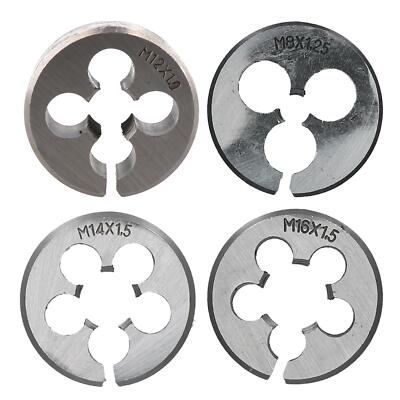
Purchase longer 10mm bolts (i got some off ebay 180mm long, making sure they are 8.8 grade ) Using these bolts you can then shorten them to 125- 130mm and cut a 10 mm thread (either leave it 1.5mm pitch or go finer 1.25mm or 1mm) You could turn them down and cut a 3/8 UNF thread and make it look original. Leave the plain shank 97mm long, 95mm minimum. You will have to ream the top rear most hole in the case as the 10mm bolt won't go through the hollow dowel.Any links to where such bolts can be sourced? I've had no luck so far...


I used to buy excellent quality bolts, nuts, washers & spacers, including satin chrome, from Custom Fasteners in Newtown, Wales.Any links to where such bolts can be sourced? I've had no luck so far...
Yes, for the same torque, there is a slight increase in clamping force for the fine pitch vs. coarser pitch. Typical values for M10 threads (dry) preloaded at 50 Nm are 21 kN for M10 x1.5 mm and 23 kN for M10x1.0 mm . That's 10% and not insignificant.A finer pitch gives and maintains a greater clamping force than a coarser thread


GregI may remember wrong, but I think @mdt-son started the 10mm bolt thing a while back.
Didn't understand the point then, don't now. If the idea is to get a tighter fit between the bolts and cradle holes and bolts and through holes in the engine, on the surface it makes sense. However, getting those holes all in the exact location for a tight slip fit seems hard to me. If only one bolt were being changed to act as a location "dowel" it would make more sense to me, but I wouldn't bother.
It's already a struggle in many cases to get the bolts out - can't imagine if they were tighter in the holes!
Also, having to have metric tools to work vintage British motorcycles would put me off. I was forced a while back to buy all the tools needed to work on an ARP equipped bike - what a PITA and expense that was.
So, please enlighten me on the point.
However, getting those holes all in the exact location for a tight slip fit seems hard to me.
Metric dimensions for M10 bolt heads and nuts are larger than the corresponding 3/8" UNF dimensions. Thus, no problem milling the head and nut smaller for imperial tools, should one wish.Also, having to have metric tools to work vintage British motorcycles would put me off.


Not 5/16" as already mentioned the Mk3 lower bolt is another 3/8".Note, not sure of these fit Mk 111's. Needs to be confirmed.

You must hate your commando as you already use two different sets of spanners Whitworth and A/FThe RGM bolts look like a better engineering solution to me. Fitting metric bolts to Brit bikes is wrong as it means having to use two different sets of spanners, & is a pet hate of mine. I will only use metric if I'm fitting a part from a modern bike, such as a brake caliper. Also, reaming engine mounting holes out to 10mm & fitting metric bolts won't leave you any better off, as commercially available bolts will usually be between 0.002" & 0.004" down on nominal.
coz of the hollow dowel
Part number 06 2621Which hollow dowel would that be, where is it in the parts book or what is the part number?
Do you mean to tell me i have told LAB something?


