Excess Oil in Primary Chain Case - 72 Combat case in 73 750

Further UPDATE: I spoke with Matt at Colorado Norton Works. I believe he knows what he's talking about.

Here's my understanding of what he explained: All Nortons will wet sump more or less, some from sitting (engine off) and some (particularly 72 Combat and early 73 750 with Combat case) while running (because the return orifice routing is not sufficient to get enough oil to the return side of the pump).

For wet sumping when the engine is not running, Matt thought the AMR modification is "hit or miss" (in my case I believe it has been very successful). Matt does not recommend a mechanical off valve in the supply line to the pump (for obvious operator error reasons), including the mechanical shut off valves that include an electrical cut off to the coil (to prevent starting when you've forgotten to open the valve).

For wet sumping when the engine is running - or put another way, when the insufficient stock system for returning oil to the tank can't get the oil back to the tank quickly enough - Matt said they all wet sump at speed. (Apparently this is a particular problem for the 72 Combat case that was also used in early 73 750s). This link that L.A.B provided above to a page on OldBrits website clearly explains the inadequacy of the stock system for returning oil to the tank at revs on 72 combat and early 73 750 https://www.nwno.org/resources/OldBrittsWebsite/n_c_case.html I understand that OldBrits has been closed for a few years, so you can't get the machining fix they used to offer. But that fix to increase the flow of oil back to the return side of the oil pump required complete disassembly of the motor. Per my understanding of what Matt at CONortonWorks told me, that's not necessary if you install a good reed valve breather.

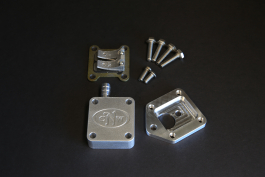
Per Matt, the remedy for wet-sumping, whether from the engine off or the engine running, is to replace the stock crankcase breather with a reed breather. Matt explained the reed breather will 1) relieve the pressure in the crankcase and 2) return volumes of oil (2 quarts or more) to the tank within 15-20 seconds.

CoNworks has a high quality reed breather for the combat crankcases that have the stock breather on the drive side rear of the crnakcase https://coloradonortonworks.net/1972-breather-modification.html jsmotorsports also has one that fits Combat and other crankcases https://jsmotorsport.com/reed-valve-crank-case-breather/ NYCNorton has a nice looking reed breather kit for bikes that have the stock breather on the bottom of the crankcase (but not for 72 Combat and early 723 750 crankcases with the breather on the rear of the drive side of the crankcase https://nycnorton.com/product/reed-valve-breather-kit/

Again, that's my understanding of what Matt explained to me. Apologies to Matt if I've misunderstood or misreported what he told me.

Just to be careful, and since I have the timing cover off, I'm going to remove the oil pump and make sure the gasket is installed properlyand not blocking the return orifice in the crankcase.
 
Last edited:
one option is to drill, tap (with a very a big thread tap!) and add an earlier style sump filter to the bottom of the case.
No that does not work due to the meaty casting section also being deleted, hence why I followed my method and added a block with the filter inside the block.

When the oil pump is off dismantle it and check the gears on the return side are not beaten up by debris and then do a pump refurb to tighten up the clearances. Also did AMR add the O rings to the pump to stop oil moving from feed to return side internally.

This is my version with X rings.

Excess Oil in Primary Chain Case - 72 Combat case in 73 750
 
Further UPDATE: I spoke with Matt at Colorado Norton Works. I believe he knows what he's talking about.

Here's my understanding of what he explained: All Nortons will wet sump more or less, some from sitting (engine off) and some (particularly 72 Combat and early 73 750 with Combat case) while running (because the return orifice routing is not sufficient to get enough oil to the return side of the pump).

For wet sumping when the engine is not running, Matt thought the AMR modification is "hit or miss" (in my case I believe it has been very successful). Matt does not recommend a mechanical off valve in the supply line to the pump (for obvious operator error reasons), including the mechanical shut off valves that include an electrical cut off to the coil (to prevent starting when you've forgotten to open the valve).

For wet sumping when the engine is running - or put another way, when the insufficient stock system for returning oil to the tank can't get the oil back to the tank quickly enough - Matt said they all wet sump at speed. (Apparently this is a particular problem for the 72 Combat case that was also used in early 73 750s).

Per Matt, the remedy for wet-sumping, whether from the engine off or the engine running, is to replace the stock crankcase breather with a reed breather. Matt explained the reed breather will 1) relieve the pressure in the crankcase and 2) return volumes of oil (2 quarts or more) to the tank within 15-20 seconds.

CoNworks has a high quality reed breather for the combat crankcases that have the stock breather on the drive side rear of the crnakcase https://coloradonortonworks.net/1972-breather-modification.html jsmotorsports also has one that fits Combat and other crankcases https://jsmotorsport.com/reed-valve-crank-case-breather/ NYCNorton has a nice looking reed breather kit for bikes that have the stock breather on the bottom of the crankcase (but not for 72 Combat and early 723 750 crankcases with the breather on the rear of the drive side of the crankcase https://nycnorton.com/product/reed-valve-breather-kit/

Again, that's my understanding of what Matt explained to me. Apologies to Matt if I've misunderstood or misreported what he told me.

Just to be careful, and since I have the timing cover off, I'm going to remove the oil pump and make sure the gasket is installed properlyand not blocking the return orifice in the crankcase.
Just remember that ‘wet sumping at speed’ means just that ie sustained high revs at WOT. From your description, that is NOT what we’re talking about here at all.

While you’ve got the timing cover off, please show us the AMR mods as Cliffa asks for….
 
When my main crank seal blew in half from a wetsump start up, I had oil spewing out coating rear tire before I noticed. Didnt crash but was a real danger. I solved the wetsumping, which would drain tank in about two weeks, with a stainless/brass ball valve water tap on feed hose with an ignition defeat switch..
Ran me about $15 in parts and about an hour to make up. I see taps with ign defeat switches selling for $80+ from a few places. No more wet sump drama.
Tornado -

That's one way to stop wet sumping when the engine is not running, and I see the appeal of a mechanical valve in the supply line with an ignition defeat switch, but if I've understood Matt at Co Norton Works, that relies on the electronic defeat switch not malfunctioning. I don't know enough about the internal reliability of electrical switches or how the mechanical lever of the shut off valve physically operates the electircal switch mounted on the valve (and how reliable that might be). I have seen UK and German places that sell mechanical valves with electronic defeat switches that look pretty strong.

For mechanical valves in the supply lines that do not include an electrical defeat switch, in my view, unless you trust yourself to be as reliable as an f-15 pilot, (I don't) it only takes one time to forget to open the valve to ruin your motor.

But I think Matt's view (again apologies to him if I'm misunderstanding or misreporting what he told me) seems to be that wet sumping can also happen when the engine is running, particularly at high revs and particularly with the 72 Combat crankcases that were also used in the early 73 750s, and - whether the excess oil in the sump is from it leaking there while the engine is off or from the system failing to return enough oil to the tank when the engine is running, the remedy is a reed valve breather system that - per Matt - will return the oil very quickly to the tank and relieve the pressure that blows the mail seal and causes other leaks.
I’m interested in the AMR mod to the MkIII timing cover. Any chance you could post some pics of it please?
Cliffa - here's a thread about the AMR modification. It seemed to work really well for me to stop wet-sumping when the engine is not running https://www.accessnorton.com/NortonCommando/amr-wet-sump-conversion.38526/ And here's a link to the AMR site that explains their modification https://www.amr-of-tucson.com/
 
Just remember that ‘wet sumping at speed’ means just that ie sustained high revs at WOT. From your description, that is NOT what we’re talking about here at all.

While you’ve got the timing cover off, please show us the AMR mods as Cliffa asks for….
here's a thread about the AMR modification that Cliffa asked about. It seemed to work really well for me to stop wet-sumping when the engine is not running https://www.accessnorton.com/NortonCommando/amr-wet-sump-conversion.38526/ And here's a link to the AMR site that explains their modification https://www.amr-of-tucson.com/

And I apologize if my descriptions early in this thread were misleading or uniformed. Please see my last few posts that report what I've understood from further research and from Matt at CONortonWOrks which, I hope, clarify the information that I think is not in any previous thread about wet sumping or excess oil in the primary.
 

But I think Matt's view (again apologies to him if I'm misunderstanding or misreporting what he told me) seems to be that wet sumping can also happen when the engine is running,
That is/was the correct definition of wet sumping and the reason for the Old Britts webpage I posted.

72 Combat crankcases that were also used in the early 73 750s,
Those cases/breather were used before Combat, during Combat (the non-Combat engines also used the same cases/breather) and after Combat so they are not really Combat cases.
 

That is/was the correct definition of wet sumping and the reason for the Old Britts webpage I posted.


Those cases/breather were used before Combat, during Combat (the non-Combat engines also used the same cases/breather) and after Combat so they are not really Combat cases.
L.A.B. What I've seen is that Reed breathers have been available for many versions of the crankcases, but the Combat and early 73 750 cases have the stock breather mounted in a unique place a the rear of the drive side of the case, so the reed breathers that replace the stock breathers that are on the bottom of the case won't fit on the 72 Combat and early 73 750 cases. It's just about getting the right reed breather for the case you have.
 
Yes, for your particular case you need this cNw breather.

 
Tornado -

That's one way to stop wet sumping when the engine is not running, and I see the appeal of a mechanical valve in the supply line with an ignition defeat switch, but if I've understood Matt at Co Norton Works, that relies on the electronic defeat switch not malfunctioning. I don't know enough about the internal reliability of electrical switches or how the mechanical lever of the shut off valve physically operates the electircal switch mounted on the valve (and how reliable that might be). I have seen UK and German places that sell mechanical valves with electronic defeat switches that look pretty strong.

For mechanical valves in the supply lines that do not include an electrical defeat switch, in my view, unless you trust yourself to be as reliable as an f-15 pilot, (I don't) it only takes one time to forget to open the valve to ruin your motor.

But I think Matt's view (again apologies to him if I'm misunderstanding or misreporting what he told me) seems to be that wet sumping can also happen when the engine is running, particularly at high revs and particularly with the 72 Combat crankcases that were also used in the early 73 750s, and - whether the excess oil in the sump is from it leaking there while the engine is off or from the system failing to return enough oil to the tank when the engine is running, the remedy is a reed valve breather system that - per Matt - will return the oil very quickly to the tank and relieve the pressure that blows the mail seal and causes other leaks.

Cliffa - here's a thread about the AMR modification. It seemed to work really well for me to stop wet-sumping when the engine is not running https://www.accessnorton.com/NortonCommando/amr-wet-sump-conversion.38526/ And here's a link to the AMR site that explains their modification https://www.amr-of-tucson.com/
Well of course there is always some limits to any electrical or mechanical contraption...most modern electric switches have Mean Time Between Failures (MTBF) of 10's to 100's of thousands cycles. Plus, it will take a double-failure...(the switch and then a forgetful human) before a problem would happen. Double-failure points were considered more than safe enough for the Apollo program, so should be enough for us on our old bikes!

The reed valve sump drains are good but do cost well over $300 USD. But they too have some issues...you've got a new oil line beneath the engine...vulnerable to impact with objects (I've scraped the sump on speed-bumps in parking lots). And if there is any debris in the oil for whatever reason, that gets returned into the tank by passing the filter.

My point is nothing is perfect, these are old machine and cannot be bullet proof.
 
Back
Top