Commando counter balance install, why not?

Chain strength shouldn't be a problem because there are no heavy spring loads on the magneto (or balancer) like there is on the camshaft - the balancer just spins. You need a 9 tooth sprocket on the balancer. You would have to determine if a thinner chain is just as strong as a wider chain if you use a Commando cam sprocket combination with an Atlas magneto sprocket (the links and pins are the same?) or you may have to put the ignition on the crank and use the Atlas cam sprocket (this is where things get hairy). Or you would need a timing pinion gear with changed sprocket thickness..
The problem associated with a chain-driven counter-balance can be addressed to torsional vibration of the crankshaft, which multiplies by the elasticity of the chain. It's the same problem encountered with the 4-valve Commando by Norvil, and the 90 degree camshaft.

- Knut
 
You need a drop in bolt on kit for customers to make this go.
The technical challenges aside, is it likely the owner of a Norton classic bike will spend big bucks on a device altering the looks and feels of the bike, which is never used for long distance touring? The "kit" will be of interest to Dominator and G/N15 owners primarily. Not whishing to dampen your courage and enterprising spirit, I believe the market response will be disappointing.

- Knut
 
Last edited:
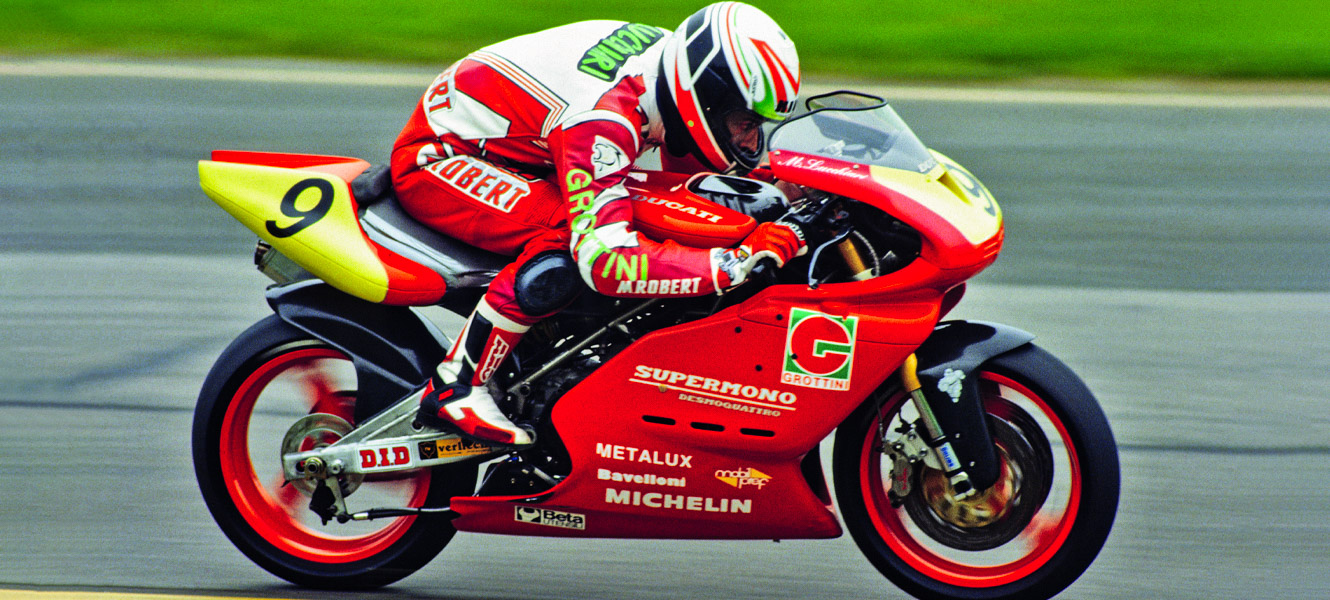
Ducati tried the dummy piston when they first came out with their experimental single cyl monoshock roadracer and it had too much friction and robbed too much HP even when they ran it sloppy loose. The problem was solved with a conrod and a perpendicular link at the top of the dummy con rod to eliminate the dummy piston. You would also have to design the crank case and add a connecting rod - good luck with that.
Friction loss may have been the reason why Doug Hele's inventive idea didn't catch on. It is an attractive and cost-effective concept though which requires minimal exterior changes to the bike or the engine: I slightly revised crankcase, a new crankshaft, and the parts comprising the balancing device. As you mention, by introducing a linked rod, friction can be greatly reduced or eliminated entirely. A further reduction can be achieved by applying coating between moving parts.
What Ducati found out in their quest for maximum power isn't necessarily a determining factor for a touring bike.


- Knut
 
Last edited:
The technical challenges aside, is it likely the owner of a Norton classic bike will spend big bucks on a device altering the looks and feels of the bike, which is never used for long distance touring? The "kit" will be of interest to Dominator and G/N15 owners primarily. Not whishing to dampen your courage and enterprising spirit, I believe the market response will be disappointing.

- Knut
Agreed Knut!
If someone offered me a proven kit for nothing, I'd say no thanks - I like it as it is.
 
I use my ‘72 Commando for long distance touring and I’ll never be interested. I’ve been tricked into enough “trick” bits and either dumped or worn most of them out.
Apart from fuel stops, I did a couple of 18 hour non-stop rides last year from Dunkirk to just north of Barcelona and back again without suffering vibration issues, unlike a BMW I once owned.

IMG_2082.jpeg

Ap
 
Last edited:
Since title of this thread asks "Why Not?" I will comply:

You can do all sorts of things to a Commando to improve it, right up until it is no longer is a Commando any more. I say enjoy it for what it is, what the original designers made it as. Embrace the quirks and nuances and just ride it.
 
The easiest solution for Norton vibration is the lightweight pistons. They became necessary in racing because the cases and cranks were breaking. Later they were used on street bikes to take the stress off the motor and smooth out the ride. Vibration is reduced by 1/3 and HP/reliability is increased. I developed the lightweight pistons because I prefer the handling qualities of solid framed bikes and wanted to prevent things from breaking. The lightweight pistons are the 1st option. The counterbalancer is only a fantasy at present.

Mounting for the counterbalancer can come off the engine plates and there is pleny of strength there. The cam places enormous strain on the chain and I don't think the counterbalancer shaft comes anywhere near that strain for the chain. Just try spinning a cam with a wrench while the head is on and the chain or spark plugs are out and you'll see what I mean - I'm doing this on a spintron everyday right now (new lifter development) and the strain is obvious.

Here are the obstacles I'm concened about:
Ignition - unless a new timing pinon gear/sprocket arrangement is worked out the ignition will have to go on the crank primary side similar to the Steve Maney setup.

The counterbalancer will turn the opposite direction as the crank and help cancel crank imbalance. But it will be above the crank centerline and that could throw things off - how much is unkown until its tried.

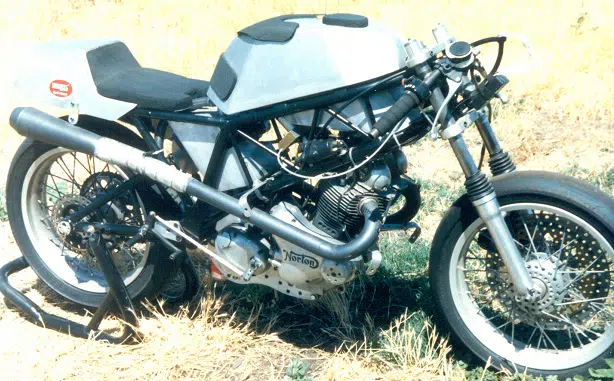
My original intent was to make one for personal use for my cafe Atlas. If it works then anyone with a high vibe Atlas with heavy factory pistons can install it to smooth things out.

The guy who started this post is intrested in this idea for making his Commando even smoother. If its a success then he and others like him can try it.

Or I can forget the whole idea and continue to lighten pistons and rods as shown below.

Commando counter balance install, why not?


The lightweight pistons started with the monoshock 850 below and were necessary after my cases failed (7 cracks).
Commando counter balance install, why not?


But even with the lightweight pistons and/or isolastics the Norton is not as smooth as counterbalanced vertical twins or better balanced bikes such as BMW and Ducati. I would like to see that change.
 
Last edited:
The whole point of commando isolastics is to reduce vibration to an acceptable level
Which is does rather well
Just how smooth do you want it to run?
And at what revs?
With a 360 degree vertical twin, there is always a choice to be made which depends on how you intend to use the bike. Rubber-mounted motors always lose power. If the Commando crankshaft is rebalanced to 72% and the motor is rigidly-mounted - the bike will be almost vibration-less between 5000 RPM and 7000 RPM - which is useless in a road bike which never goes above 5000 RPM. Isolastics are a cheat which tames a monster. A 180 degree vertical twin vibrates less, but does not provide the same level of performance. I would not use balance shafts to smooth-out a motor because the energy of vibration has to go somewhere, and the best place is down the drive chain, in large pulses which distort the tyres in a rhythm.
My first race bike was a 500cc short stroke Triton. A 500cc Manx was far superior, simply because of the way the power is delivered. With a Manx, tyres behave differently - pulses give grip. A Commando engine with a high balance factor is much better for racing than a short-stroke Triumph motor which has as much power but revs much higher. I suggest the 500cc Domiracer was a waste of space. Tom Phillis was an excellent rider.
 
If you did , youd introduce another imbalance , as its stuck out there , unless it was IN THE MIDDLE .

MINIMUM COMPONENT COUNT was a virtue .

A foid 2 litre V4 , with derbig 8 1/2 inch clutch , post 1970 , is Big Port .
Throwing OUT the Balance Shaft . ( & blocking oilways not reqd . )
is way better than lightening the flywheel . With 1 3/4 headers & dual system ,
it'll better 'n a Std big valve Lotus . & tow trucks out of ditches etc . If anyone has one .

the nice ' cantering ' " oscillation " introduced is better than the non existant seconday ' buzz ' they say you cant discern .

Im thinking this modern rubbish would be better WITH Iso , and electyro damping variabilty . Vicous Via Valve ? .
Most ' thumping ' on a Commando - is Road Shock through the front end . try putting your boot heel on the chaincase or timing cover - usualy they seem SMOOTH there too .
My Seeley Command 850 is a joke. Most of the adrenalin rush comes when the motor smoothes-out at 5000 RPM and really goes. I love it and even thinking about it makes me want to race again. I never start my bike at home, because the moment the motor fires-up, the desire to ride it is not controllable. I would be booked by the police within 5 minutes. I think I might go into my shed today, and put it back together again, and think about riding it up the street. The kids in my life would like that.
 
I would bet that at least 90% of Commando riders on this site rev over 5000 RPM every time they take their bike out. 180 degree vertical twins have a rocking couple which presents its own problems by vibrating left and right. You are confusing vibration with power stroke distribution and density. Lack of a balance shaft does not redirect the energy of vibration down the drive chain. Frank Zappa was an excellent guitarist.
 
The counterbalancer will turn the opposite direction as the crank and help cancel crank imbalance. But it will be above the crank centerline and that could throw things off - how much is unkown until its tried.
Jim, the intermediate gear wheel runs at half the speed vs. the crankshaft. A balancer needs to run at the same speed as the crankshaft, so a 2:1 gear ratio will be needed. Is there a chain suitable for a 7000 rpm sprocket of say 18 teeth? (The driving sprocket would need to have 36 teeth - is there space available for such a large sprocket? I don't think so.) I can envision the chain bursting with a bang!

Other concerns:

At this speed, the balancer shaft needs to be 100% parallel to the crankshaft. You mentioned supporting it on a separate platform bolted to the engine plates. If so, it will be difficult to ensure a parallel orientation.

The counterbalancing forces will have to pass through the engine bolts and engine bosses and may wear them out fairly quickly (at the interface, forces are not in equilibrium).

- Knut
 
Jim, the intermediate gear wheel runs at half the speed vs. the crankshaft. A balancer needs to run at the same speed as the crankshaft, so a 2:1 gear ratio will be needed. Is there a chain suitable for a 7000 rpm sprocket of say 18 teeth? (The driving sprocket would need to have 36 teeth - is there space available for such a large sprocket? I don't think so.) I can envision the chain bursting with a bang!

Other concerns:

At this speed, the balancer shaft needs to be 100% parallel to the crankshaft. You mentioned supporting it on a separate platform bolted to the engine plates. If so, it will be difficult to ensure a parallel orientation.

The counterbalancing forces will have to pass through the engine bolts and engine bosses and may wear them out fairly quickly (at the interface, forces are not in equilibrium).

- Knut
I think I already mentioned that the balancer would need a 9 tooth sprocket. I checked and they exist. Yes the balancer will be parallel to the crank - I'm more concerned about it being located above the centerline of the crank. The torque and power of the motor puts way more strain on the bolts than the balancer ever will. I'm more concerned about finding time for this project and locating a crank PTO side ignition. A commando timing side ignition would work if I the narrow mag chain is just as strong (after reshaping the cam sprocket). I wish someone else would take on this project - it would save me a lot of trouble.
 
Gee Al you want to come riding with me and my mates if you didn't take your bike over 5k RPMs then you be left way behind, get up in the tight range roads we venture on and its always a race to the next set of twisties, my 2S cam works best over 4500 that is where the fun starts with the work done to my motor.
You keep saying things about street/road going Nortons but you haven't ridden on the road since you were 29 years old from what you tell us, your race days are over tracks are harder to find that will let you ride your Seeley, tame it down and maybe build it into a road going bike and get it out on the road, ride it, enjoy it as time is running out for you or sell it on to someone who would do something with it as when your gone your bike might end up on the scrap heap when they clean out your shed, see it happen all the time working at the Mens Shed family cleaning out sheds from fathers too old or past on, life time of tools and equipment just being dumped on us to sort.

Anyway back to the subject, there are many things that can be done to make our Norton's smoother, but adding a counter balance for an old design motor might be just way too much work involved and might not work anyway, lighter bits and balancing the motor fully be a easier solution to vibrations as Norton went down the rubber mount way to solve bad vibs, take a look at a 650 Domie they are smoother to ride than a 750 Atlas in the same frame, the larger the bores the more vibrations so the next step was to rubber mount the Commando's with a completely different design frame and set up.

Modern Triumphs have sorted out the problem with vibrations on their twins, my 2016 1200 Thruxton is smooth as to ride but they also changed from 360 swing of the crank to a 270 swing and counter balance as well but a complete resigned motor and smoother than the older 900 Thruxtons that had the 360 swing crank, the 1200 are so much better and smoother right through the whole rev range.
 
With a 360 degree vertical twin, there is always a choice to be made which depends on how you intend to use the bike. Rubber-mounted motors always lose power. If the Commando crankshaft is rebalanced to 72% and the motor is rigidly-mounted - the bike will be almost vibration-less between 5000 RPM and 7000 RPM - which is useless in a road bike which never goes above 5000 RPM. Isolastics are a cheat which tames a monster. A 180 degree vertical twin vibrates less, but does not provide the same level of performance. I would not use balance shafts to smooth-out a motor because the energy of vibration has to go somewhere, and the best place is down the drive chain, in large pulses which distort the tyres in a rhythm.
My first race bike was a 500cc short stroke Triton. A 500cc Manx was far superior, simply because of the way the power is delivered. With a Manx, tyres behave differently - pulses give grip. A Commando engine with a high balance factor is much better for racing than a short-stroke Triumph motor which has as much power but revs much higher. I suggest the 500cc Domiracer was a waste of space. Tom Phillis was an excellent rider.
🤣🤣🤣🤣🤣🤣🤣🤣🤣🤣🤣🤣🤣🤣🤣🤣🤣🤣🤣🤣🤣🤣🤣🤣🤣🤣🤣🤣🤣🤣🤣🤣🤣🤣
 
Gee Al you want to come riding with me and my mates if you didn't take your bike over 5k RPMs then you be left way behind, get up in the tight range roads we venture on and its always a race to the next set of twisties, my 2S cam works best over 4500 that is where the fun starts with the work done to my motor.
You keep saying things about street/road going Nortons but you haven't ridden on the road since you were 29 years old from what you tell us, your race days are over tracks are harder to find that will let you ride your Seeley, tame it down and maybe build it into a road going bike and get it out on the road, ride it, enjoy it as time is running out for you or sell it on to someone who would do something with it as when your gone your bike might end up on the scrap heap when they clean out your shed, see it happen all the time working at the Mens Shed family cleaning out sheds from fathers too old or past on, life time of tools and equipment just being dumped on us to sort.

Anyway back to the subject, there are many things that can be done to make our Norton's smoother, but adding a counter balance for an old design motor might be just way too much work involved and might not work anyway, lighter bits and balancing the motor fully be a easier solution to vibrations as Norton went down the rubber mount way to solve bad vibs, take a look at a 650 Domie they are smoother to ride than a 750 Atlas in the same frame, the larger the bores the more vibrations so the next step was to rubber mount the Commando's with a completely different design frame and set up.

Modern Triumphs have sorted out the problem with vibrations on their twins, my 2016 1200 Thruxton is smooth as to ride but they also changed from 360 swing of the crank to a 270 swing and counter balance as well but a complete resigned motor and smoother than the older 900 Thruxtons that had the 360 swing crank, the 1200 are so much better and smoother right through the whole rev range.
The fact that Al believes that nobody goes over 5000 rpm on a road bike is truly amazing!!!
 
I think I already mentioned that the balancer would need a 9 tooth sprocket. I checked and they exist. Yes the balancer will be parallel to the crank - I'm more concerned about it being located above the centerline of the crank. The torque and power of the motor puts way more strain on the bolts than the balancer ever will. I'm more concerned about finding time for this project and locating a crank PTO side ignition. A commando timing side ignition would work if I the narrow mag chain is just as strong (after reshaping the cam sprocket). I wish someone else would take on this project - it would save me a lot of trouble.
I'm happy to take it on and put it on the shelf with my hairbrained ideas! Don't be mad - it's funny (at least to me).

Anyone who wants a useful project should attack the MK3 neutral switch. I tried, Ashley (AN) tried. Easy enough to do with proximity sensors, but they are WAY too expensive! The originals leak and most are worn out. The Lucas replacements do not work unless the camplate button is replaced the switch is modified (difficult task), and the wiring connections are resolved (no room).

Commando counter balance install, why not?
 
Back
Top