
You are using an out of date browser. It may not display this or other websites correctly.
You should upgrade or use an alternative browser.
You should upgrade or use an alternative browser.
850 Head, cylinders and pistons are out. Can you comment on photos of piston tops and combustion chambers?
- Thread starter DennisMo
- Start date


acotrel
Flagged
- Joined
- Jun 2012
- Messages
- 15,044

I would replace the rings as a matter of course. If there are steps at the tops of the bores. I would have them removed by an engine reconditioner. Oil pressure in a Commando engine is a joke - for racing, I use SAE 50 grade oil. The Norton motor does not really spin fast enough to greatly wear the big ends. Heat build-up in a petrol-fuelled motor can adversely affect oil viscosity. Most road-going motors in old motorcycles are probably never jetted lean enough to get real problems. From the photos - the oil problem needs to be fixed, and the carburetion re-tuned
acotrel
Flagged
- Joined
- Jun 2012
- Messages
- 15,044
I just had another look at the photos - the tops of the bores look perfect. I would give them a quick hone and fit new rings - then put it back together again. When it is running again - see if it smokes. If it has been run until it was severely overheated, the rings might have collapsed. It does not look as though it has been jetted too lean - the exhaust valve is still slightly brown - not white. To check whether the big ends are passing too much oil, you need an oil pressure gauge - check it when the engine is cold. When the engine is hot - does not mean much - if the revs drop, it can read almost zero and still be OK.
acotrel
Flagged
- Joined
- Jun 2012
- Messages
- 15,044
I am surprised that anyone reads a workshop manual when rebuilding a motor. Common sense tells you what needs to be done. Triumphs do silly things such as measuring the stretch in conrod bolts. Nortons have more racing experience - nothing in a Commando engine is on the limit. In some AJS twin motors - there were sizing holes in the conrods to accept a pin to detect stretch - that is where the conrods used to break.Its surprising how many people tear into a strip down of an engine without reading the workshop manual. Even if they have got one to read.
I would estimate at least 60% to 70% of posts on forums such as this one are easily covered by reading the manual.
acotrel
Flagged
- Joined
- Jun 2012
- Messages
- 15,044
Nobody can become confident or competent by being told to be so. What can appear to be daunting, usually is not the main problem. Just do everything slowly, the first time. Most major problems are probably caused by doing things in a rush. One of my friends, once had a dealership for Bridgestone motorcycles. He had pulled a lot of motors apart and rebuilt them. The first time he pulled a Japanese motor apart, he was worried. But he found that they are even simpler than British motors. I would not like to rebuild a Jaguar or Aston Martin car engine. I would need a different brain and learn to play cricket.
Last edited:

ludwig
MEMBER
- Joined
- Aug 2006
- Messages
- 901

Apart from all the rest, carbon build-up here:
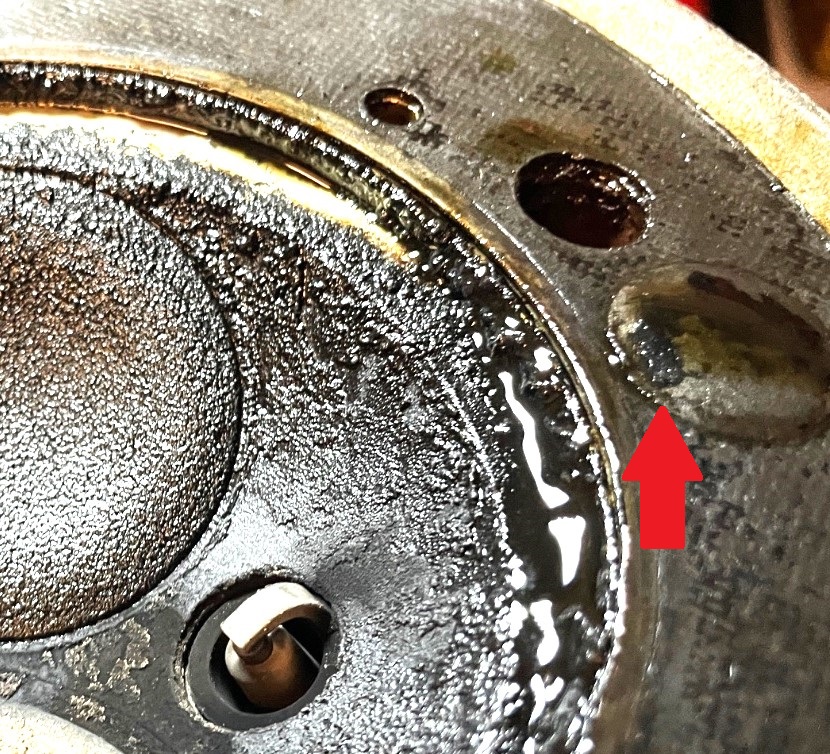
..indicates that you have blow-by into the bolt holes.
Quite common on 850 engines.
That's why I put spacers on top of the bolts to support the head gasket:
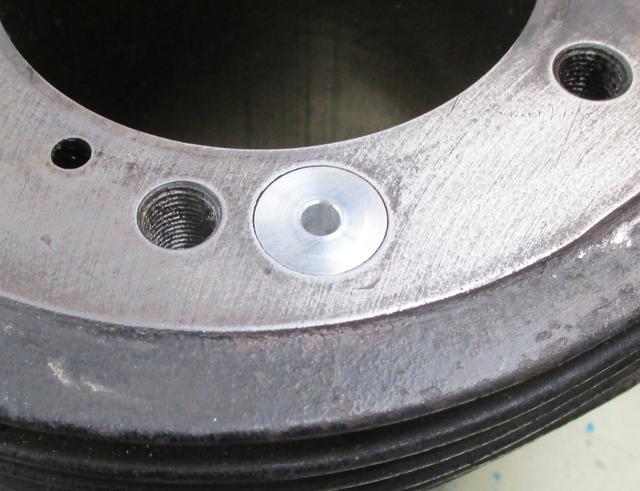
Another mod that I'm sure some forum members will find not worth the trouble.
..indicates that you have blow-by into the bolt holes.
Quite common on 850 engines.
That's why I put spacers on top of the bolts to support the head gasket:
Another mod that I'm sure some forum members will find not worth the trouble.
Last edited:


jimbo
FULL MEMBER
- Joined
- Sep 2004
- Messages
- 2,148

I thought I'd seen evidence of liners, but after examining the photos more carefully I believe there are none . Sorry about that.
acotrel
Flagged
- Joined
- Jun 2012
- Messages
- 15,044
Some very loose motors can be very fast. A lot often depends more on tuning than anything else. My friend has an RZ350 Yamaha. He recently found a couple of new-old-stock needle jets for it. I looked at the old ones, and could not imagine how they had been made. There is a row of almost microscopic-sized holes up the sides of them, which would feed fuel as the throttle is opened. In the 1970s, every different model of the same motor from any one Japanese manufacturer, had different needles and needle jets.

concours
FULL MEMBER
- Joined
- Dec 2011
- Messages
- 10,775
Al, those small holes in the needle jets are to mix air and fuel BEFORE being metered by the needle. That air/fuel emulsion allows more precise metering. It's a pressed two part assembly.Some very loose motors can be very fast. A lot often depends more on tuning than anything else. My friend has an RZ350 Yamaha. He recently found a couple of new-old-stock needle jets for it. I looked at the old ones, and could not imagine how they had been made. There is a row of almost microscopic-sized holes up the sides of them, which would feed fuel as the throttle is opened. In the 1970s, every different model of the same motor from any one Japanese manufacturer, had different needles and needle jets.
With the head and cylinders off, I want to make sure that the drain hole in the cylinder head is clear all the way down. Can someone tell me where the hole that I see in the crankcase face (to cylinder head) leads (drains) to inside the engine?
Thanks
Dennis
Thanks
Dennis

marshg246
FULL MEMBER
- Joined
- Jul 2015
- Messages
- 6,077
Timing chest.With the head and cylinders off, I want to make sure that the drain hole in the cylinder head is clear all the way down. Can someone tell me where the hole that I see in the crankcase face (to cylinder head) leads (drains) to inside the engine?
Thanks
Dennis
I would love to (and appreciate to) hear more about this, ideally including a for-dummies version of how-to. I did note the comment below about fabricating spacers from old gasket material.Apart from all the rest, carbon build-up here:
https://postimages.org/
..indicates that you have blow-by into the bolt holes.
Quite common on 850 engines.
That's why I put spacers on top of the bolts to support the head gasket:
https://postimages.org/
Another mod that I'm sure some forum members will find not worth the trouble.
This is my baby; there is no concept of not worth the trouble involved!
Tx - B
In the past @comnoz has talked about a gasket company that will custom make copper gaskets. Maybe one just a little larger could be obtained. I've tried to find the post, but no luck.I did something similar for a different reason though. I’ve got the ANIL 850 style bolt through barrels on my 750 but the 750 copper head gasket supplied isn’t quite wide enough to cover the bolt holes, as seen in the picture, and let water in which started rust in the hole. I used some old head gasket material View attachment 123073

Deets55
FULL MEMBER
- Joined
- Oct 2013
- Messages
- 1,711

MexicoMike
MEMBER
- Joined
- Jan 2010
- Messages
- 3,316
"Thanks. I will blow it out with air."
Clean it mechanically with a rod/something stiff- then blow it out with air. Air alone will not clear things like silicone squeeze-out, gasket sealer, etc.
Clean it mechanically with a rod/something stiff- then blow it out with air. Air alone will not clear things like silicone squeeze-out, gasket sealer, etc.
I used small long bottle brushes then an air line nota hard job"Thanks. I will blow it out with air."
Clean it mechanically with a rod/something stiff- then blow it out with air. Air alone will not clear things like silicone squeeze-out, gasket sealer, etc.
concours
FULL MEMBER
- Joined
- Dec 2011
- Messages
- 10,775
This guy makes anything, I've bought from him before.

copper gaskets unlimited | eBay Stores
Copper Gaskets Unlimited I manufacture copper gaskets for high performance engines and stock applications as well. Motorcycle, Auto, Watercraft, Tractor, Snowmobile and Idustrial engines. Products I make are Head, Base, Exhaust, Flange, and Shims. Contact me for info
ebay.us
Last edited:
marshg246
FULL MEMBER
- Joined
- Jul 2015
- Messages
- 6,077
You can look through the cylinder block and see if there is any obstruction - if so, any number of things can clear it.
In the crankcase, it quickly makes a sharp turn towards the timing chest. A pipe cleaner with the end having just the right bend can go through and then all the way to the timing chest. It is rare to find anything obstructing but I always triple check and then when the engine is back together, I put oil in the intake valve area and make sure it makes it to the timing chest.
That drain is, at best, just good enough so you don't want any obstruction!
In the crankcase, it quickly makes a sharp turn towards the timing chest. A pipe cleaner with the end having just the right bend can go through and then all the way to the timing chest. It is rare to find anything obstructing but I always triple check and then when the engine is back together, I put oil in the intake valve area and make sure it makes it to the timing chest.
That drain is, at best, just good enough so you don't want any obstruction!
Similar threads
- Replies
- 21
- Views
- 1,932

- Replies
- 18
- Views
- 1,517


- Replies
- 224
- Views
- 29,901

- Locked
- Replies
- 17
- Views
- 4,982
