
Shelby-Right
FULL MEMBER
- Joined
- Jan 2022
- Messages
- 971

Wow nice, just like mine, it's a 73 mkV signal orange, I don't know how fast it goesThis is the best photo I have of the completed bike, will post more in the future...
 .
.
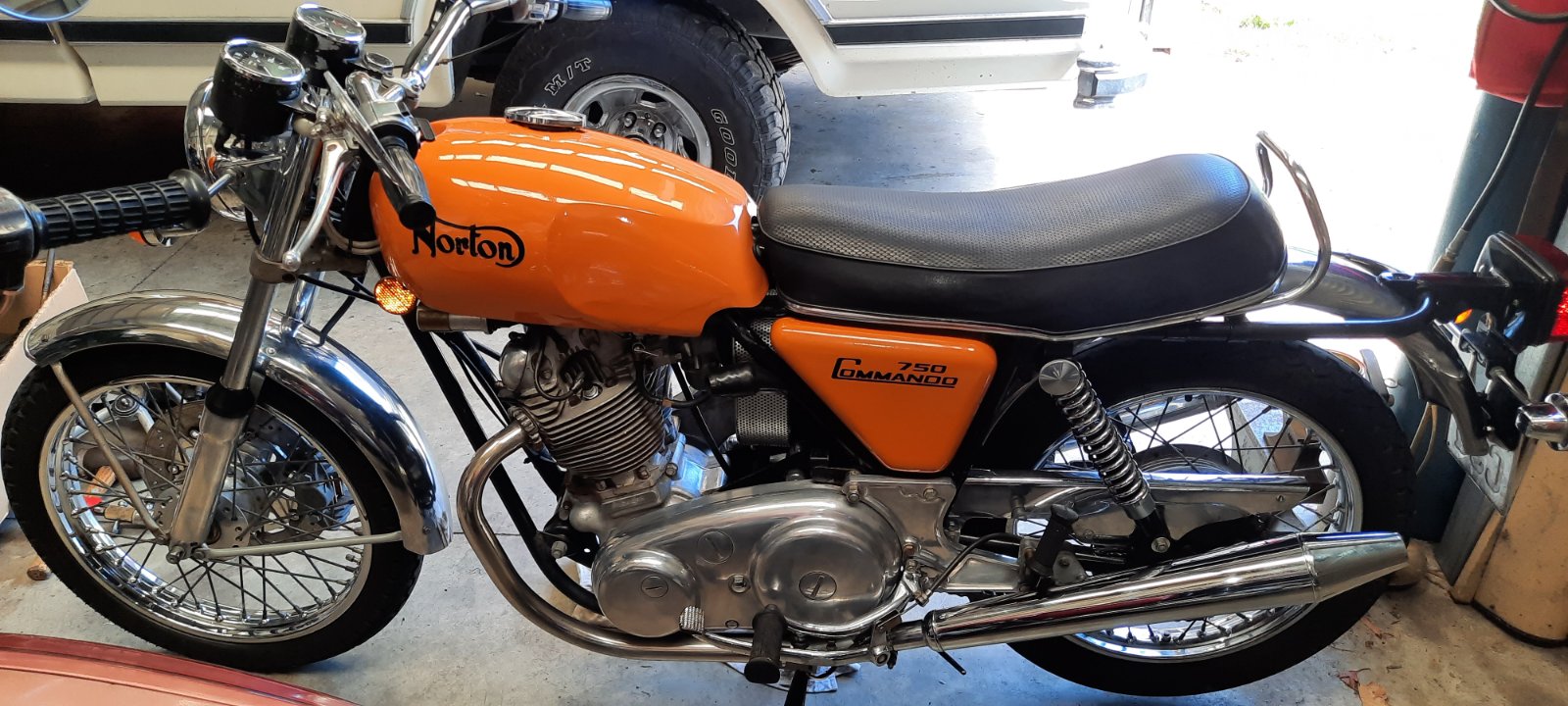

Wow nice, just like mine, it's a 73 mkV signal orange, I don't know how fast it goesThis is the best photo I have of the completed bike, will post more in the future...
.


If itis fuel starvation, the motor will usually miss, long before damage occurs, I asked the Microsoft Copilot a question -Not sure if anyone has mentioned previously - Carb fuel level and / or starvation, even a mk3 with an original well worn chocolate cam and black caps will do 100mph - of course not me, apparently a friend said!
Spend 50 bucks and put it on the dyno and see what's happen with the air fuel ratio.
 Methanol Jetting: Nonlinearity and Predictive Limits
 Calorific Value and Combustion Angularity

I read a story a long time ago.What RPM are you reaching? What needle position? The main jet kicks in at 3/4 throttle. 110 is about the limit with a 21T front sprocket so something is not adding up.


Does this work for you for maximum power because you know the advance range is perfect or is it just fixed timing and you know it also happens to give max power at the high end? If I follow this procedure on my TR44W with a Boyer Digital (red box) I lose power at the top end. I have to have the occasional kick back on starting if I don't want to give up a few HP (and I don't like that.) Sometimes it's vicious and farts smoke out the carb, sometimes it just stop stops half way like it hit a wall and farts.I set the timing statically then advance the timing till it get some kick back when kicking then retard ever so slightly till no kick back, every so slightly on the adjustments, once set right and easy kick starting (first kick every time)

Doing it this way works for me and my Norton and once its set I get no kickback at all when starting it and with the extra big spark from the Joe Hunt even better starts first kick every time , I can putt around the suburbs at low RPMs, down to 40mph in top gear but under that I got to drop it back to 3rd, but if I open the throttle right up it pulls like a train and will rev as far as I am willing to take it, I ran my old Boyer EI for over 32 years and it was the same but not as quick the Joe Hunt produces a bigger and strong spark and the pick up is quicker and gets up to the high revs quicker and with the mild work done to my 850 it will keep running freely, but I just know how far I am willing to take it as it will rev way past 8k RPMs, but that's not a good idea if you want to keep your motor in one piece lol.Does this work for you for maximum power because you know the advance range is perfect or is it just fixed timing and you know it also happens to give max power at the high end? If I follow this procedure on my TR44W with a Boyer Digital (red box) I lose power at the top end. I have to have the occasional kick back on starting if I don't want to give up a few HP (and I don't like that.) Sometimes it's vicious and farts smoke out the carb, sometimes it just stop stops half way like it hit a wall and farts.
It looks really lovely - especially the front brake - it probably protects the excellent paint job.looking for power eh ...
well it's the wrong colour and that's Laverda orange ... will go faster in BRG
(couldn't help myself)
Ashley, a few years ago, I was at a road race meeting, and across the pits - there was a bike like yours. It was being raced in Period 3 Historic, which is pre-73. I thought at the time 'I would love to be racing that' - it would be a very convincing argument in that class. The position of the motor in the featherbed frame is extremely important. The lean on the Commando motor also helps. In normal racing, we brake into corners, the accelerate out from the transition point. How the bike feels are we begin to accelerate determines how much throttle we use. With a bike like yours, it can turn and accelerate very hard. A feeling of lightness in front will deter many riders - most Tritons have that problem. The mounts on the front of the motor need to be touching the mounts on the frame. And the wheels need to be 19 inch. Actually, the power of the motor does not matter much, when the bike can be ridden that fast.Doing it this way works for me and my Norton and once its set I get no kickback at all when starting it and with the extra big spark from the Joe Hunt even better starts first kick every time , I can putt around the suburbs at low RPMs, down to 40mph in top gear but under that I got to drop it back to 3rd, but if I open the throttle right up it pulls like a train and will rev as far as I am willing to take it, I ran my old Boyer EI for over 32 years and it was the same but not as quick the Joe Hunt produces a bigger and strong spark and the pick up is quicker and gets up to the high revs quicker and with the mild work done to my 850 it will keep running freely, but I just know how far I am willing to take it as it will rev way past 8k RPMs, but that's not a good idea if you want to keep your motor in one piece lol.
As I say it works for me in how I tune my Norton, I don't even own a timing light, but after 49+ years I think I know my Norton and I am no tuning expert but I do have a sweet running Norton and my old riding mates keep telling me how sweet it runs, but my days of running flat out are over but I do love taking it up into the high revs through the gears, 2nd and 3rd are my fun gears, it never misses a beat right through the rev range it just gets up and go, love it.
With the Joe Hunt the faster the motor spins the bigger the spark it produces, best ignition I have ever run in my Norton and works so well with my old Amals that are jetted right for my motor.
Ashley


Fine with points and magnetos but my understanding is that doing this with electronic ignition will damage the ignition unit unless the spark plug wire is earthed. (on the "killed side" )"the old school way of tuning Amals is kill one cylinder and tune the running cylinder once set kill it and do the other side, I have done it this way a few time in my early days but now I do it by ear and feel with the hands at the end of the mufflers."
Yep!
Yep! If it’s firing on both cylinders, at reasonably slow idle, we’re in business."the old school way of tuning Amals is kill one cylinder and tune the running cylinder once set kill it and do the other side, I have done it this way a few time in my early days but now I do it by ear and feel with the hands at the end of the mufflers."
Yep!

I'm sure manufacturers say that because people won't completely follow instructions.Fine with points and magnetos but my understanding is that doing this with electronic ignition will damage the ignition unit unless the spark plug wire is earthed. (on the "killed side" )
ts aerAl not sure why you keep talking about methanol as it's a street bike but you keep harping on about methanol as you seem to know sweet fu ck all about road going Commando's.


