vibratory tumblers

cNw & Jim Comstock both do it, but I can't imagine how big a machine they have to do crankcase halves and heads. The media looks like swollen white rice grains and is hard - maybe ceramic. Caution, they just fit in the intake side drain hole of the head - inspect!
 
cNw & Jim Comstock both do it, but I can't imagine how big a machine they have to do crankcase halves and heads. The media looks like swollen white rice grains and is hard - maybe ceramic. Caution, they just fit in the intake side drain hole of the head - inspect!
I ran into that problem.
There is a kit available with everything pre-cut and bent...just weld it together. It's probably twice the size I would need though.
 
50+ years ago my godfather RIP had 3 industrial size machines in his 2 car garage. He did sales and service for a manufacturer called Roto Finish out of Kalamazoo, Michigan. I believe they are now called Hammond's Roto Finish. He would use the machines in the garage to prepare samples for his customers depending on the finish they desired. The finish desired, as well as the metal being finished determined the type of media used. Sometimes it was multiple types of media. Also, there may have been detergents and polishing liquids added too. At 15yo, I didn't really have a need for it, but I still have a pewter ashtray from the Watergate Hotel in DC., and plenty of fishing spoons.

45+ years ago while working for the Inductotherm Corporation, they had one of his machines in there. It was set up to run copper buss bar. The media used was S/S with a bath, it was not round, but like a flying saucer with a tit on top and bottom. I ran a 1952 Triumph pre unit primary through there and it turned out beautiful. 40 years later it was still bright and shiny.

Anyway Seattle, I don't know what you intend to do with such a small unit? 20 years ago my buddy Ed did some valve covers for a 69 Bonnie, they turned out nice. I don't know that he has the equipment set up at his house. I think he used a customer's machine. You can call him for advice. Tell him Johnny Z sent you. Here's his website.

 
Yep - those small cylindrical bowls with the shaft in the middle just won't cut it for that work - which, incidentally, is also what I'm interested in.
 
Jim Comstock did this procedure when he did my head work.6 years later it still looks new.No oil stains,etc. I think anyone that has their cases split or head work and could find someone that can do this would be very pleased with the results.Jim called the machine a mill tumbler.
Mike
 
Here’s a pic of my 920 engine being dry built with all brand new castings. Followed by some pics during final assembly after having the parts tumble polished.

The pic from before looks like concrete compared to after!


Brand new castings:
IMG_0577.jpeg


After tumble polishing, beautiful finish that stays this clean for years:
IMG_0611.jpeg
IMG_0614.jpeg
IMG_0615.jpeg
 
Last edited:
I want to use it on cases and cylinder heads.
Like Concours said below, you might want to make a few phone calls to machine shops in your area. You would never fit cases or a head in the HF unit. It's more like a toy.
The Roto Finish units I had access to were probably 5 to 6' in diameter. Call my buddy Ed @ Tri State Metal he will enlighten you. Just make sure you are sitting down when he tells you what the cost is. I'm sure you could buy a nice new car, for what they cost. He has some videos on his website. Most likely a lot cheaper to go with vapor blasting unless you plan on making a business out of it.
 
IMHO:
Soda Blasting: Gets relatively clean cases cleaner, does nothing to improve the metal. Easy cleanup.

Vapor Blasting: Gets relatively clean cases cleaner, does nothing to improve the metal. Easy to hard cleanup depending on the media.

Dry Ice Blasting: Gets cases cleaner, does nothing to improve the metal. No actual cleanup.

Bead Blasting: Gets relatively clean cases cleaner and closes up the metal if done right. If all stains are not removed it locks them in so they can't be removed. Hard cleanup.

Vibratory Tumbling: Excellent outcome, very expensive to get into, when I send cases to cNw for machine work I have them do this service as well. Easy cleanup but must be well inspected.

My Way: Excellent outcome, low cost, time consuming, and not for those unwilling to spend the time to do it right.

My Way:
1) Get cases/head as clean as you can with WD40, denatured alcohol, soap and water, etc. - blasting will not remove grease - the media will stick to it! Of course with bearings, valves, springs, etc. removed.
2) Blast with #75 Glass Abrasive at 90psi. Will be spotlessly clean, look weird, and will stain easily - do not touch with bare and especially dirty hands.
3) Wash with soap and water until almost all media is gone. If done in a stainless steel sink it's easy to feel when there is no media in the bottom of the sink.
4) Remove ALL media from the blast cabinet.
5) Put new, unused #8 Glass Beads in the blast cabinet and blast at 50psi at a angle to the metal and back 2"-4". Magic happens before your eyes and takes only a few minutes. The metal is closed and becomes new looking and stain resistant.
6) Wash with soap and water until ALL media is gone. When you're sure it's all gone, wash more! If done in a stainless steel sink it's easy to feel when there is no media in the bottom of the sink. If you feel even one bead, keep washing!
7) Blow everything absolutely dry and inspect.

Sometimes I fill all threaded holes with studs/bolts/plugs, sometimes before step 1, sometimes after step 1 and sometimes not at all. If you keep the media out of the threaded holes it is much easier to get rid of all media. If you fill the holes with them dirty, they stay dirty. I've never decided which is best but in the end, I make sure there is no media anywhere in the cases or head.

I didn't invent my way - my media supplier taught me the basics of how to do it.
 
My friend here, Fred, called Jim Comstock to see what he uses. It's a Mr. Deburr...about $4000 new plus shipping, tax, and abrasive media. No idea of how much noise this creates or the power consumption. Very spendy but does an excellent job. However, I'm a little short these days by about $3500 so I will call some metal shops in my area tomorrow.
 
Hi Greg,

What's the purpose of step 3? You could clean the object by compressed air and go on blasting with #8. Should save hours of work. I understand the need for meticulous cleansing when blasting is finished. Threaded holes may be protected by disposable plasticine.

- Knut
 
Last edited:
Hi Greg,

What's the purpose of step 3? You could clean the object by compressed air and go on blasting with #8. Should save hours of work. I understand the need for meticulous cleansing when blasting is finished. Threaded holes may be protected by disposable plasticine.

- Knut
Knut,
What is plasticine?
Thanks,Mike
 
Hi Greg,

What's the purpose of step 3? You could clean the object by compressed air and go on blasting with #8. Should save hours of work. I understand the need for meticulous cleansing when blasting is finished. Threaded holes may be protected by disposable plasticine.

- Knut
Three things:
1) Any glass abrasive in the beads and the surface may not close fully.
2) I was hounded when I first started doing this by people insisting that the glass abrasive would be stuck in the metal. With soap and water you get any of that out.
3) Blast media is insidious. You can believe it's all gone when it is nowhere near so. In a sink and using a lot of soap and water you can feel when it's gone.

In a perfect world, you could do it all with air and I even tried that early on - does not work. I've done many, this isn't a perfect world but when I'm done the parts are perfectly free of media.

I have a collection of studs that can't be used in an engine because they have been blasted free of their plating. I use those to plug the holes and/or to make sure all holes are open and free of media.
 
Blu tac works better than plasticine for protecting holes, it pulls out in one piece and has some bounce to it so it stands up to the media more effectively. Does not negate the need to wash the part after media blasting as media can still get caught in area's.

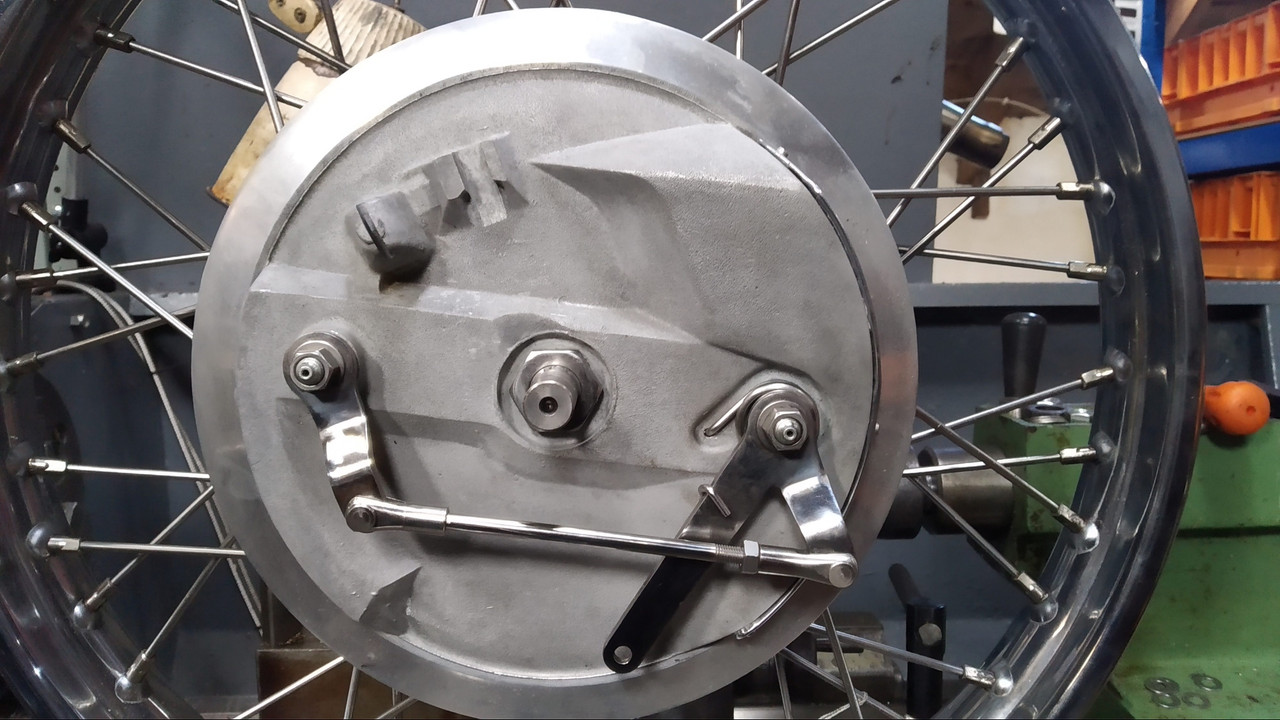
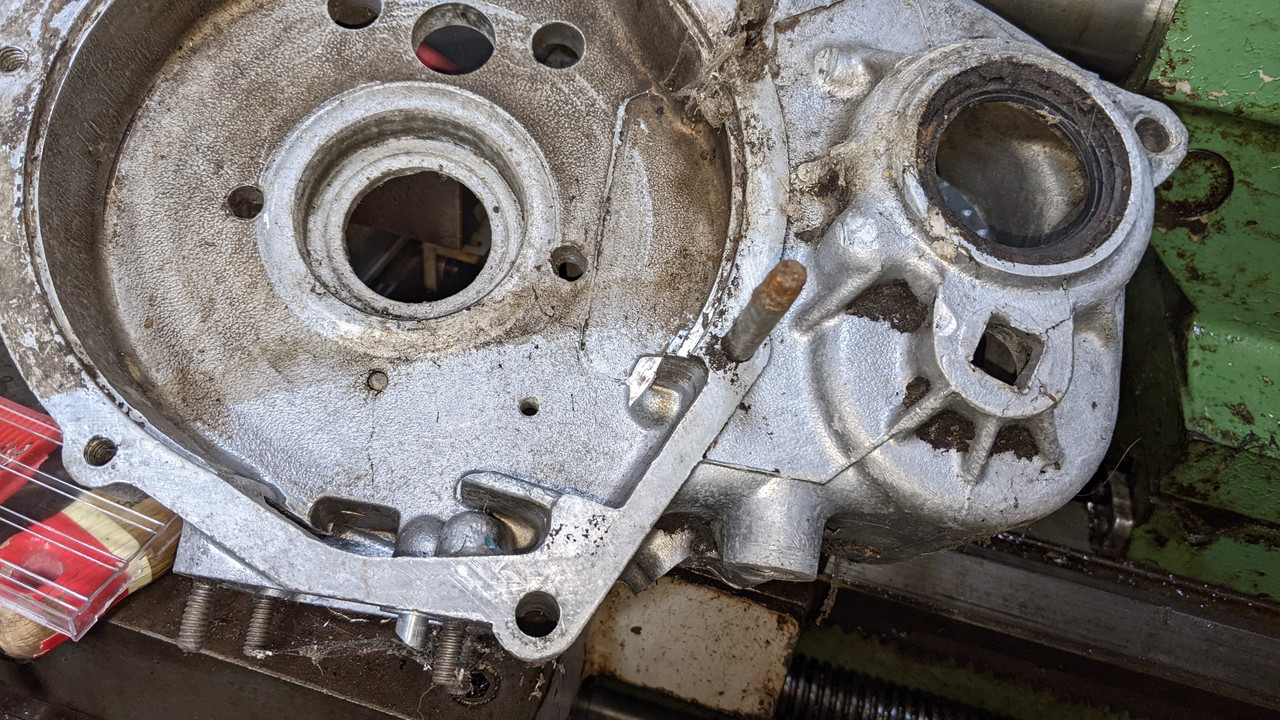
I ultrasonically clean instead.

TLS brakeplate ultrasonically cleaned and then assembled.

vibratory tumblers


and a crankcase only partially inserted and ultrasonically cleaned for 15 mins as a test.

vibratory tumblers
 
Thanks for the reference to Bostik Blue Tac. I will try it. Ultrasonic cleansing sure is an intriguing process!

- Knut
 
Back
Top