The Desaxe head gasket for correcting cylinder alignment is here

Joined
Nov 26, 2009
Messages
3,386
Country flag
When Norton went from 650 to 750 then moved the cylinders backward to accomodate the larger bore. But they did not realign the cylinder bore with the crankshaft center thus causing more vibration, more piston skirt wear and strain on the components. Instead of the cylinders being behind the crank centerline – they should be in front of it – ideally 1 or 2mm in front. This is called “Desaxe”. The JS wedge base gasket achieves this by moving the cylinder centerline approx 1 mm in front of the crank center giving you a more reliable and longer lasting motor with increased performance.

The image below shows how the wedge base gasket tapers in thickness from one end to the other (use yamabond sealer). To restore compression you should go to a thinner .003″ or .021″ JS head gasket. Its a drop in gasket. All the cylinder bolts and nuts screw in just fine.

top view
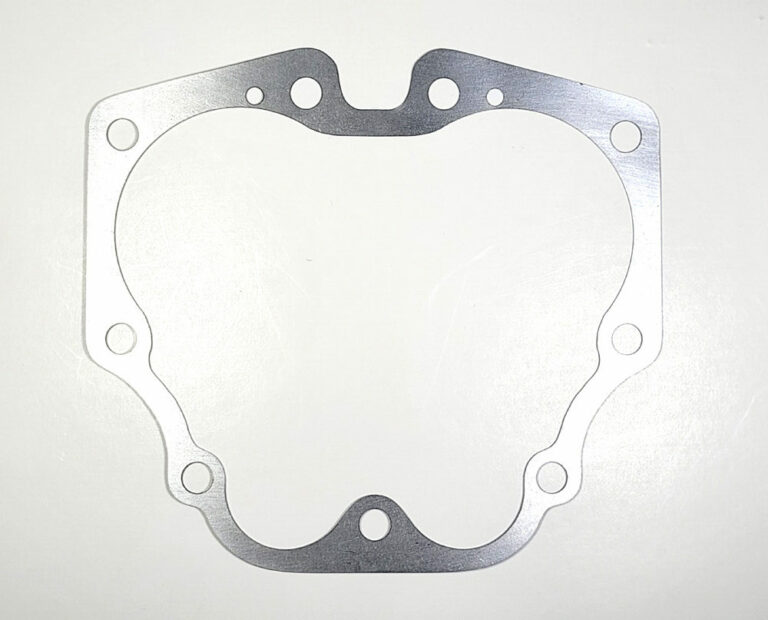
The Desaxe head gasket for correcting cylinder alignment is here


side view showing how the wedge shaped gasket tapers from one end to the other (.008" to .075")
The Desaxe head gasket for correcting cylinder alignment is here
 
Last edited:
When Norton went from 650 to 750 then moved the cylinders backward to accomodate the larger bore. But they did not realign the cylinder bore with the crankshaft center thus causing more vibration, more piston skirt wear and strain on the components. Instead of the cylinders being behind the crank centerline – they should be in front of it – ideally 1 or 2mm in front. This is called “Desaxe”. The JS wedge base gasket achieves this by moving the cylinder centerline approx 1 mm in front of the crank center giving you a more reliable and longer lasting motor with increased performance.

The image below shows how the wedge base gasket tapers in thickness from one end to the other (use yamabond sealer). To restore compression you should go to a thinner .003″ or .021″ JS head gasket. Its a drop in gasket. All the cylinder bolts and nuts screw in just fine.

top view


side view showing how the wedge shaped gasket tapers from one end to the other (.008" to .075")
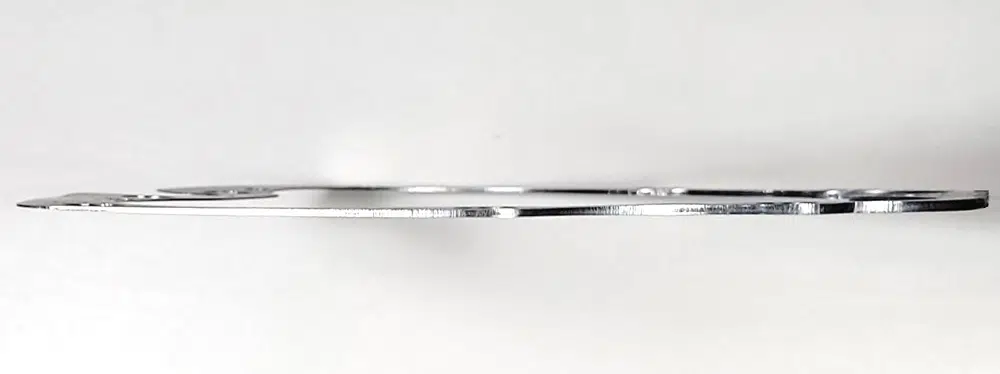
Base Gasket?
I like the idea, but your claim about less vibration - have you verified this or is it purely theoretical? i.e.:what improvement in vibration can be expected and should the crankshaft balance factor be altered to accommodate the better balance?
Cheers
 
Last edited:
Base Gasket?
I like the idea, but your claim about less vibration - have you verified this or is it purely theoretical? i.e.:what improvement in vibration can be expected and should the crankshaft balance factor be altered to accommodate the better balance?
Cheers
I don't think this has anything to do with balance factor; it's more about the forces acting on the piston which position it differently through the power stroke which provides several advantages including less wear, less vibration and better geometry which gives a slight increase in power.
 
Base Gasket?
I like the idea, but your claim about less vibration - have you verified this or is it purely theoretical? i.e.:what improvement in vibration can be expected and should the crankshaft balance factor be altered to accommodate the better balance?
Cheers
See this article:

https://motocrossactionmag.com/ask-the-mxperts-what-is-a-desaxe-engine/

The next question is - should I offset the wrist pin as well? Maybe not a full millimeter but at least .5mm

Batrider - I don't see a problem - the angle is not that great and there is some loose play between the threads so the nut still comes down flat. Its no problem for the 850 through bolts either - the top end is only deflected about 1/32" because the bolt hole is oversize. The important thing is that the engine is happier.
 
Last edited:
How much real world testing has been done with an old 650, 750, or 850 Norton twin engine?

The article about the modern single cylinder MX race engine is nifty, but what does it have to do with a Norton twin engine designed in the 1950's?
 
How much real world testing has been done with an old 650, 750, or 850 Norton twin engine?

The article about the modern single cylinder MX race engine is nifty, but what does it have to do with a Norton twin engine designed in the 1950's?
Its all about alignment of the bore to the center of the crank. Look at the earlier 650 Norton - its correct in that at least the bore is straight and aligned with the crank center (or in front) same as Triumphs, BSAs and other Brit bikes. Norton moved the cylinders backward for the larger 750 bore because that was the cheapest and easiest way. They cut corners. The wedge gasket is an easy fix to correct it - less piston skirt wear and less rattle. Its comon practice to move the wrist pin in the piston to get the same effect. I may move my wrist pins toward the front just .020" to improve this benefit. It doesn't matter which motor it is - moving the piston towards the front straightens out the con rod just a little so there is less sideways force and friction against the cylinder wall.

BTW the wedge gasket changes the angle of the bore only about 1/2 a degree ( .6).
 
Last edited:
Its all about alignment of the bore to the center of the crank. Look at the earlier 650 Norton - its correct in that at least the bore is straight and aligned with the crank center (or in front) same as Triumphs, BSAs and other Brit bikes. Norton moved the cylinders backward for the larger 750 bore because that was the cheapest and easiest way. They cut corners. The wedge gasket is an easy fix to correct it - less piston skirt wear and less rattle. Its comon practice to move the wrist pin in the piston to get the same effect. I may move my wrist pins toward the front just .020" to improve this benefit. It doesn't matter which motor it is - moving the piston towards the front straightens out the con rod just a little so there is less sideways force and friction against the cylinder wall.

BTW the wedge gasket changes the angle of the bore only about 1/2 a degree ( .6).
Cool that

I've read your description of the potential benefits, but it does need testing for an old mind like mine. Maybe some of the younger bucks that still love to tear into their engines at the drop of a hat can build an engine with the wedge base gasket or a set of pistons with the wrist pin moved backward a little.

It would take a 2 foot thick wrap around pillow to make my engine quiet and rattle less. Kidding, but I've sort of given up on making my old Norton 750 engine rattle and vibrate less. It works well enough with the parts that are in it, which does include your rods and pistons.
 
I'm having trouble thinking about how anyone would notice the vibration difference on a street Commando and I've taken apart lots of street engines where I don't see unusual skirt wear. This is seeming to me like blueprinting for the fun if it. Of course, for a race bike I would think differently.

I am very interested in the answers to the @ROB ss and @seattle##gs questions. Also, there's a thread where @TJBaker57 showed his cracked cases due to cylinder misalignment (yes, different problem).

Finally, tilting the cylinders moves the head about .15"-.2" - not a lot but what effect on the exhaust and head steady?
 
I had to brush up on my trig but I calculated the same small angle using approximate measurements. The angle would cause about a .006" gap on one edge of the nut (depending on the outer size of the nut - I guessed 5/8" across). Not ideal.
There are spherical washers that are made to correct this problem (up to 2-3 degree mismatches) but they are fairly thick and may not fit.
 
I think the vibration improvement is all about minimising wear and needless rattling, but I don't think you'd feel the difference in a Commando frame. Schwany: I'm pretty sure you'd want to move the wrist pins forward to achieve a positive Desaxe.
 
I had to brush up on my trig but I calculated the same small angle using approximate measurements. The angle would cause about a .006" gap on one edge of the nut (depending on the outer size of the nut - I guessed 5/8" across). Not ideal.
There are spherical washers that are made to correct this problem (up to 2-3 degree mismatches) but they are fairly thick and may not fit.
If you can obtain blanks (a friend with a lathe may be of help), fabricating a wedge shaped washer is simple, using a belt sander, a bolt, a nut, and some glue.

- Knut
 
To achieve less piston wear and less piston rattle the wrist pin has to be moved towards the major thrust side, which is to the rear on a commando engine. Moving the pin forwards would have a negative affect on wear and more piston rattle. Graham.
 
To achieve less piston wear and less piston rattle the wrist pin has to be moved towards the major thrust side, which is to the rear on a commando engine. Moving the pin forwards would have a negative affect on wear and more piston rattle. Graham.
False. The thrust side of a piston is at the exhaust side. For an engine with zero desaxe, moving the wrist pin forward (towards the exhaust side) will straighten the conrod at peak pressure (usually 10-15 degrees ATDC, power stroke) for an engine which rotates CW as seen from the timing side, thus reducing horizontal F_rod, and subsequently it's reaction force F_thrust.
For an engine with negative desaxe, the vector diagram gets a little cluttered, and you will need more offset towards the exhaust side, but the effect is identical.

- Knut
 
I think the vibration improvement is all about minimising wear and needless rattling, but I don't think you'd feel the difference in a Commando frame. Schwany: I'm pretty sure you'd want to move the wrist pins forward to achieve a positive Desaxe.
Agree one definitely wouldn't notice anything in the saddle riding a Norton with a ISO cradle mounted engine that was already balanced as well as possible.

I thought I was repeating what JS said when I put wrist pin rearward in my post. I have no idea what the truth actually is. I'm not an engine designer.
 
Back
Top