
You are using an out of date browser. It may not display this or other websites correctly.
You should upgrade or use an alternative browser.
You should upgrade or use an alternative browser.
Removing bezels from instrument clocks
- Thread starter solbero
- Start date


- Joined
- Jan 2004
- Messages
- 2,804

Great post.One last thing!
What I should have done when I had the gauges out of their cases, is to strip off the white reflective paint inside them and respray. The paint was flaking badly all over.
Not doing this meant that when I had the gauge upside down, and was hammering the bezel crimp, a couple fo flakes worked their way down (somehow) onto the glass. I am thinking that maybe they will vibrate off the glass while I ride but that hasn't happened yet...
They are small so I will get over it if they never disappear!
Dennis
By the way, I put LED pilot bulbs in place of their incandescent and I can actually read the gauges at night!!
I currently have one apart.
What kind of paint should be used for the inside white?
I made the mistake to not strip out the paint so I can't suggest any white paint based on my use.
But I think you want the most reflective white you can get.
Do note that the factory white paint inside is not sprayed on the whole inside. On mine, they blocked it from
the area closest to the light bulb position. I guess this kept the light even around the visible area of the dial through the glass.
I have installed LED bulbs that are far brighter and I can see the gauge properly at nightime!
Dennis
But I think you want the most reflective white you can get.
Do note that the factory white paint inside is not sprayed on the whole inside. On mine, they blocked it from
the area closest to the light bulb position. I guess this kept the light even around the visible area of the dial through the glass.
I have installed LED bulbs that are far brighter and I can see the gauge properly at nightime!
Dennis
Stephen Hill
MEMBER
- Joined
- Oct 2009
- Messages
- 1,543

I don't think many Japanese gauges were built to easily come apart for maintenance. They just built a better product to begin with, and attached it to a motorcycle that didn't suffer from strong vibration.It gauls me that the chronos have a screw on bezel and you have to stand on your head and have special tools to do up a magnetic. So the magnetic never gets lubricated and then fails. All to save how much and require
special tools? Absolutely perfect explanation of why the motorbike industry failed in UK. Add up all the
'how cheap can we go' missteps and there you are.


solbero
MEMBER
- Joined
- Mar 2025
- Messages
- 88

I thought I would give an update. I replaced the bezels on both instrument clocks yesterday. I used the Wassel bezel replacements sold by RGM Norton as replacements.
To distribute the pressure when compressing the seals I created a 3D printed holder to fit the top of the clocks.
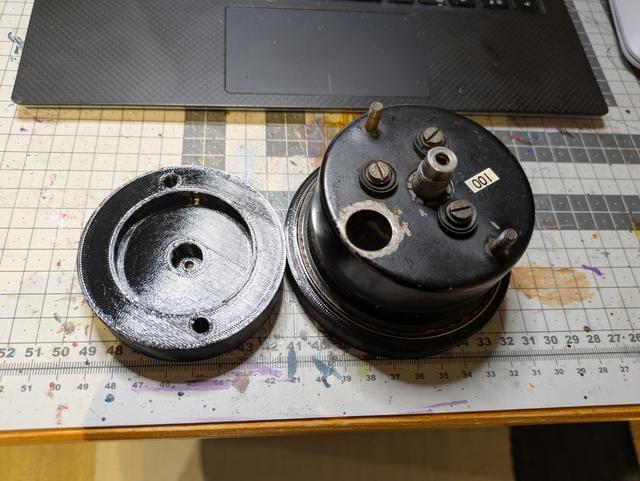
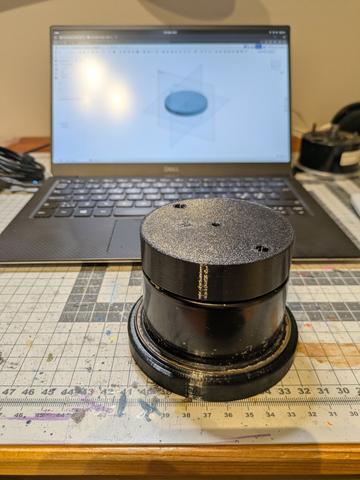
The bezels were quite stiff (the originals were much softer) and I was unable to crimp it using a socket extension as recommended by others. I ended up using a Knipex Pliers Wrench to bend and crimp the bezel. The pliers wrench had smooth, paralell jaws which created a nice, tight crimp after two passes.
To distribute the pressure when compressing the seals I created a 3D printed holder to fit the top of the clocks.
The bezels were quite stiff (the originals were much softer) and I was unable to crimp it using a socket extension as recommended by others. I ended up using a Knipex Pliers Wrench to bend and crimp the bezel. The pliers wrench had smooth, paralell jaws which created a nice, tight crimp after two passes.

concours
FULL MEMBER
- Joined
- Dec 2011
- Messages
- 10,802
The original bezels would have been batch annealed after the stamping operation, prior to plating.I thought I would give an update. I replaced the bezels on both instrument clocks yesterday. I used the Wassel bezel replacements sold by RGM Norton as replacements.
To distribute the pressure when compressing the seals I created a 3D printed holder to fit the top of the clocks.
The bezels were quite stiff (the originals were much softer) and I was unable to crimp it using a socket extension as recommended by others. I ended up using a Knipex Pliers Wrench to bend and crimp the bezel. The pliers wrench had smooth, paralell jaws which created a nice, tight crimp after two passes.


baz
FULL MEMBER
- Joined
- May 2010
- Messages
- 8,810

I did that to mine many years agoYou could have taken the opportunity to drill a hole for easy access to the set screw:
https://postimages.org/
I also run my speedo drive off the front wheel with an almost straight cable so there is never any fluctuations on the needle
I strapped my sat nav next to the speedometer and adjusted the screw until it matched the satnav
solbero
MEMBER
- Joined
- Mar 2025
- Messages
- 88
Good suggestion, I might just do that later. By the way, the three screws spaced around the cable attachment stub, what are they for? I assumed they were adjustment/set screws. But since the set screw is hidden inside, they are probably used for something else.You could have taken the opportunity to drill a hole for easy access to the set screw:
https://postimages.org/
Edit: After a little bit of thinking I realised I have to remove and fit new bezels again to drill the hole. Otherwise swarf will most likely get into the instrument.
Last edited:

L.A.B.
FULL MEMBER
- Joined
- Nov 2004
- Messages
- 21,503
They attach the mechanism to the case.By the way, the three screws spaced around the cable attachment stub, what are they for?
Similar threads


- Replies
- 9
- Views
- 1,834
