
Thanks for visiting Access Norton
- Guest view limit reached
- Create a free account (more details)
- Already a member? Click here to login
You are using an out of date browser. It may not display this or other websites correctly.
You should upgrade or use an alternative browser.
You should upgrade or use an alternative browser.
OIL NON-RETURN VALVE
- Thread starter Hal
- Start date

Hi guys,
Rather than creating a new thread about the same part, I sneak myself in here (apologies, Hal!).
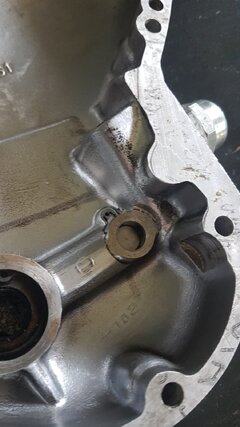
Recently I bought a very nice looking Mk3 timing cover for my rebuild. My problem is, I think the plunger for the oil NR Valve is stuck in the timing cover.
Is this known to happen to some covers and plungers?
Observation: Top of what I think is the plunger is shiny, flat and further inward towards the engine C/L than the bore's bottom, it seems. Is the drilling flat at the bottom? See enclosed picture.
I have tried with some heat, tapping, poking .... the assumed plunger doesn't move. Will I have to drill it out? I could try heating more, using a gas burner.
- Knut
Rather than creating a new thread about the same part, I sneak myself in here (apologies, Hal!).
Recently I bought a very nice looking Mk3 timing cover for my rebuild. My problem is, I think the plunger for the oil NR Valve is stuck in the timing cover.
Is this known to happen to some covers and plungers?
Observation: Top of what I think is the plunger is shiny, flat and further inward towards the engine C/L than the bore's bottom, it seems. Is the drilling flat at the bottom? See enclosed picture.
I have tried with some heat, tapping, poking .... the assumed plunger doesn't move. Will I have to drill it out? I could try heating more, using a gas burner.
- Knut
Last edited:
Apply an airline to the little bleed hole. Cover with a clean rag or cloth and give it a squirt, it should pop out.Hi guys,
Rather than creating a new thread about the same part, I sneak myself in here (apologies, Hal!).
Recently I bought a very nice looking Mk3 timing cover for my rebuild. My problem is, I think the plunger for the oil NR Valve is stuck in the timing cover.
Is this known to happen to some covers and plungers?
Observation: Top of what I think is the plunger is shiny, flat and further inward towards the engine C/L than the bore's bottom, it seems. Is the drilling flat at the bottom? See enclosed picture.
I have tried with some heat, tapping, poking .... the assumed plunger doesn't move. Will I have to drill it out? I could try heating more, using a gas burner.
View attachment 122569
- Knut
Unfortunately no joy. The plunger is stuck. It's strange, because top of the plunger looks so fresh. I have applied WD40 and will heat the cover properly next.Apply an airline to the little bleed hole. Cover with a clean rag or cloth and give it a squirt, it should pop out.
- Knut


I warmed the cover to approximately 150 degrees by Mapp gas and tapped the cover on a wooden board really hard. The plunger remains stuck.Gently warm the alloy area around the plunger it should drop out when you tap the cover on a firm surface. or apply a puff of air into it
Applying a Neodym magnet in the heated state is difficult for obvious reasons.
Last resort is to split the plunger. I don't want to pull it out by force as I fear the bevel which has formed at the end will damage bore in the cover.
I believe the bevel which locks the plunger in situ is the result of a hydroforming action due to very high oil pressure occurring during cold weather starting.
The plunger solution obviously needs a redesign.
- Knut

Thanks for the suggestion. Plunger diameter and depth precludes this solution. Besides, we don't want to expend skirt of the plunger any further.possibly an improvised blind hole bearing puller?
If I wanted, I could drill and tap the plunger's crown, then by using a sliding hammer, force the plunger out.
However, the challenge is to remove the plunger without damaging the plunger bore, and I think I need to fragment plunger by drilling or milling.
- Knut

Fast Eddie
FULL MEMBER
- Joined
- Oct 2013
- Messages
- 23,413

My understanding is that these do not ‘seize’ in the bore per se… it’s that the pistons gets cocked and wedges in the the bore.
If it’s wedged, with the corners dug in, no amount of heat or penetration is going to help.
If you drill and tap into it as dobba says, you’ll be able to manipulate it, un-cock it, and pull it out without mullering the bore.
Hopefully…
If it’s wedged, with the corners dug in, no amount of heat or penetration is going to help.
If you drill and tap into it as dobba says, you’ll be able to manipulate it, un-cock it, and pull it out without mullering the bore.
Hopefully…
Last edited:

kommando
MEMBER
- Joined
- May 2005
- Messages
- 8,088
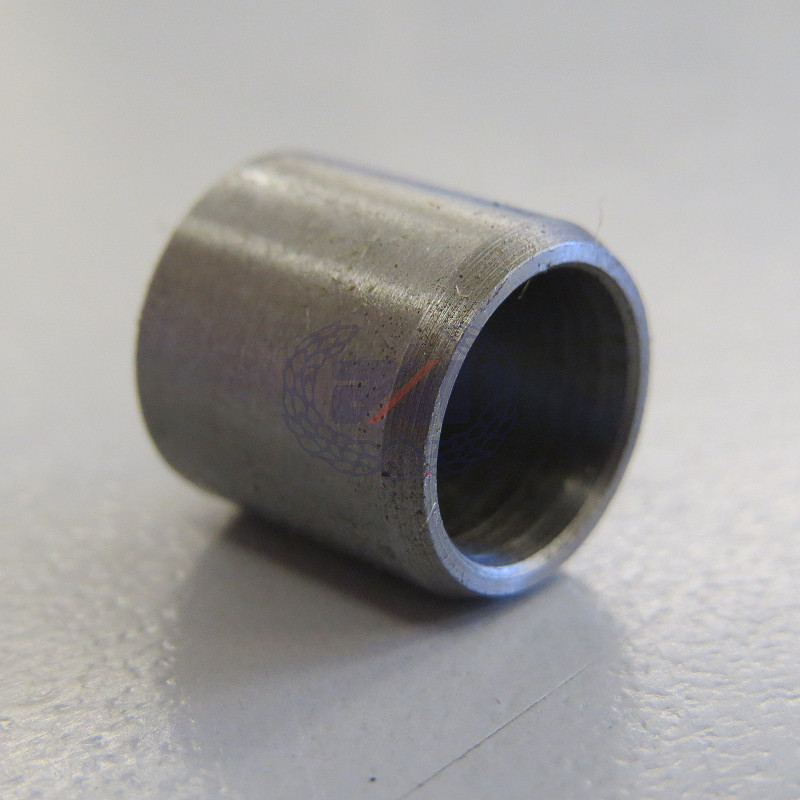
Cocked over to one side it may have created a burr it now cannot get past, as the bore does not provide the seal if a wiggle will not free it then pulling hard is the best option. After reaming out the bore to clean it up then a new plunger will need an extra wide chamfer on the front to match the rear so risk of jamming is reduced. A good polish of the chamfers and sides would not go amiss either.
Yes, hopefully. If the manipulation isn't successful (without resorting to brute force) , I will keep my die grinder ready.If you drill and tap into it as dobba says, you’ll be able to manipulate it, un-cock it, and pull it out without mullering the bore.
Hopefully…
- Knut
seattle##gs
FULL MEMBER
- Joined
- Oct 2014
- Messages
- 2,316

I've learned (not the hard way) to ALWAYS use an oil pressure gauge on a fresh motor. I was handed an already built motor to finish the bike and when I started the motor the gauge flatlined....not even a twitch in the needle. After checking all possibilities I discovered that the OPRV had been assembled with the plunger backwards. This motor had come from a professional shop.
Another time someone brought over an 850 with an inline shut-off valve that failed to open and that required a lot of work including grinding the crank journals. This was bought on line...just pictures. I would never buy a bike without seeing it run.
Another time someone brought over an 850 with an inline shut-off valve that failed to open and that required a lot of work including grinding the crank journals. This was bought on line...just pictures. I would never buy a bike without seeing it run.
The succession to my story was written in the other thread, but to conclude in this thread, no hydro forming occurs. The hoop stresses occurring at the skirt are very small, in the order of 8 MPa for the actual dimensions, so we need at least 100x higher pressure to achieve hydro forming.
Upon drilling through the plunger's crown, spring and plunger popped out. What I found was that a sludge mud pit had formed below the plunger, creating suction at the plunger. Because of the anaerobic nature of a mud pit, a considerable partial vacuum can develop, acting at the internal and external surface of the plunger holding it firmly in place. Anyone walking with Wellies in deep mud has experienced this effect! Because the small vent bore was blocked, no pressure equalization was possible, but this happened when drilling through the crown! Once bore and plunger were cleaned of sludge, the plunger slid freely and showed no tendency to stick in the lower position.
To avoid this happening again, it's advisable to clean plunger and corresponding bore in the timing cover at certain intervals.
- Knut
Upon drilling through the plunger's crown, spring and plunger popped out. What I found was that a sludge mud pit had formed below the plunger, creating suction at the plunger. Because of the anaerobic nature of a mud pit, a considerable partial vacuum can develop, acting at the internal and external surface of the plunger holding it firmly in place. Anyone walking with Wellies in deep mud has experienced this effect! Because the small vent bore was blocked, no pressure equalization was possible, but this happened when drilling through the crown! Once bore and plunger were cleaned of sludge, the plunger slid freely and showed no tendency to stick in the lower position.
To avoid this happening again, it's advisable to clean plunger and corresponding bore in the timing cover at certain intervals.
- Knut
Similar threads

- Replies
- 15
- Views
- 5,044