- Joined
- Mar 8, 2026
- Messages
- 3

Surprisely, even with new spark plugs and "probably" everything ok, zero spark! Can anyone help?


Commando from 1973 (frame 303348). No electronic, contact breakers (as original). Cleaned them with sand paper ......I think we could do with a bit more information than that? Which model, electronic (if so which type?) or points ignition, etc.

Alright, so you've set the points gaps and statically timed it according to the manual instructions. You should have power as far as the ballast resistor through the white/yellow from the kill button then white/blue wires and then to both negative 6V coil terminals through white/purple and then to each set of points and condensers from the coil positives? Make sure the points wire terminals are positioned between the insulator and the spring (as below) and not fixed under the nuts.Commando from 1973 (frame 303348). No electronic, contact breakers (as original). Cleaned them with sand paper ......
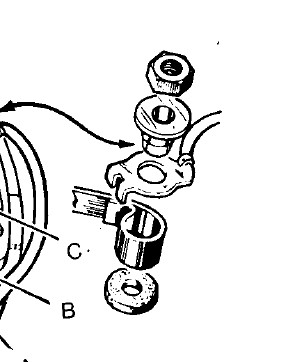


I just checked all the electrical circuit (?). There is power everywhere. I think the contact breakers should spark, but nothing. At the end, can it be from the condenser? Faulty? Maybe chaging the contact breakers and condenser something will hapen.Alright, so you've set the points gaps and statically timed it according to the manual instructions. You should have power as far as the ballast resistor through the white/yellow from the kill button then white/blue wires and then to both negative 6V coil terminals through white/purple and then to each set of points and condensers from the coil positives? Make sure the points wire terminals are positioned between the insulator and the spring (as below) and not fixed under the nuts.
It could be but I wouldn't expect both condensers to fail at the same time although I suppose it could happen and in any case the condensers generally stop the points from sparking it wouldn't necessarily prevent the engine from starting. I wouldn't expect the failure of both sets of points at once either.At the end, can it be from the condenser?


