Here's a question no one's asked

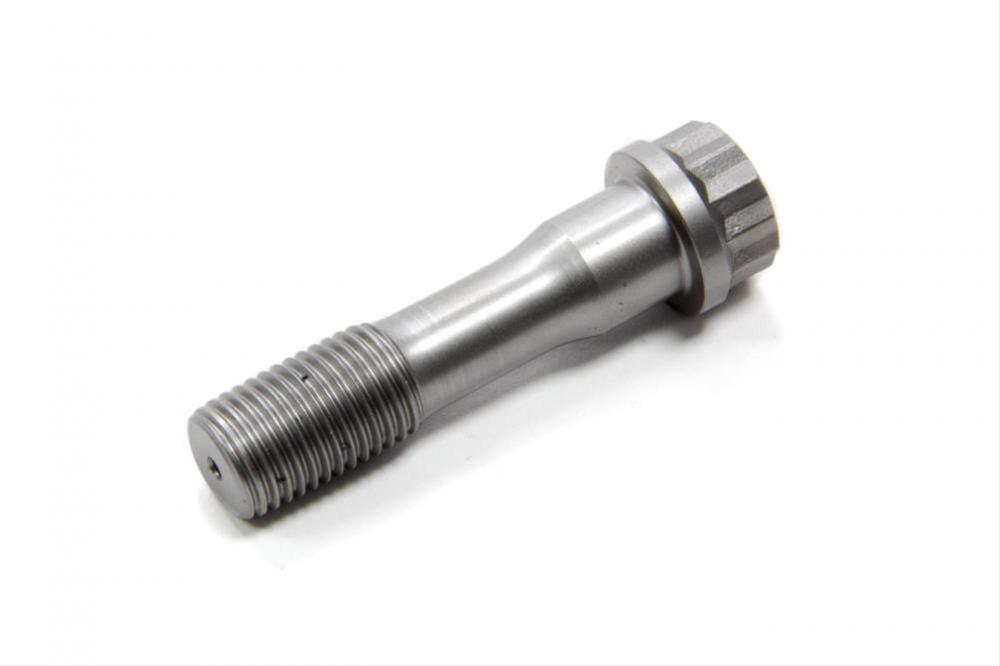
rob ss - I agree with you that waisted bolts are not as important on cast iron parts but you still see them in cast iron engines and there are plenty of aluminum cylinders out there and they're getting more popular. A reduced shank bolt is generally considered to be better and thats why you see them being used for heads and rods. The Carrillo rods are all steel and the bolts are high grade steel with reduced shanks. This gives them some more stretch than bolts with full thickness shanks and so they have a wider range of elasticity - their tension is more consistant. See the reduced shank rod bolt and chart below where the bolts can be torqued according to the bolt stretch. Many builders prefer to measure the amount of stretch on the rod bolt.

Here's a question no one's asked


Here's a question no one's asked


Below is a video I made showing how to install thread inserts with a common drill press so they are installed deep enough and come out straight.
 
Last edited:
A bolt or stud that is not stretched is not tight and will vibrate loose. The waisted section on waisted bolts & studs is usually about the same diameter as the minor diameter of the thread, so is not a weak point. Waisted bolts, regardless of length, will stretch more than standard bolts for the same torque and will stay tight for longer, especially on an engine that vibrates a lot, like a Commando. Graham.
 
My experience was that prior to using the Comstock (CnW) bolt kit, I had problems with the fasteners loosing tension and oil leaks around the pushrod tunnels.. After converting, both problems solved. YMMV of course,
Steve
I use them too (ARP version/cNw) but not for the applications above that Jim is trying to sell
Next he'll have special waisted triangular bolts for engine to cradle fixing.
Cheers
 
A bolt or stud that is not stretched is not tight and will vibrate loose. The waisted section on waisted bolts & studs is usually about the same diameter as the minor diameter of the thread, so is not a weak point. Waisted bolts, regardless of length, will stretch more than standard bolts for the same torque and will stay tight for longer, especially on an engine that vibrates a lot, like a Commando. Graham.
Interesting, the entire world is falling apart because standard nuts and bolts are used - who knew!

Cut away about 25% of a bolt's shank and it's not weaker - who knew!

:)
 
My experience was that prior to using the Comstock (CnW) bolt kit, I had problems with the fasteners loosing tension and oil leaks around the pushrod tunnels.. After converting, both problems solved. YMMV of course,
The kit that cNw sells, as best I can tell, does not include wasted studs for the three head studs being discussed here, and it does not include wasted versions of the 5/16" studs screwed into the barrels. The 5 head bolts are wasted, ARP style, but not the triangular style. So, I'm confused about what is stopping your pushrod tunnel leaks. BTW, it takes nothing special to prevent those leaks - simply follow AN's recommendations for composite head gaskets and do the required retorquing.

Also, cNw states: "Manufacturer: cNw / ARP" for these. When Jim Comstock designed something that cNw sells, cNw states: "Manufacturer: cNw / Comstock Engineering" So I don't know where the "Comstock(CnW) bolt kit" came from.


Here's a question no one's asked
 
The cNw kit used to have wasted 5/16" studs. I have them. They are problematic in that the head gasket if not glued down very carefully on the barrels can shift forward up on the waste cut during assembly putting some head gasket over the rear of the cylinder bores. Piston will beat the hell out of the head gasket. The black studs are excellent though. The cylinder fastener kit is also a good thing.

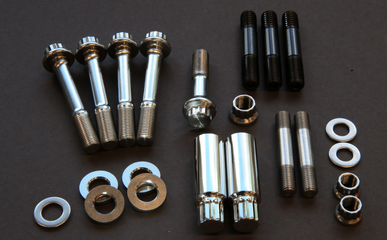
Below is the cNw hardware I removed last child's play build of my 750 Norton engine. The 3 cNw studs in question are still being used.
cNw_Bolts.jpg
 
Last edited:
ARP manufactures reduced shank (not wasted) bolts and studs that look like the parts cNw sells. JS's studs are ground by I'm not 100% sure, but are ground to his spec. The 5/16" studs JS sells wouldn't have the potential head gasket alignment issue the early ARP 5/16" reduced shank studs cNw originally sold. Of course neither would standard shank 5/16" studs. No T-shirt unless "Norton Standard Stud" works.
 
My view of the waisted or milled studs and bolts.
As already stated waisted studs can allow the gasket to move unless the gasket is doweled into place
The main reason for needing some "stretchability" is difference in heat expansion between the stud and the material it is clamping.
The three steel studs screwed into the head are clamping through cast iron so there will be negligible difference.
The two 5/16 studs at the front are in the coldest part of the head and are relatively short, so probably not a problem, leave them to help locate the gasket.
The 4 outer bolts and the middle are the longest, clamping through aluminium around the hottest part of the cylinder head. These would see the greatest benefit, as the head expands the bolts can stretch slightly, then as it cools the elasticity of the bolts will keep clamp pressure.

Similar effects can be obtained using Belville washer stacks under the bolt heads to keep a constant clamping pressure.
 
The kit that cNw sells, as best I can tell, does not include wasted studs for the three head studs being discussed here, and it does not include wasted versions of the 5/16" studs screwed into the barrels. The 5 head bolts are wasted, ARP style, but not the triangular style. So, I'm confused about what is stopping your pushrod tunnel leaks. BTW, it takes nothing special to prevent those leaks - simply follow AN's recommendations for composite head gaskets and do the required retorquing.

Also, cNw states: "Manufacturer: cNw / ARP" for these. When Jim Comstock designed something that cNw sells, cNw states: "Manufacturer: cNw / Comstock Engineering" So I don't know where the "Comstock(CnW) bolt kit" came from.


View attachment 123823
You build far more engines than I have, so I'm not trying to argue with you - obviously you have found a method that works for you. I'm simply saying that for me, using the cNw set (and getting the 3 threads helicoiled to take the new studs) fixed the problems I had with the head bolts requiring frequent retorquing (which was probably the cause of the oil leaks).

I called then Comstock(cNw) simply because they were developed by Jim Comstock and are now sold by cNw. If you search the forum, there will be a longish thread where Jim explains this.

I really miss his posts, but I always wondered where he found the time to do all the work and write about it.
 
Similar effects can be obtained using Belville washer stacks under the bolt heads to keep a constant clamping pressure.
...although, the belleville washer stack, as well as being fugly, would necessitate a longer bolt. So why not buy the proven, waisted ones?
You'd also have to do the calcs on what size and how many washers are needed to give the effective gasket clamping plus the necessary "give".
I fully support waisted ones (5/16" equivalent) be it ARP, CNW or Jim's - they all do the good job! 👍
Cheers
 
...although, the belleville washer stack, as well as being fugly, would necessitate a longer bolt. So why not buy the proven, waisted ones?
I fully support waisted ones (5/16" equivalent) be it ARP, CNW or Jim's - they do the good job! 👍
Cheers
I just threw the beleville stack in as it's commonly used in industrial applications
 
Has anybody seen or talked to Jim lately? Hows he doing
You build far more engines than I have, so I'm not trying to argue with you - obviously you have found a method that works for you. I'm simply saying that for me, using the cNw set (and getting the 3 threads helicoiled to take the new studs) fixed the problems I had with the head bolts requiring frequent retorquing (which was probably the cause of the oil leaks).

I called then Comstock(cNw) simply because they were developed by Jim Comstock and are now sold by cNw. If you search the forum, there will be a longish thread where Jim explains this.

I really miss his posts, but I always wondered where he found the time to do all the work and write about it.
Me too. Has anybody seen or talked to him lately? Hows he doing?
 
I called then Comstock(cNw) simply because they were developed by Jim Comstock and are now sold by cNw. If you search the forum, there will be a longish thread where Jim explains this.
I guess they changed. Matt always gives credit and if you look at today's offering he clearly states that is a cNw/ARP product and he talks about working with ARP to make them. On other things, like the cNw breather he clearly states Comstock Engineering and cNw and I happen to know that Jim gets a cut of each of those.

Anyway, what cNw sells today I pictured and they are not what has been described here.
 
Marshg246 - Composite head gaskets will seal for awhile but after a few years in hot weather on the street they start to leak in my experience (much sooner on the track). What finally kept my head oil tight was the addition of pliobond sealer and fine copper wire on a copper gasket. I've had my head on about 10 years now and its still very oil tight. Its never done that well before and it took a lot of experimentation and development to get there. It required everything - all the waisted bolts, the solid copper HG, the pliobond and the fine copper wire.

It gets to 110 Deg F here in central Calif and the high temps reveal the weak points where your motor will leak. I also include conical shaped Belleville spring washers or both the 3/8" and the 5/16" studs because every little bit helps. See the conical shape below. They are very thick and they are not cheap.
Here's a question no one's asked
 
Back
Top