seattle##gs
VIP MEMBER
- Joined
- Oct 28, 2014
- Messages
- 2,200

Back to the original question...Where did he come up with the elephant's foot adjusters?


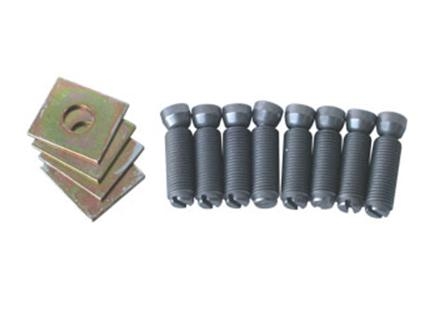
 www.coolairvw.co.uk
 www.johncraddockltd.co.uk


Come on, they are only £8.19 each!^^^ £65.50 wow !
Land Rover ones are only £1.69 each ( BSF thread ) sold singly
Search Result | John Craddock Ltd
Search results from our catalog of Land Rover and Range Rover parts and accessories


Imagine trying to tap new threads into the hardened rocker.That’s a LOT of work Jim! I’d be interested to know if the guy has any real data / evidence regarding the problem he is trying to fix and the benefits of his solution ?
Regarding off the shelf parts, IIRC the common ones folk play with are from Rotax and VW and Mercedes.
I think the VW and Mercedes ones are the same part?
Altering threads is required amongst other faffing around.
8mm Elephant Foot Valve Adjusting Screw Set (Tappet) - Type 1 Engines
CB Performance heavy duty Elephant feet adjusters feature a large foor print that covers the valve stem to reduce the chance of mushrooming
I certainly agree with the A+ !Imagine trying to tap new threads into the hardened rocker.
The custom ones pictured have the advantage that they are short and can be installed easily with little height difference.
I give the guy an A+ for ingenuity.


 www.accessnorton.com
The lash caps seem to be made of harder material and show very little wear. The Maney valves are made by GS valves, They have hardened tips and thats what I use for my big valves.I haven't found many off-the-shelf Norton valves (other than Black Diamonds) that come with hardened tips. Just bought stock 650 valves from RGM, and I don't think they have hard tips, can't see a parting line. A couple years back, a guy with 650 replacement valves posted he had wear issues, I think even with mushroom tappets.
Therefore will probably run the JSM lashcaps on mine, if they'll fit a stock retainer. That way, the wearing part becomes easily replaceable.
The parts house UK-made valves are just rebuilder valves, no stem coating treatment, no hardenned tip. Designed with planned obselesence in mind, not to be any better.
I believe only Maney stocked hardenned UK-made Norton valves.
There are several advantages.Elephant foot ???? So what is the advantage?

There are several advantages.
* No side thrust at valve guides. Particularly guides made of bronze wears due to side thrust. Valves will increasingly rattle in the guides, accelerating wear at both valve and valve guide further. If wear gets really bad, the valve's sealing will be affected.
* It's an incomprehension assuming hardened valve tips will prevent tappets digging in. Valves with hardened stem tips will still wear, though they should resist it significantly better than untreated tips.
* Friction between tappet and valve tip translates to resistance in the valve train, which means (additional) wear at the cam follower and camshaft lobe. The elephant foot tappet eliminates this factor.
* No need to maintain the valve to tappet clearance, contrary to the original design.
* Less noisy valve gear.
I think the Elephant foot tappet is an excellent invention (used by Porsche and VW, also by MB apparently, and pioneered by Dave Madigan on Triumph triples). Rejecting the idea because of convenience is a personal choice of course, but shouldn't clutter the discussion and prevent a serious test. The original German swivel foot tappets had M8x1 threads while Norton rockers have 9/32-26 TPI CEI threads, which means a custom EF tappet has to be fabricated. One has to set up the angle of these adjusters correctly, as the original swivel foot tappets have about 25 degrees of range. This may require an alteration to pushrod lengths.
I hope Jim's customer will add first hand experience.
- Knut
Image:
Einstellschraube Kipphebel für PORSCHE 911 SC 930 964 Einlass/Auslass Ventil 4251750544436 | eBay.de
Entdecke Einstellschraube Kipphebel für PORSCHE 911 SC 930 964 Einlass/Auslass Ventil in großer Auswahl ✓ Vergleichen Angebote und Preise ✓ Online kaufen bei eBay.de ✓ Kostenlose Lieferung für viele Artikel!www.ebay.de

I wonder if it's possible to use the T160 captive ball type on a Norton then?Regarding their use in Triumph's, Dave Degens was playing with these long before Dave Madigan. So were Triumph as it happens, Tridents had a similar arrangement using a captured ball with a flat that sat on the valve stem. A problem with the Trident design (and some of the others IIRC) was that big, long duration race cams we used in the twins had a range of motion greater than they were designed for.
Degens final version was to use Rotax parts and machine off the threads so you were left with a small diameter shaft / pin, then make adjusters of the correct thread, bore them, and press in the modified Rotax elephants foot.
In fact, I just had a rummage and discovered I still have some !
View attachment 121131View attachment 121132

Yes, just had a discussion with a renowned t160 owner (Tom Mellor...world record holder at Bonneville on his t160 powered streamliner). He was lamenting a loss of compression on one of his road going Tridents, stating he found some of the captive ball tappets had likely rotated out of position not letting the valve fully close. He planned to swap out for a valve stem cap arrangement.I wonder if it's possible to use the T160 captive ball type on a Norton then?
In the triple world, owners are not 100% positive about them, there are reports of the ball moving when adjusting the tappets, so that the clearance ends up as far too much, and some report cracking on the cup.
Yes I think that’s pretty much the consensus, those capture ball tappets were / are the first things to go when tuning a tripe AFAIK.Yes, just had a discussion with a renowned t160 owner (Tom Mellor...world record holder at Bonneville on his t160 powered streamliner). He was lamenting a loss of compression on one of his road going Tridents, stating he found some of the captive ball tappets had likely rotated out of position not letting the valve fully close. He planned to swap out for a valve stem cap arrangement.

