Agreed, I eventually got around to plugging up the holes for now. Fortunately I have a borescope to double check the holes are clear before closing them up.Open intake ports with washers and screws nearby, scare me...

You are using an out of date browser. It may not display this or other websites correctly.
You should upgrade or use an alternative browser.
You should upgrade or use an alternative browser.
1974 Commando 850 Barn Find
- Thread starter Hammerski
- Start date
No bolt in the bottom, but I did shim it with some foam I had lying around for some support.If you installed the bottom bolt in the oil tank, REMOVE IT (unless you are OK with a cracked tank).
Just keep an eye on the two rubber bobbins and replace them as they fatigue and crack.
I could use some help getting the final pieces together.
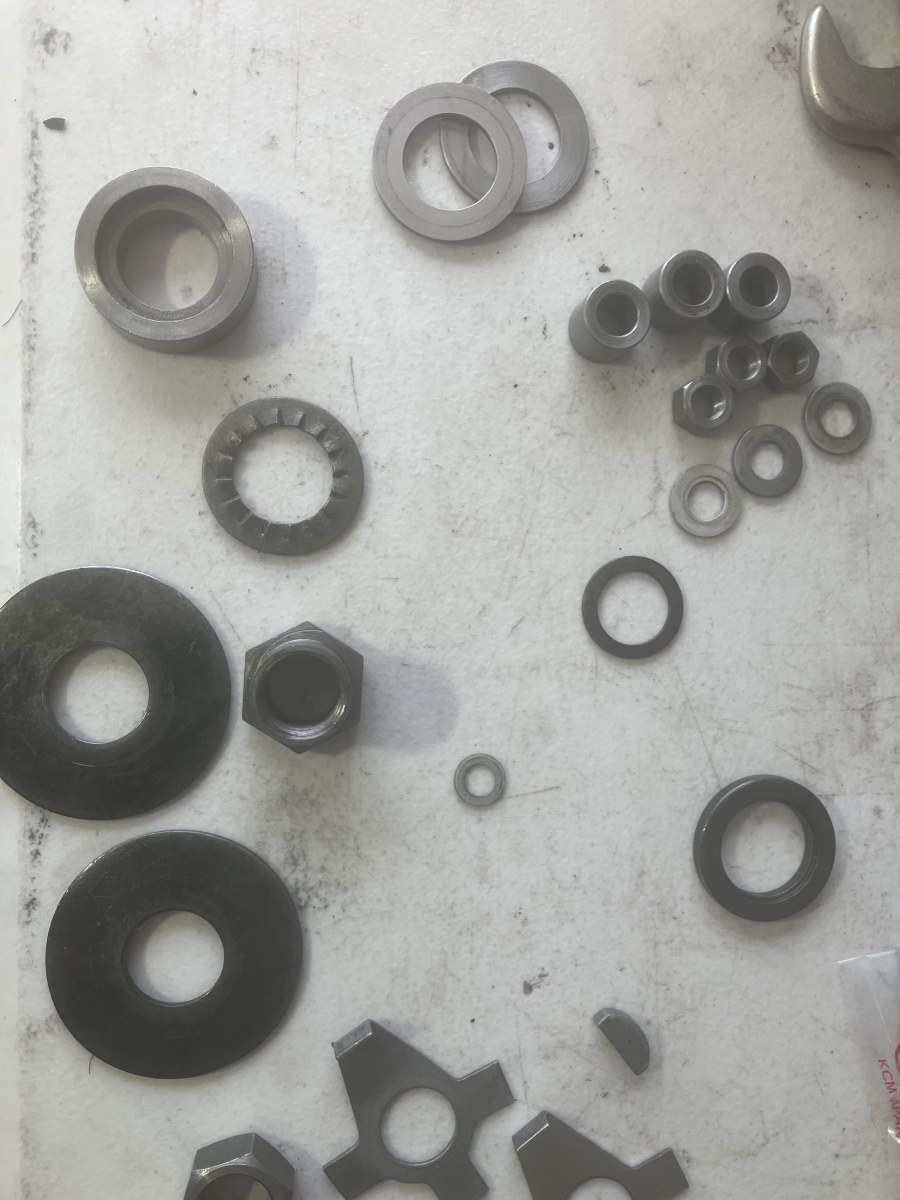
First off, where in the world to the two large washers in the picture below go? They are both slightly dished. I had them in my primary bag, but I don't see them in the parts book, although I could be missing them. This section is difficult to read.
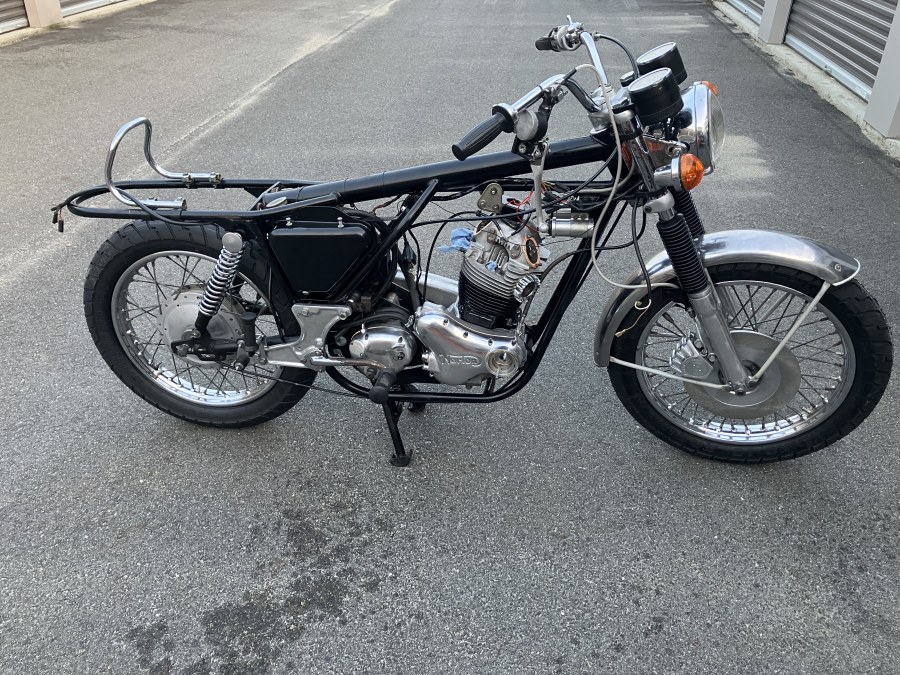
Second, does anyone have a photo of the bracket that holds the wires for the rear brake switch? I can't figure out where and whichaway it goes on.
The rest of the pieces are falling together reasonably well.
First off, where in the world to the two large washers in the picture below go? They are both slightly dished. I had them in my primary bag, but I don't see them in the parts book, although I could be missing them. This section is difficult to read.
Second, does anyone have a photo of the bracket that holds the wires for the rear brake switch? I can't figure out where and whichaway it goes on.
The rest of the pieces are falling together reasonably well.

L.A.B.
FULL MEMBER
- Joined
- Nov 2004
- Messages
- 21,508

Not a photo but a brochure picture.Second, does anyone have a photo of the bracket that holds the wires for the rear brake switch? I can't figure out where and whichaway it goes on.

grandpaul
FULL MEMBER
- Joined
- Jan 2008
- Messages
- 14,219

Those appear to be shims (#55 & 56, below) for the clutch pack, to bring it into alignment with the crank sprocket. They MIGHT need to go on after the circlip (53) and shouldered safety ring (54). You have to do the mockup FIRST, and make darn sure your inner primary is properly mounted, stand-off bolt shimmed, and THEN true up the primary chain.I could use some help getting the final pieces together.
First off, where in the world to the two large washers in the picture below go? They are both slightly dished. I had them in my primary bag, but I don't see them in the parts book, although I could be missing them. This section is difficult to read.
DISREGARD! I was looking at the two SMALLER washers.
I'll have to scratch my brain on this one...
Last edited:

Richard Tool
FULL MEMBER
- Joined
- Aug 2019
- Messages
- 2,020
Here is how mine is set up -

Also note brake pedal safety spring - highly recommended if you don’t have one . This supports the pedal to take some of the load of the brake arm spring at the hub . Andover part-no: 06.4172
Also note brake pedal safety spring - highly recommended if you don’t have one . This supports the pedal to take some of the load of the brake arm spring at the hub . Andover part-no: 06.4172
I think this must be it. The id is too small to fit on the trans main shaft, and perfect for the crank shaft. Without these the rotor nut bottoms on its threads and the rotor is spaced way inward. With them just behind the stepped spacer the rotor is centered. Odd that they’re not in the book though"First off, where in the world to the two large washers in the picture below go? They are both slightly dished. I had them in my primary bag"
Bellevelle washers for the charging rotor. (Not knowing their size)

concours
FULL MEMBER
- Joined
- Dec 2011
- Messages
- 10,809
Not odd. They are a popular upgrade to the soft steel washers.I think this must be it. The id is too small to fit on the trans main shaft, and perfect for the crank shaft. Without these the rotor nut bottoms on its threads and the rotor is spaced way inward. With them just behind the stepped spacer the rotor is centered. Odd that they’re not in the book though
Did not come from the factory.
Search here, read plenty.
Thanks for the photo and info, I'll add the safety spring to my list as well.Here is how mine is set up -
View attachment 121110
Also note brake pedal safety spring - highly recommended if you don’t have one . This supports the pedal to take some of the load of the brake arm spring at the hub . Andover part-no: 06.4172
Thought today might be the first start, but did not happen. I ended up shearing the clutch locating circlip on my way to 70 ft/lbs... have since learned that ~40 and loctite seems to be the current wisdom due to this issue.
After that I focused on ticking off all of the small jobs I had left. Finished and tested all the wiring including ignition and sparkplugs(just using the tri spark to test for now, still need to time the rotor). Mounted the rear mudguard and chain guard, rebuilt the rear brake, mounted the carbs and air filter, and filled all the fluids I could.
One thing I did notice is that the old chain is 99 links with one being a half link, and my replacement has no such half link. I cut it at 100 for now, but am pretty much out of adjustment range. Will 98 links fit with the standard 19T sprocket?
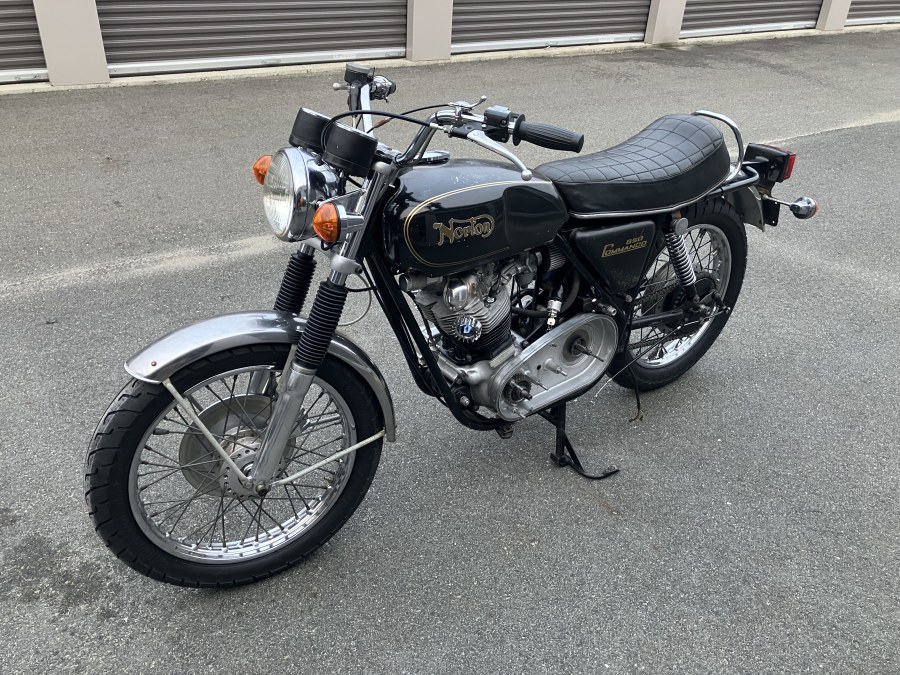
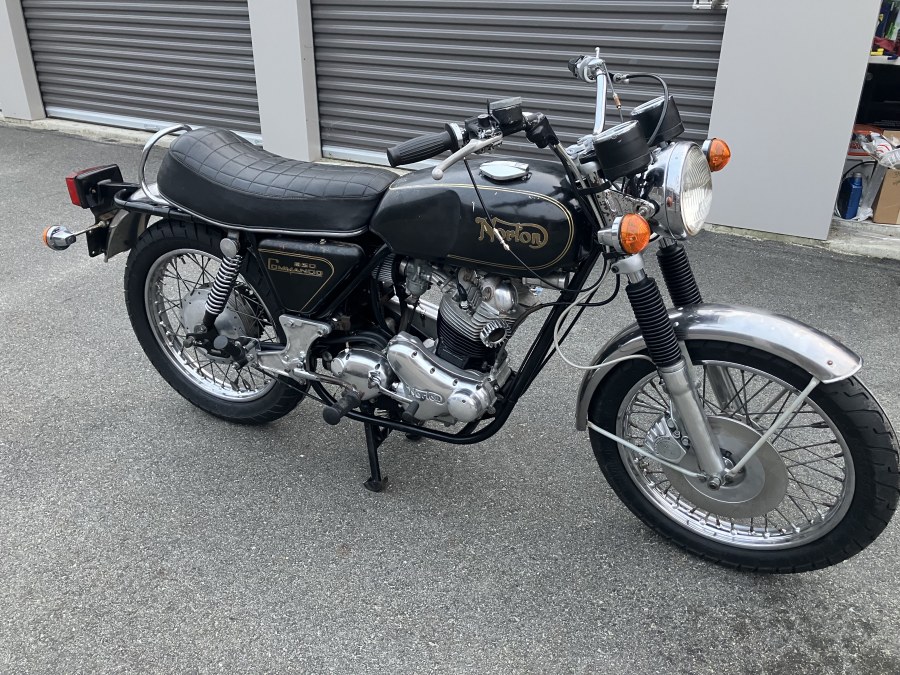
After that I focused on ticking off all of the small jobs I had left. Finished and tested all the wiring including ignition and sparkplugs(just using the tri spark to test for now, still need to time the rotor). Mounted the rear mudguard and chain guard, rebuilt the rear brake, mounted the carbs and air filter, and filled all the fluids I could.
One thing I did notice is that the old chain is 99 links with one being a half link, and my replacement has no such half link. I cut it at 100 for now, but am pretty much out of adjustment range. Will 98 links fit with the standard 19T sprocket?
L.A.B.
FULL MEMBER
- Joined
- Nov 2004
- Messages
- 21,508
One thing I did notice is that the old chain is 99 links with one being a half link, and my replacement has no such half link. I cut it at 100 for now, but am pretty much out of adjustment range. Will 98 links fit with the standard 19T sprocket?
According to the parts book, 99 links fits a 21T sprocket and 98 fits a 19T. But then 21T should be the standard sprocket size.
According to the owners manual US Roadsters had a 44T rear sprocket which I'm not sure is correct as there's no mention of a 44T rear drum sprocket in the parts book for '73 or '74.
Last edited:

PeterJoe
MEMBER
- Joined
- Dec 2011
- Messages
- 423
Those large area bellville washers don't show in the 1974 Supplement parts book because this change was done after the parts book was printed.I could use some help getting the final pieces together.
First off, where in the world to the two large washers in the picture below go? They are both slightly dished. I had them in my primary bag, but I don't see them in the parts book, although I could be missing them. This section is difficult to read.
These bellville washers are used on 1974 Norton Commandos that have an alternator rotor part number 54201144. These washers are mounted on both sides of the rotor. Basically this rotor is a modified rotor part number 54212006 with both sides machined to accept the bellville washer. This modified rotor would have the newer part number ink stamped on the backside of the rotor. There's a good chance that this number has disappeared over the years.
When using the newer type rotor, you need to insure that the woodruff key does not protrude past the rotor and bang into the inner bellville washer. A little grinding might be needed on the woodruff key. You'll note on the spacer between the engine sprocket and the rotor has a counter bore. Normally this would be facing outboard, however on my bike I have it facing inboard because there is more surface area pushing against the bellville washer with it turned this way. My bike had no shims as well.
There's no star washer used in this newer setup as well, as the spring action of the bellville washer's hold that nut tight.
A picture of your alternator rotor will confirm whether or not you'll use those bellville washers.
Here's a picture of my rotor. You can see the large area bellville washer under the nut. Apparently on the 850 Mark 3's they reverted back to the star washer arrangement. I think the Bellville washer is a better design.
Peter Firkins
Yes, those are loose and the axle pinch bolt is still on the bench until I can get everything together and confirm the forks cycle smoothly.Are the cap head pinch bolts on the lower yoke loose as I would not expect to see the heads poking out if they were tight, as below?
https://postimages.org/
L.A.B.
FULL MEMBER
- Joined
- Nov 2004
- Messages
- 21,508
the axle pinch bolt is still on the bench
Take care not to overtighten that bolt as the fork casting has been known to crack.
Very interesting. My rotor is turned like yours in the photo with flats on both sides for the washers. I'll give that a shot.Those large area bellville washers don't show in the 1974 Supplement parts book because this change was done after the parts book was printed.
These bellville washers are used on 1974 Norton Commandos that have an alternator rotor part number 54201144. These washers are mounted on both sides of the rotor. Basically this rotor is a modified rotor part number 54212006 with both sides machined to accept the bellville washer. This modified rotor would have the newer part number ink stamped on the backside of the rotor. There's a good chance that this number has disappeared over the years.
When using the newer type rotor, you need to insure that the woodruff key does not protrude past the rotor and bang into the inner bellville washer. A little grinding might be needed on the woodruff key. You'll note on the spacer between the engine sprocket and the rotor has a counter bore. Normally this would be facing outboard, however on my bike I have it facing inboard because there is more surface area pushing against the bellville washer with it turned this way. My bike had no shims as well.
There's no star washer used in this newer setup as well, as the spring action of the bellville washer's hold that nut tight.
A picture of your alternator rotor will confirm whether or not you'll use those bellville washers.
Here's a picture of my rotor. You can see the large area bellville washer under the nut. Apparently on the 850 Mark 3's they reverted back to the star washer arrangement. I think the Bellville washer is a better design.
Peter Firkins
I mocked it up with both spaces and belleville washers behind the rotor and it was close to centered in the stator and the key cleared, but I'll try again with one washer outboard of the rotor.
grandpaul
FULL MEMBER
- Joined
- Jan 2008
- Messages
- 14,219
Remember to build up the forks with yoke, fender, and axle hardware close to just barely snug FIRST. Then...Yes, those are loose and the axle pinch bolt is still on the bench until I can get everything together and confirm the forks cycle smoothly.
Sit on bike, apply front brake, and pump forks 4 -6 times. Align and tighten axle.
Repeat sitting and pumping forks, ensure no stiction, align and tighten front fender hardware.
Repeat pumping forks, ensure smooth movement, align and tighten lower yoke.
One last round of pumping, align and tighten top yoke.
Forks should be fully free to compress and rebound, and everything should remain aligned.
PeterJoe
MEMBER
- Joined
- Dec 2011
- Messages
- 423
The stator doesn't center with the rotor very well at all on a stock Commando. On my bike, I ended up making a set of three shorter spacers for the stator so that the stator would line up with the rotor better. I don't recall what the length of the spacers are right now. You can only shorten the spacers so much before the stator interferes with the inner primary cover.Very interesting. My rotor is turned like yours in the photo with flats on both sides for the washers. I'll give that a shot.
I mocked it up with both spaces and belleville washers behind the rotor and it was close to centered in the stator and the key cleared, but I'll try again with one washer outboard of the rotor.
Peter Firkins
Similar threads


- Replies
- 271
- Views
- 39,503


- Replies
- 3
- Views
- 688
- Replies
- 6
- Views
- 1,706


- Replies
- 46
- Views
- 8,350
