jimbo
VIP MEMBER
- Joined
- Sep 25, 2004
- Messages
- 2,110

This is what I am referring to in Grant's paper, not across the bulbIf you're voltage drop is across the bulb then all four Zener diodes are good.

This is what I am referring to in Grant's paper, not across the bulbIf you're voltage drop is across the bulb then all four Zener diodes are good.

Maybe you mean a selenium rectifier?? In the early days gallium was used as a detector diode in crystal sets.Are you sure you are not applying the voltage in the reverse direction. In that direction, the voltage drop should be that of a standard diode, app. .65 volts. Be careful as without a resistance you are nearly shorting the batter since the diode is biased to conduct in a near dead short.
If mine failed I would just convert to an electronic regulator of somewhat greater sophistication. That being said I am still using the gallium rectifier with rather high leakage current on my 20M3.

On my '73 Commando, modern, solid state Podtronics "upgrade" produced .2 volts LESS charging output at all RPM compared to OEM Rectifier/Zener... So it was functionally a downgrade!Correct , rectifiers .
Stopped using zeners and rectifiers a long time ago , thanks to solid state equivalents .


Some Zeners regulate the voltage too high.On my '73 Commando, modern, solid state Podtronics "upgrade" produced .2 volts LESS charging output at all RPM compared to OEM Rectifier/Zener... So it was functionally a downgrade!

I have no love for PODtronics, but that's not why. Having the correct charge voltage across the battery is what's important, not having the most.On my '73 Commando, modern, solid state Podtronics "upgrade" produced .2 volts LESS charging output at all RPM compared to OEM Rectifier/Zener... So it was functionally a downgrade!
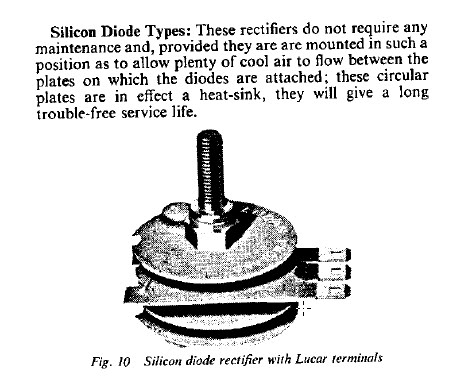
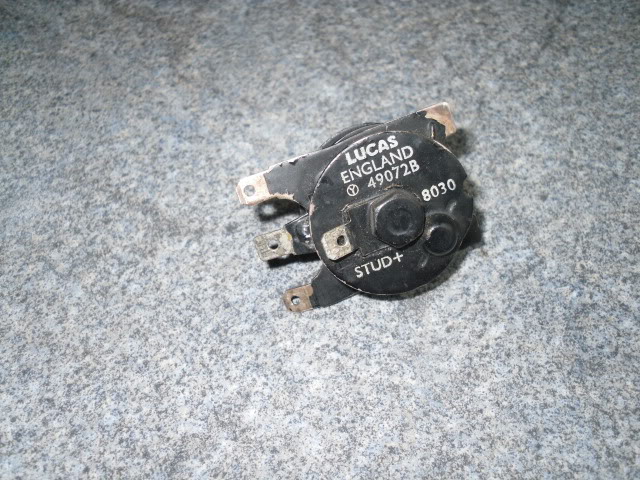
Yep, I misspoke, I was referring to early 20m3 large disc rectifiers that have a larger leakage current than the later silicon ones.Maybe you mean a selenium rectifier?? In the early days gallium was used as a detector diode in crystal sets.

I was referring to early 20m3 large disc rectifiers that have a larger leakage current than the later silicon ones.
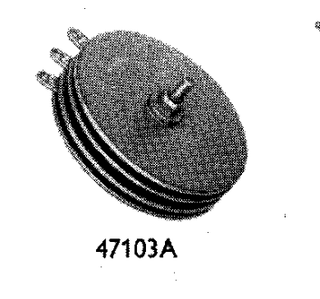
my early 126XXX Fastback, 20M3 (since sold but a very original example)had a Zener on a large aluminum disc, did you mistake that for a early rectifier?Yep, I misspoke, I was referring to early 20m3 large disc rectifiers that have a larger leakage current than the later silicon ones.