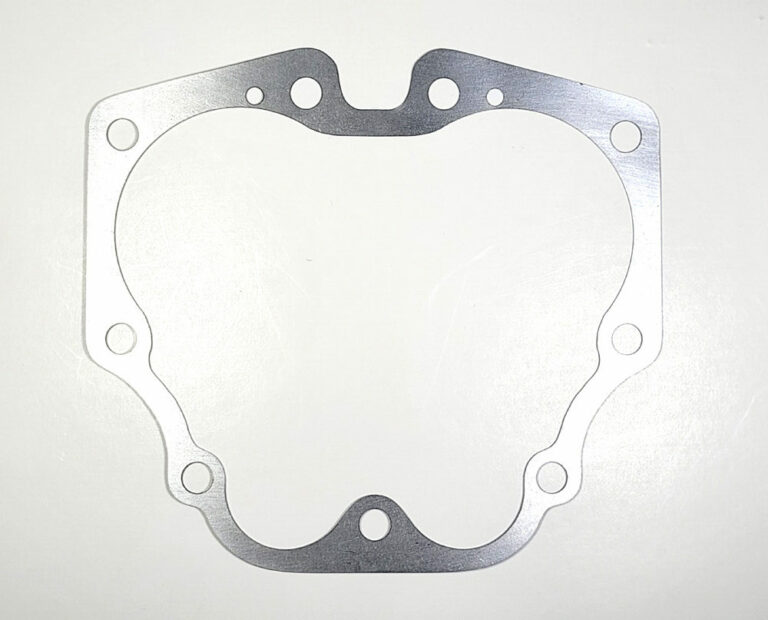
The Desaxe head gasket for correcting cylinder alignment is here

They benefits should outweigh whatever else might worry you. Note that I'm not taking things too far. I'm only taking them as far or not as far as other manufacturers have found works best. I'll be transitioning the pistons but you can always special order if you don't want to wait. I'm not expecting a stupendous improvement - just a step in the right direction towards more efficiency and reduced wear/vibration/noise. Its a few little helpful things that add up to a better running motor.
Hi Jim,
You say that we can special order them now. Will special order cost more $ than your listed price for pistons?
Also, since you offer several 750 and up pistons, is this special order option available for all?

Thanks,
Ed
 
They benefits should outweigh whatever else might worry you.
I asked three questions. The first two are not about worry, they are simple technical questions that I'm sure you can answer - why avoid them?

Since you've never answered the third for me or anyone else who has asked, I'll assume that you simply don't know what, if any, benefits there are for a street bike.
 
I asked three questions. The first two are not about worry, they are simple technical questions that I'm sure you can answer - why avoid them?

Since you've never answered the third for me or anyone else who has asked, I'll assume that you simply don't know what, if any, benefits there are for a street bike.
I hope everyone realises that writing things on the forum is entirely voluntary.

It’s an interesting project.

Even if it makes the engine worse, it’s an interesting project! I’m glad he’s doing it and telling us about it.
 
Won't that require longer rods to keep the compression ratio? Won't that increase the wear/pressure on the front of the piston skirt? What gain do you expect for a street bike?
Absolutely relevant question, Greg. I can't answer all your questions, but the first one.

As an example, for the standard rod length (6.5") and the actual desaxe of -2.36 mm (750cc), moving the desaxe to +2.36mm will alter TDC by 0.000003 mm.
For long rods (6.75") and the actual desaxe of -2.36 mm (750cc), moving the desaxe to +2.36mm will alter TDC by 0.0000009 mm.

Hence, the effect on compression ratio is negligible and there is no need to alter conrod length.

- Knut
 
Last edited:
Marshg246 - go back and read my 1st post where I say that Norton made the mistake of moving the cylinder centerline backward in the wrong direction thus increasing wear and vibration. The wedge base gasket corrects this problem and so the vibration and wear is reduced. Its common knowledge that putting the cylinder centerline in front ot the crank center reduces wear and vibration and that's why other successfull manufactures are doing it. Now go back and read the 3rd post where Rob SS mentions my claim about less vibration.

The wedge base gasket moves the cylinder centerline from in back of the crank centerline which is wrong and creates inwanted wear and vibration to in front of the crank centerline where it smoother running and reduced wear on the piston skirt. I can't say how much the difference will be or if it will be noticable or obvious - but there is a difference and its a step in the right direction. The choice is simple - leave it stock where its wrong or use the wedge gasket to achieve a smoother running and more reliable street or race motor with reduced friction. Or you can mill the cases which is a lot more trouble as I did way back in the 1980s to improve the performance and reliablility of my race bike.

Note that I also offer thinner head gaskets to raise compression - its drop in with no machining necessary.


the wedge base gasket

The Desaxe head gasket for correcting cylinder alignment is here


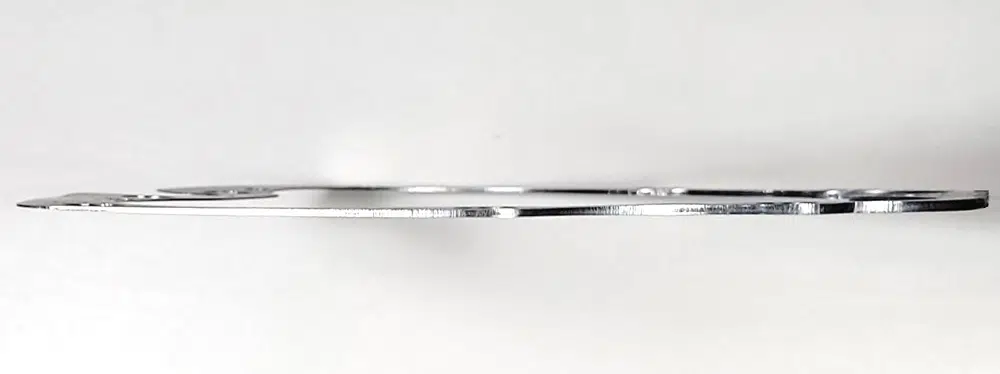
side view
The Desaxe head gasket for correcting cylinder alignment is here


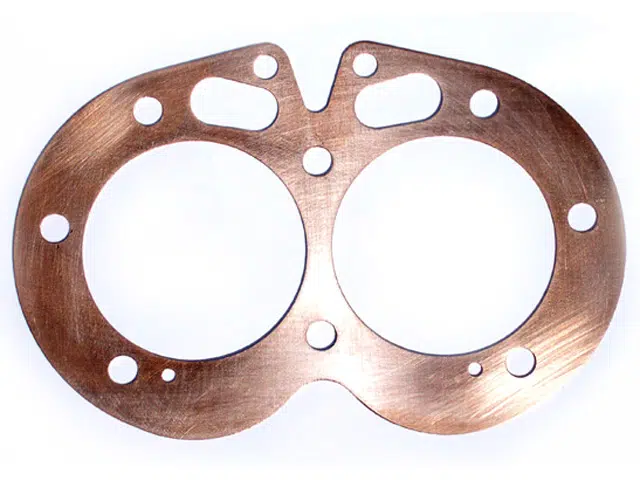
A thinner JS .020" thick head gasket to raise compression
The Desaxe head gasket for correcting cylinder alignment is here


APRRSV - There is no extra charge for offset pins but I'll order them as I need them to replace depleting stock. I'm low on some piston sizes and ordering those sizes won't cost more but they will have to be made first. Ordering a size that I'm flush on would be a special order and cost more if you onder only two pistons but there would be no extra charge if you ordered four pistons. Email me about the size you want.
 
Last edited:
The offset pins are not necessary for the wedge gaskets. The offset pins are just taking it a step further. I'll probably only offset them .020" and see how it goes.
 
Last edited:
Marshg246 - go back and read my 1st post where I say that Norton made the mistake of moving the cylinder centerline backward in the wrong direction thus increasing wear and vibration. The wedge base gasket corrects this problem and so the vibration and wear is reduced. Its common knowledge that putting the cylinder centerline in front ot the crank center reduces wear and vibration and that's why other successfull manufactures are doing it. Now go back and read the 3rd post where Rob SS mentions my claim about less vibration.

The wedge base gasket moves the cylinder centerline from in back of the crank centerline which is wrong and creates inwanted wear and vibration to in front of the crank centerline where it smoother running and reduced wear on the piston skirt. I can't say how much the difference will be or if it will be noticable or obvious - but there is a difference and its a step in the right direction. The choice is simple - leave it stock where its wrong or use the wedge gasket to achieve a smoother running and more reliable street or race motor with reduced friction. Or you can mill the cases which is a lot more trouble as I did way back in the 1980s to improve the performance and reliablility of my race bike.
I have read and re-read many times. "Common knowledge", "Reduces Wear and Vibration"; yes, you keep saying that. I and others have asked what actual difference it makes on a street bike.

In post #3 @robs ss asked: "I like the idea, but your claim about less vibration - have you verified this or is it purely theoretical? i.e.:what improvement in vibration can be expected and should the crankshaft balance factor be altered to accommodate the better balance?". Specific question - I've seen no specific answer - "just a guess" would be a fine answer!

Moving the pin forward would seem to me to increase skirt pressure and therefore wear. It would be nice if you explained how it decreases wear.

IMHO, an engine designed 80+ years ago and our 50+ year old version of that engine must not be considered the same as a modern engine.

Granted, on your race bike, every tiny improvement probably meant something. I'm rebuilding a Combat engine right now with 78k miles that one piston could go again - the other has a very scuffed skirt with some marks in the cylinder wall. It has the pistons that were known to lose their tops so I would not use them again if both were OK.
 
Last edited:
Reduced skirt pressure and wear :

I'm no expert but isn't it because the angle of the rod to bore is reduced with desaxe ( making it closer to parallel to bore if you like )

edit : ^^ this being primarily at the top of bore
 
marshg246 - crank shaft balance counterweight factors are a completely different subject and have nothing to do with the wedge plate. No you don't have to rebalance for the wedge plate. You want verification - I can verify that the cylinder alignment is wrong on the stock Norton and that the wedge plate corrects that error. With the wedge plate you are essentially blueprinting your engine. I think everyone can agree that blueprinting your engine is a good thing. I can't prove that the wedge plate reduces vibration. My customers may experience a smoother running motor or they may not notice a "seat of the pants" difference - but the benefits of a forward desaxe have already been stated by other manufactures and some of them are already listed in this thread. I do know this from experience - if you install the lighter pistons and longer rods, the lightweight valve train and the desaxe wedge gasket - you will have a notiably smoother running Norton.

Simply google "engines that use desaxe".

You'll get this and a whole lot more:

"Desaxe (offset) engines, which position the cylinder centerline away from the crankshaft axis to reduce friction and improve combustion efficiency, are used in many modern applications. Examples include the Yamaha MT-09 motorcycle engine, Ford's Dragon series engines, Honda K-series (K20C1) engines, and Yamaha's YZ450F motocross engine....
Key Examples of Engines Using Desaxe Design:
 
Last edited:
Back
Top