
Join the Access Norton Community
- Thanks for visiting Access Norton
- 1 free views left
- Create a free account (more details)
- Already a member? Click here to login
You are using an out of date browser. It may not display this or other websites correctly.
You should upgrade or use an alternative browser.
You should upgrade or use an alternative browser.
Road holder damper tubes
- Thread starter olympus
- Start date

olympus
Basic
- Joined
- Aug 5, 2017
- Messages
- 1,551

Hi Jseng1, many thanks for responding.
To be fair i carried out your mod to blank off the lower oil holes and drill an 1/8 hole in the conical section ... but man the ride is awful.... in fact the bike is almost un rideable even when using ATF in the fork legs.
The idea of having the oil hole lifted is sound & works well, but i need to increase the size of the oil hole to give me some damping.
I am asking for the diameter of the original hole so i can drill the hole larger, but small than Original
To be fair i carried out your mod to blank off the lower oil holes and drill an 1/8 hole in the conical section ... but man the ride is awful.... in fact the bike is almost un rideable even when using ATF in the fork legs.
The idea of having the oil hole lifted is sound & works well, but i need to increase the size of the oil hole to give me some damping.
I am asking for the diameter of the original hole so i can drill the hole larger, but small than Original

o0norton0o
VIP MEMBER
- Joined
- Apr 27, 2015
- Messages
- 2,261

I've done a bit of damper testing in the past, and still more to come in the future... The problems with suspension are best stated that there are 2 qualities.
1)Softness of ride- how well the movement of the forks absorb the terrain irregularities
2)Quality of handling performance- That has to do with how much the suspension reduces the force input to the chassis and maintains the traction of the tires
Unfortunately, the extremes of 2 qualities can not be achieved at the same time with springs and hydraulics. On a race track, you don't expect a highly irregular surface, so you set up for quickest handling and maximum traction for obvious reasons.
On the public roads there's more of a need to trade that responsiveness for a more forgiving ride. That's one of the reasons after adapting CBR600F4I suspension with dual circuit damper valves to my commando, the settings for public roads are still a compromise of softness for better handling and visa versa. You're not going to get both extremes at the same time. The softer you make your suspension the more ponderous and vague your bike will feel. The more responsive you make your bike's handling, the stiffer it will feel...
When I started my modification, I thought the dual circuit valving would give me both extremes at the same time. Good crisp handling on high quality road surfaces and soft responding suspension for pot hole ridden roads...... doesn't happen like that... The best you can do is trade a little bit of handling quality for a bit more forgiving ride on bumpy roads. Or, if you ride on horrible roads mostly set up your suspension for comfort instead of handling performance...
The design of early suspension was that fluid viscosity and spring choice were your only levers of adjustment. There are certainly other ways to make adjustments like progressive springs, shim stack valves, and externally adjustable low speed valving to try to give the best of both worlds. I think you can get a little better with high tech suspension, but spring choice doesn't work the same way as dual circuit valving, so when you chose a spring, you chose your range of adjustment..... a super soft spring will never give you good handling and a super stiff spring will never give you a soft ride......
You may get the hydraulic part worked out by changing the hole size,... but you might try a softer spring too. There's a lot of springs for sale cheaply on ebay. I tried a few and I also bought a race spring from race tech to test (for $150. what a waste of money) The race spring was 2 springs softer than recommended for my weight and it was still too stiff. Softer springs made the bike handling slower, but softer to ride. I think I settled on a .67kg/mm spring for my dampers and the stock commando spring I'm told is somewhere around .63kg/mm
1)Softness of ride- how well the movement of the forks absorb the terrain irregularities
2)Quality of handling performance- That has to do with how much the suspension reduces the force input to the chassis and maintains the traction of the tires
Unfortunately, the extremes of 2 qualities can not be achieved at the same time with springs and hydraulics. On a race track, you don't expect a highly irregular surface, so you set up for quickest handling and maximum traction for obvious reasons.
On the public roads there's more of a need to trade that responsiveness for a more forgiving ride. That's one of the reasons after adapting CBR600F4I suspension with dual circuit damper valves to my commando, the settings for public roads are still a compromise of softness for better handling and visa versa. You're not going to get both extremes at the same time. The softer you make your suspension the more ponderous and vague your bike will feel. The more responsive you make your bike's handling, the stiffer it will feel...
When I started my modification, I thought the dual circuit valving would give me both extremes at the same time. Good crisp handling on high quality road surfaces and soft responding suspension for pot hole ridden roads...... doesn't happen like that... The best you can do is trade a little bit of handling quality for a bit more forgiving ride on bumpy roads. Or, if you ride on horrible roads mostly set up your suspension for comfort instead of handling performance...
The design of early suspension was that fluid viscosity and spring choice were your only levers of adjustment. There are certainly other ways to make adjustments like progressive springs, shim stack valves, and externally adjustable low speed valving to try to give the best of both worlds. I think you can get a little better with high tech suspension, but spring choice doesn't work the same way as dual circuit valving, so when you chose a spring, you chose your range of adjustment..... a super soft spring will never give you good handling and a super stiff spring will never give you a soft ride......
You may get the hydraulic part worked out by changing the hole size,... but you might try a softer spring too. There's a lot of springs for sale cheaply on ebay. I tried a few and I also bought a race spring from race tech to test (for $150. what a waste of money) The race spring was 2 springs softer than recommended for my weight and it was still too stiff. Softer springs made the bike handling slower, but softer to ride. I think I settled on a .67kg/mm spring for my dampers and the stock commando spring I'm told is somewhere around .63kg/mm
Last edited:

johnm
VIP MEMBER
- Joined
- Feb 26, 2008
- Messages
- 2,041

The workshop manual for the post 1970 bikes including Mk2 850 says 36.5 lb/ft or 0.652 kg/mm.I've done a bit of damper testing in the past, and still more to come in the future... The problems with suspension are best stated that there are 2 qualities.
1)Softness of ride- how well the movement of the forks absorb the terrain irregularities
2)Quality of handling performance- That has to do with how much the suspension reduces the force input to the chassis and maintains the traction of the tires
Unfortunately, the extremes of 2 qualities can not be achieved at the same time with springs and hydraulics. On a race track, you don't expect a highly irregular surface, so you set up for quickest handling and maximum traction for obvious reasons.
On the public roads there's more of a need to trade that responsiveness for a more forgiving ride. That's one of the reasons after adapting CBR600F4I suspension with dual circuit damper valves to my commando, the settings for public roads are still a compromise of softness for better handling and visa versa. You're not going to get both extremes at the same time. The softer you make your suspension the more ponderous and vague your bike will feel. The more responsive you make your bike's handling, the stiffer it will feel...
When I started my modification, I thought the dual circuit valving would give me both extremes at the same time. Good crisp handling on high quality road surfaces and soft responding suspension for pot hole ridden roads...... doesn't happen like that... The best you can do is trade a little bit of handling quality for a bit more forgiving ride on bumpy roads. Or, if you ride on horrible roads mostly set up your suspension for comfort instead of handling performance...
The design of early suspension was that fluid viscosity and spring choice were your only levers of adjustment. There are certainly other ways to make adjustments like progressive springs, shim stack valves, and externally adjustable low speed valving to try to give the best of both worlds. I think you can get a little better with high tech suspension, but spring choice doesn't work the same way as dual circuit valving, so when you chose a spring, you chose your range of adjustment..... a super soft spring will never give you good handling and a super stiff spring will never give you a soft ride......
You may get the hydraulic part worked out by changing the hole size,... but you might try a softer spring too. There's a lot of springs for sale cheaply on ebay. I tried a few and I also bought a race spring from race tech to test (for $150. what a waste of money) The race spring was 2 springs softer than recommended for my weight and it was still too stiff. Softer springs made the bike handling slower, but softer to ride. I think I settled on a .67kg/mm spring for my dampers and the stock commando spring I'm told is somewhere around .63kg/mm
I'm investigating my fork right now because the Landsdown setup is showing way too much sag. Static no rider is at least 1.5 inches. With me on it half the range is gone.
I'm looking at either packing out to increase the ride height or stronger springs. But yesterday I measured the standard spring and the Landsdown spring to coil bind. About 5.625 in to full coil bind.
There really isn't much space available to install stiffer springs by increasing wire diameter. Decreasing the no of coils is another way I guess.
o0norton0o
VIP MEMBER
- Joined
- Apr 27, 2015
- Messages
- 2,261
When I was doing my research, I came across an interesting way to test springs. It involved a bathroom scale and compressing the spring exactly 1" while the foot of the damper was on the scale. I can't remember the way to calculate it but I ended up testing springs I bought off ebay and had .85 (race tech), .75, .67, and a progressive spring that was 55/80 (written on the box that it came in) I didn't like the progressive spring at all. Maybe I didn't give it a long enough time testing before I switched but it felt weird. The .85 was crisp, but a bit stiff for public roads and race tech spec'd 95kg/mm for a person my weight. I kept going down in spring tension and decided on the more .67kg spring because I don't need to be pushing myself to ride more aggressively on public roads so I traded a little more comfort for a bit less performance...

ludwig
Basic
- Joined
- Aug 30, 2006
- Messages
- 888

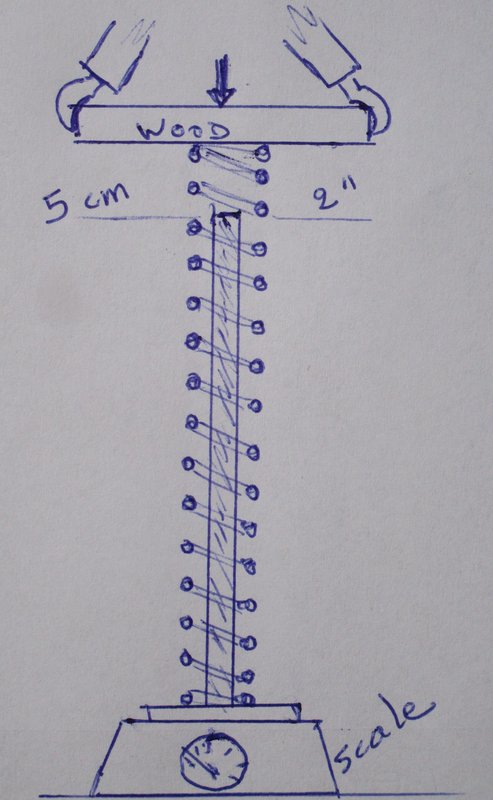
Years ago I posted this easy way to test springs:When I was doing my research, I came across an interesting way to test springs. It involved a bathroom scale and compressing the spring exactly 1" while the foot of the damper was on the scale. .
Put a solid bar/rod inside the spring, 5 cm (2 inch) shorter than the spring.
Place it on a bathroom scale and push down with a wooden block till the block touches the rod.
Read scale, divide by 5 for kg/cm. Divide by 2 for lbs/inch.
It is pretty accurate.
o0norton0o
VIP MEMBER
- Joined
- Apr 27, 2015
- Messages
- 2,261
I bought them in a speculative way..... crazy, but this is how I did it..
I would browse ebay for motorcycle fork springs, then try to narrow down the years I was looking for because modern bikes have much fatter fork tubes and their springs are too wide to fit in the commando fork tubes (34.5mm as I recall)
So I would scroll along ebay with a second browser window open to this website.
 www.motorcyclespecs.co.za
Then I would look to see the weight of the bike in the ebay add to see if it was at least as heavy as a commando so I could determin if I thought the spring would be worth the trouble to buy and test.
Then I would go here to check the fork tube diameter of the springs I was looking at to know if it would fit in the norton fork tubes....
https://kiwavmotors.com/en/faq/abou...1XqsjkHSRIZYhpRRFaq6RnVKdMBCL_E17rU7-3ONAHPhh
After that, it was a crap shoot. I bought the race springs knowing their spring rate and the progressive springs knowing their spring rate. The others I bought and tested using the bathroom scale method.
Edited to add: Ludwig to the rescue! ha ha, I forget how exactly I did it. I think I found the 1" method online, and don't remember the exact method, just that it was as you described. A very simple method to do at home with a bathroom scale.
I would browse ebay for motorcycle fork springs, then try to narrow down the years I was looking for because modern bikes have much fatter fork tubes and their springs are too wide to fit in the commando fork tubes (34.5mm as I recall)
So I would scroll along ebay with a second browser window open to this website.
Motorcycle Specifications Home Page
Motorcycle Specifications Overviews and Road Tests
www.motorcyclespecs.co.za
Then I would look to see the weight of the bike in the ebay add to see if it was at least as heavy as a commando so I could determin if I thought the spring would be worth the trouble to buy and test.
Then I would go here to check the fork tube diameter of the springs I was looking at to know if it would fit in the norton fork tubes....
https://kiwavmotors.com/en/faq/abou...1XqsjkHSRIZYhpRRFaq6RnVKdMBCL_E17rU7-3ONAHPhh
After that, it was a crap shoot. I bought the race springs knowing their spring rate and the progressive springs knowing their spring rate. The others I bought and tested using the bathroom scale method.
Edited to add: Ludwig to the rescue! ha ha, I forget how exactly I did it. I think I found the 1" method online, and don't remember the exact method, just that it was as you described. A very simple method to do at home with a bathroom scale.

marinatlas
Basic
- Joined
- Nov 4, 2007
- Messages
- 1,514

So try to find only someone (John Holmes on the NOC !) said 200mm2 for both holes , so 100 MM2 for one equals to PI R2 so nearly 5.6 mm each , correct me if I am wrong ; and no I will not dismantle one fork to checkHi Guys. Very Interesting read, but I still need to know the original hole size drilled in the tubes??


kommando
Basic
- Joined
- May 7, 2005
- Messages
- 7,892
That is the hole x sectional area on the stanchion bottom bushes, its extra large so it does not allow the oil flowing in or out of the gap between the top and bottom bushes to create a damping effect to add to the rod damper setup. Its, coincidentally or not, the same as Honda bottom bushes with the Showa shim stack damper tubes.200mm2 for both holes
marinatlas
Basic
- Joined
- Nov 4, 2007
- Messages
- 1,514
Sorry , I do not have understood what you have said in the NOC ,That is the hole x sectional area on the stanchion bottom bushes, its extra large so it does not allow the oil flowing in or out of the gap between the top and bottom bushes to create a damping effect to add to the rod damper setup. Its, coincidentally or not, the same as Honda bottom bushes with the Showa shim stack damper tubes.

kommando
Basic
- Joined
- May 7, 2005
- Messages
- 7,892
Its actually in stanchion just above the bottom bush, as the two bushes get close the hole is progressively covered and acts as a top out bump stop using the oil trapped between the top and bottom bush. That's provided the travel allowed actually lets the hole be covered and hence the need for extra long top bushes for the top out bump stop to work.
o0norton0o
VIP MEMBER
- Joined
- Apr 27, 2015
- Messages
- 2,261
Hi Guys. Very Interesting read, but I still need to know the original hole size drilled in the tubes??
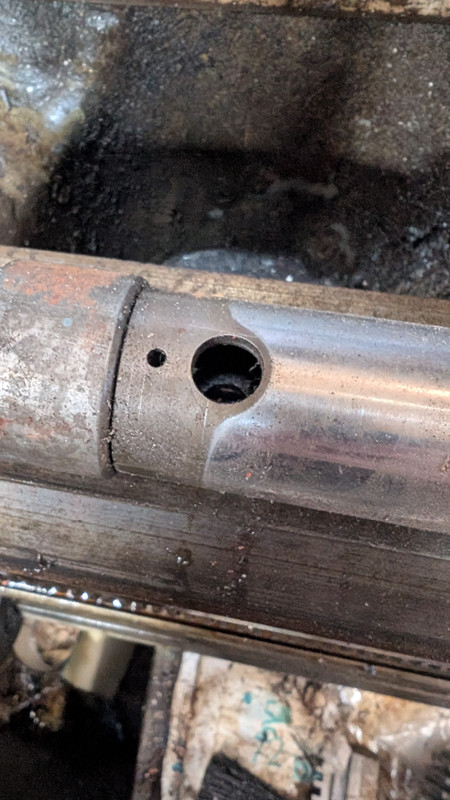
I don't know if you mean damper hole or fork tube hole, so here's a damper hole picture. the hole is .25" by my measurement.
olympus
Basic
- Joined
- Aug 5, 2017
- Messages
- 1,551
Marvelous, thank youI don't know if you mean damper hole or fork tube hole, so here's a damper hole picture. the hole is .25" by my measurement.
View attachment 119184

jseng1
Basic
- Joined
- Nov 26, 2009
- Messages
- 3,459
Olympus said: "I need to increase the size of the oil hole to give me some damping"
Increasing the size of the oil hole in the damper tube (not the fork stanchion) will not give you any damping. Instead it will eliminate damping. Compression damping is increased with a smaller hole. It is reduced with a bigger hole. Compression damping slows down the speed at which the forks compress.
A quote from my website:
"Drill one 1/8” hole in the middle of the conical section and you will have minimal compression damping. To reduce compression damping for a softer ride drill the hole to 1/4” diameter or leave it as stock) (prefered for street)."
After you have covered the holes below the conical section on early model (750) damper tubes to eliminate bottoming clunk"
"If you already have large 1/4" holes in (or above) the conical section then you are finished. But if there is no hole then you must drill a new one. Drill one 1/8” hole in the middle of the conical section and you will have minimal compression damping for racing. To eliminate compression damping for a softer ride drill the hole to 1/4” diameter (prefered for street)."
see this link for more details - https://jsmotorsport.com/fork-damping-sleeves/
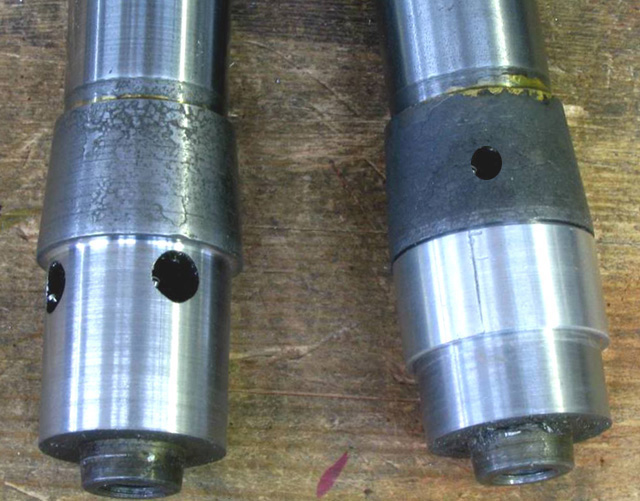
Personally I use one 1/8" diameter hole for minimal compression damping and don't notice much or any difference on the street.
The later model (850) damper tube shown below has the two 1/4" holes correctly located to eliminate bottoming clunk and does not need the aluminum sleeve or modifications as shown above.

Increasing the size of the oil hole in the damper tube (not the fork stanchion) will not give you any damping. Instead it will eliminate damping. Compression damping is increased with a smaller hole. It is reduced with a bigger hole. Compression damping slows down the speed at which the forks compress.
A quote from my website:
"Drill one 1/8” hole in the middle of the conical section and you will have minimal compression damping. To reduce compression damping for a softer ride drill the hole to 1/4” diameter or leave it as stock) (prefered for street)."
After you have covered the holes below the conical section on early model (750) damper tubes to eliminate bottoming clunk"
"If you already have large 1/4" holes in (or above) the conical section then you are finished. But if there is no hole then you must drill a new one. Drill one 1/8” hole in the middle of the conical section and you will have minimal compression damping for racing. To eliminate compression damping for a softer ride drill the hole to 1/4” diameter (prefered for street)."
see this link for more details - https://jsmotorsport.com/fork-damping-sleeves/
Personally I use one 1/8" diameter hole for minimal compression damping and don't notice much or any difference on the street.
The later model (850) damper tube shown below has the two 1/4" holes correctly located to eliminate bottoming clunk and does not need the aluminum sleeve or modifications as shown above.
Last edited:
jseng1
Basic
- Joined
- Nov 26, 2009
- Messages
- 3,459
Reducing a single hole in the damper to smaller than 1/8" will give more compression damping. 3/32" is about as small as you can go. Smaller than that brings cavitation problems. But I don't think you want any compression damping. Compression damping gives you a harsher ride because its similar to stiffer springs - compression damping makes the forks compress slower so you feel the bumps more. Compression damping is good for racing to reduce fork dive on braking but its not recommended for the street (or at least kept to a minimum).
Tighter damper caps and damper valves will increase the rebound damping so your forks extend slower. This reduces the pogoing up and down bouncing after you hit a bump.
Extended top bushings or alum sleeves should eliminate the top out clunk. But for a smoother ride you need synthetic (non-metalic bushings) because they are more slippery than bronze and make you suspension more subtle.
Tighter damper caps and damper valves will increase the rebound damping so your forks extend slower. This reduces the pogoing up and down bouncing after you hit a bump.
Extended top bushings or alum sleeves should eliminate the top out clunk. But for a smoother ride you need synthetic (non-metalic bushings) because they are more slippery than bronze and make you suspension more subtle.