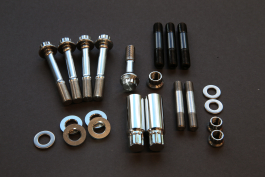
A recent conversation elsewhere about head fasteners prompted me to share this:
I’m currently running two Commando motors, a 920 and a 1007.
Both of these have bigger bores than stock and alloy barrels.
Both of those facts above present extra challenges when it comes to head gasket sealing.
Both motors are (currently, touch wood) sealing perfectly in terms of combustion and oil. The 920 in particular has been together several years now and has been used on the track and the road.
Both motors use copper gaskets (no other choice with these configurations).
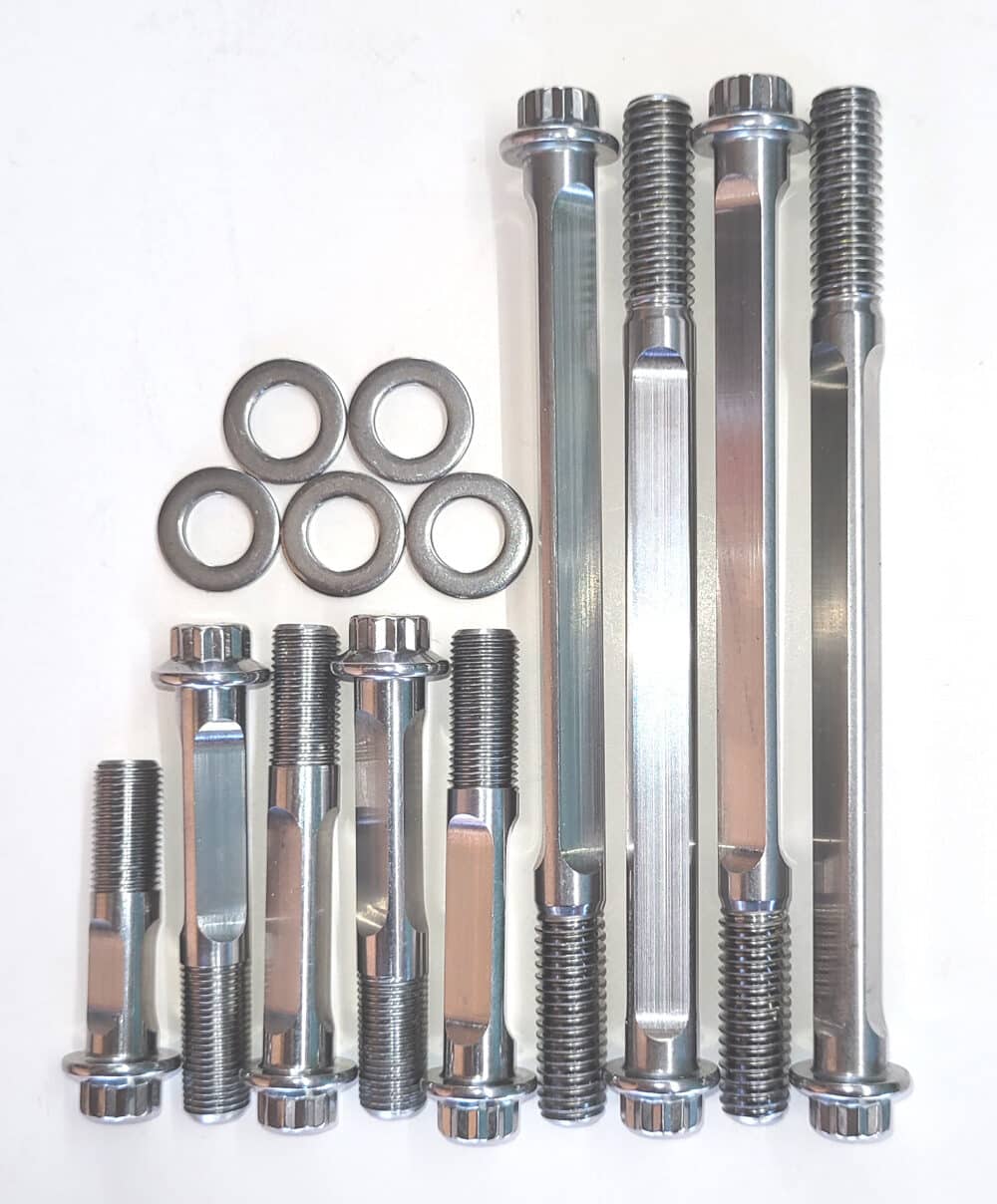
I attribute at least part of this success to the use of high quality, waisted shank fasteners.
I know these aren’t for everyone, but I believe they help with gasket sealing in a big way as they allow stretch, whilst maintaining clamping force, whilst preventing bolts over stretching or gaskets or aluminium faces being crushed.
We are lucky to have two suppliers who’ve done all the hard work and supply these for us. I’ve used parts from both, both highly recommended IMO (the small 12 point heads also make access and tightening MUCH easier):
Type 3 5 ea ARP/cNw 12 point head bolts. 3/8 – 26 thread. ARP 300 series, heat-treated stainless that is rated at 180KSI (180,000 psi) The 5 bolts above are also cut down in the center or ‘waisted’ in order to accurately maintain a torque 3 ea ARP head studs. 3/8 – 16 x 3/8 – 24. ARP 8740...

coloradonortonworks.net
The fluted shanks allow the studs to stretch to prevent the threads from pulling out. The stretch keeps bolts and studs tight to help prevent oil leaks because they can stretch and contract along with…
jsmotorsport.com