Carburetor Leakage Measured

ggryder

MEMBER
Joined
Aug 2010
Messages
215
Country flag
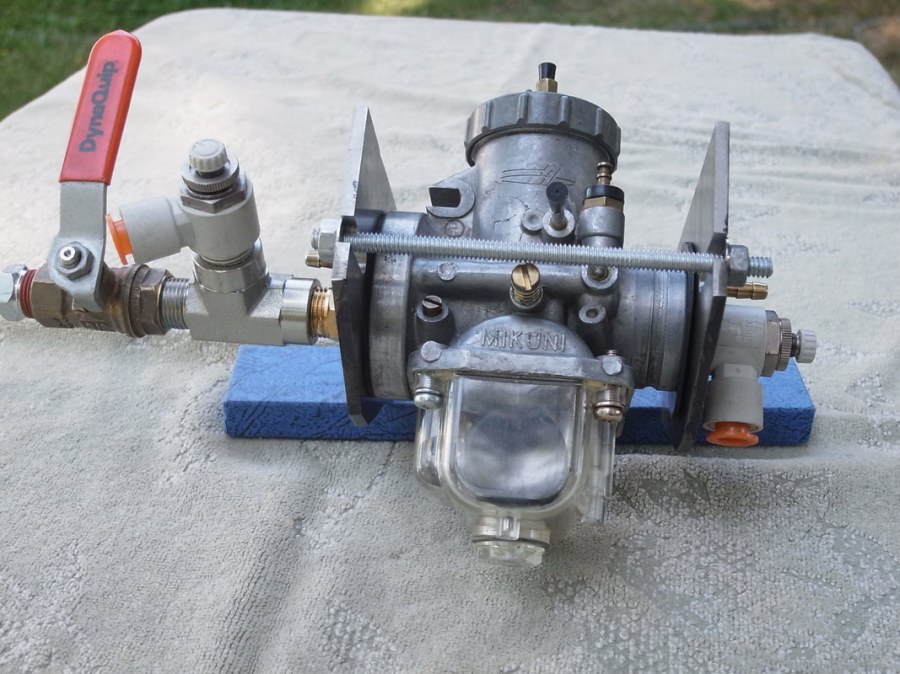
I like Amal Concentrics, so I didn't want to believe that they could wear out in as little as 5, 10 or even 20k miles. However, I was having problems getting my 20k Mk1s to deliver a decent idle and it seemed that excessive air leakage past the slide could be the problem. The carbs didn't look badly worn and measurement using micrometers need some interpretation. I thought I should be able to measure the leakage by blowing air through a carb, measuring the pressure drop (using a water manometer) and comparing the result to that obtained from a "control" carb. The control carb had the slide glued into the body, so zero leakage, all of the air going thru it passing under the slide.

All the carbs tested had the idle stop adjusted so that the flow area under the slide was the same (8 mm^2, about 1 mm lift) as the control carb. The air flow thru the carbs was the same for every test so the pressure drop across the slide was dependent on how leaky the particular carb was.

I tested a couple of new-to-low mileage carbs (Mikuni VM and Wassell Mk1 clone) and they flowed about 1.3x what the control carb did (that seemed reasonable).
Then I tested four Mk1 Concentrics all of which were used, but my own 20k examples were the only ones I knew the mileage of. They all came out in the 2x to 2.5x region, so there was as much, or more, air flowing around the sides of the slides as was flowing beneath them.
Finally a 50k mile Dellorto delivered 1.8x the control carb flow.

It seems that if you have as much air flowing around the slide as under it you would have to drop the slide all the way down to reduce the airflow to something like that needed for a proper idle. Even with the slide bottomed the carb would still pull fuel from the idle circuit but that's got to cause problems at idle and off-idle. So, I've convinced myself, I need new carbs.
Carburetor Leakage Measured
 
I like Amal Concentrics, so I didn't want to believe that they could wear out in as little as 5, 10 or even 20k miles. However, I was having problems getting my 20k Mk1s to deliver a decent idle and it seemed that excessive air leakage past the slide could be the problem. The carbs didn't look badly worn and measurement using micrometers need some interpretation. I thought I should be able to measure the leakage by blowing air through a carb, measuring the pressure drop (using a water manometer) and comparing the result to that obtained from a "control" carb. The control carb had the slide glued into the body, so zero leakage, all of the air going thru it passing under the slide.

All the carbs tested had the idle stop adjusted so that the flow area under the slide was the same (8 mm^2, about 1 mm lift) as the control carb. The air flow thru the carbs was the same for every test so the pressure drop across the slide was dependent on how leaky the particular carb was.

I tested a couple of new-to-low mileage carbs (Mikuni VM and Wassell Mk1 clone) and they flowed about 1.3x what the control carb did (that seemed reasonable).
Then I tested four Mk1 Concentrics all of which were used, but my own 20k examples were the only ones I knew the mileage of. They all came out in the 2x to 2.5x region, so there was as much, or more, air flowing around the sides of the slides as was flowing beneath them.
Finally a 50k mile Dellorto delivered 1.8x the control carb flow.

It seems that if you have as much air flowing around the slide as under it you would have to drop the slide all the way down to reduce the airflow to something like that needed for a proper idle. Even with the slide bottomed the carb would still pull fuel from the idle circuit but that's got to cause problems at idle and off-idle. So, I've convinced myself, I need new carbs.
 
I have a pair of Keihin CRS carbs to go on my Commando, but that project is going to take some time. In the meantime I was hoping to get the bike running a bit better without spending a whole lot of money. I bid on a pair of incomplete carbs, on ebay, that looked clean and, possibly, fairly fresh – hoping that the bodies would prove usable. Then I was kicking myself, thinking that anything inexpensive on ebay is 50 years old and almost certain to be worn out. When the bodies arrived I measured the bores and found that they were may be a couple of thou tighter than those of my existing carbs. That, in combination with new, anodized slides that are a couple of thou larger than the old ones proved to be very low leakage when I blew air through them; in fact they’re almost as good as the control carb with the glued-in slide. Now I'm wondering if too little leakage might prove to be a problem in itself. While the slides do move freely in the bodies when the carbs are on the bench, I’ve had problems with slides sticking before – we’ll see how it goes.
 
The slide to body is a plain journal/bearing, the worst possible mix of metals for a plain journal/bearing life is to use the same metals. When the same metal slides over itself then it gall's at a molecular level, the atoms on both surfaces match exactly so they fuse when stationary and then get ripped apart on the next movement with material being moved from one surface to the other to then fall off and create rapid wear. So an Amal slide and body made form the same materials have a hard and short life. Hence why various fixes all involve making the slide a different material from the body, brass Mikuni slides, stainless steel sleeved slides and the anodised Amal Premier.
 
I like Amal Concentrics, so I didn't want to believe that they could wear out in as little as 5, 10 or even 20k miles. However, I was having problems getting my 20k Mk1s to deliver a decent idle and it seemed that excessive air leakage past the slide could be the problem. The carbs didn't look badly worn and measurement using micrometers need some interpretation. I thought I should be able to measure the leakage by blowing air through a carb, measuring the pressure drop (using a water manometer) and comparing the result to that obtained from a "control" carb. The control carb had the slide glued into the body, so zero leakage, all of the air going thru it passing under the slide.

All the carbs tested had the idle stop adjusted so that the flow area under the slide was the same (8 mm^2, about 1 mm lift) as the control carb. The air flow thru the carbs was the same for every test so the pressure drop across the slide was dependent on how leaky the particular carb was.

I tested a couple of new-to-low mileage carbs (Mikuni VM and Wassell Mk1 clone) and they flowed about 1.3x what the control carb did (that seemed reasonable).
Then I tested four Mk1 Concentrics all of which were used, but my own 20k examples were the only ones I knew the mileage of. They all came out in the 2x to 2.5x region, so there was as much, or more, air flowing around the sides of the slides as was flowing beneath them.
Finally a 50k mile Dellorto delivered 1.8x the control carb flow.

It seems that if you have as much air flowing around the slide as under it you would have to drop the slide all the way down to reduce the airflow to something like that needed for a proper idle. Even with the slide bottomed the carb would still pull fuel from the idle circuit but that's got to cause problems at idle and off-idle. So, I've convinced myself, I need new carbs.
I like the clear float bowl, been looking for them for years....last seen as a 60's aftermarket part. Is this one new?
 
I like the clear float bowl, been looking for them for years....last seen as a 60's aftermarket part. Is this one new?
No not new. I've had them for 10 years or more and they were (another) ebay purchase so they go back further than that. Someday they may find their way onto a Suzuki GT750 - someday!
 
I like Amal Concentrics, so I didn't want to believe that they could wear out in as little as 5, 10 or even 20k miles. However, I was having problems getting my 20k Mk1s to deliver a decent idle and it seemed that excessive air leakage past the slide could be the problem. The carbs didn't look badly worn and measurement using micrometers need some interpretation. I thought I should be able to measure the leakage by blowing air through a carb, measuring the pressure drop (using a water manometer) and comparing the result to that obtained from a "control" carb. The control carb had the slide glued into the body, so zero leakage, all of the air going thru it passing under the slide.

All the carbs tested had the idle stop adjusted so that the flow area under the slide was the same (8 mm^2, about 1 mm lift) as the control carb. The air flow thru the carbs was the same for every test so the pressure drop across the slide was dependent on how leaky the particular carb was.

I tested a couple of new-to-low mileage carbs (Mikuni VM and Wassell Mk1 clone) and they flowed about 1.3x what the control carb did (that seemed reasonable).
Then I tested four Mk1 Concentrics all of which were used, but my own 20k examples were the only ones I knew the mileage of. They all came out in the 2x to 2.5x region, so there was as much, or more, air flowing around the sides of the slides as was flowing beneath them.
Finally a 50k mile Dellorto delivered 1.8x the control carb flow.

It seems that if you have as much air flowing around the slide as under it you would have to drop the slide all the way down to reduce the airflow to something like that needed for a proper idle. Even with the slide bottomed the carb would still pull fuel from the idle circuit but that's got to cause problems at idle and off-idle. So, I've convinced myself, I need new carbs.
for it to draw fuel correctly from the pilot circuit, all air MUST go under the slide.
 
I like Amal Concentrics, so I didn't want to believe that they could wear out in as little as 5, 10 or even 20k miles. However, I was having problems getting my 20k Mk1s to deliver a decent idle and it seemed that excessive air leakage past the slide could be the problem. The carbs didn't look badly worn and measurement using micrometers need some interpretation. I thought I should be able to measure the leakage by blowing air through a carb, measuring the pressure drop (using a water manometer) and comparing the result to that obtained from a "control" carb. The control carb had the slide glued into the body, so zero leakage, all of the air going thru it passing under the slide.

All the carbs tested had the idle stop adjusted so that the flow area under the slide was the same (8 mm^2, about 1 mm lift) as the control carb. The air flow thru the carbs was the same for every test so the pressure drop across the slide was dependent on how leaky the particular carb was.

I tested a couple of new-to-low mileage carbs (Mikuni VM and Wassell Mk1 clone) and they flowed about 1.3x what the control carb did (that seemed reasonable).
Then I tested four Mk1 Concentrics all of which were used, but my own 20k examples were the only ones I knew the mileage of. They all came out in the 2x to 2.5x region, so there was as much, or more, air flowing around the sides of the slides as was flowing beneath them.
Finally a 50k mile Dellorto delivered 1.8x the control carb flow.

It seems that if you have as much air flowing around the slide as under it you would have to drop the slide all the way down to reduce the airflow to something like that needed for a proper idle. Even with the slide bottomed the carb would still pull fuel from the idle circuit but that's got to cause problems at idle and off-idle. So, I've convinced myself, I need new carbs.
An interesting post. Thanks for that test information
 
When my original Amals wore out in the slides, they still ran good but wouldn't idle so just held the throttle on a little when stopped at lights and tuned the carbs for the extra air lol, but as I say my Norton ran ok with worn slides and started easy but by the time I replace the Amals they were pretty flogged out in the slides that was back in 1979, the replacement Amals are still running on my Norton and the bodies are alloy not pot metal but I replace needle and jet every couple of years, carb kits are cheap for a good running Norton, but I do run bigger jets.
Alloy bodied Amals were around back in the day as my replacement were back in the early days and the slides are still good too this day, but I did run with PWK carbs for a few years, had more troubles with them than the Amals, after unblocking one Amal they been running great since, haven't touched them in 5 years and they work so well with the Joe Hunt magneto.

Ashley
 
I have a Mikuni VM34. Is it possible to tell visually if the slide is worn?
Thanks!
Dennis
I'm far from expert when it comes to setting up carbs and until recently I've just worked with whatever I have and I haven't even considered how badly worn they might be. Visually, I suspect that the slides can become scuffed and scored before losing enough material to cause real problems. Based purely on the handful of carbs I've tested,
if you can measure the parts to 0.02 mm or so, and then work out the diametral clearance: 0.1 mm might be close to new; 0.15 mm worn but ok; 0.2 mm difficult to get a reliable tick-over and maybe also has some off-idle problems.
 
Remove the air filter .
Reach in and hold the slide .
Grab the slide with forefinger and thumb .
Any wigglenyness you need a new carb or carbs , ...
 
M:ikunis are excellent carburetors and the slides and bores hardly ever wear out. I would like to see Amal use a similar
brass and chrome slide.
 
M:ikunis are excellent carburetors and the slides and bores hardly ever wear out. I would like to see Amal use a similar
brass and chrome slide.

11c. Throttle Slide Brass Competition cutaway 2.5 – 4 – £28.00

11d. Throttle Slide Hard Anodised cutaway 2 – 4 – £46.00

11e. Brass oversize slides (Unique to Surreycycles)
 
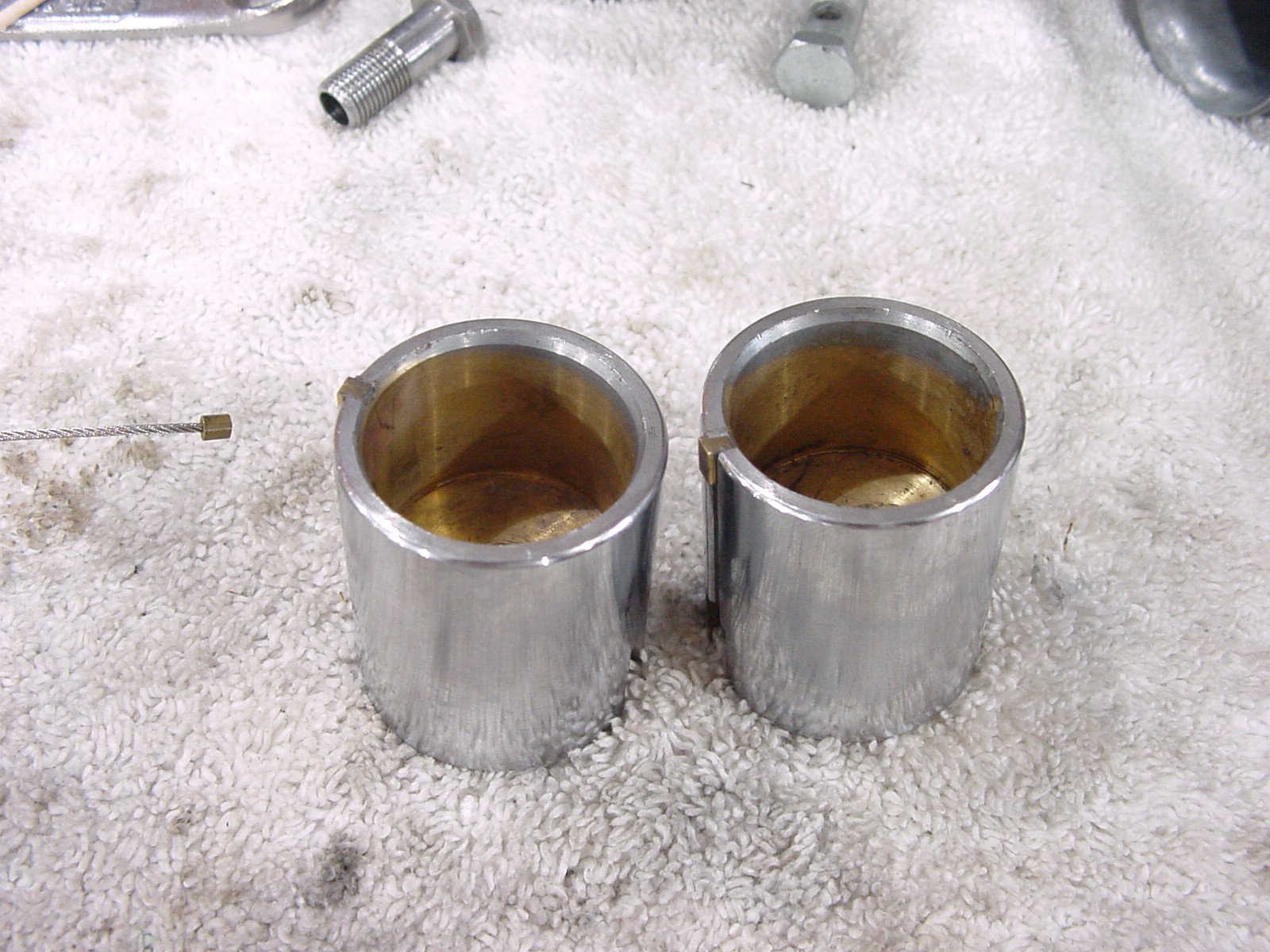
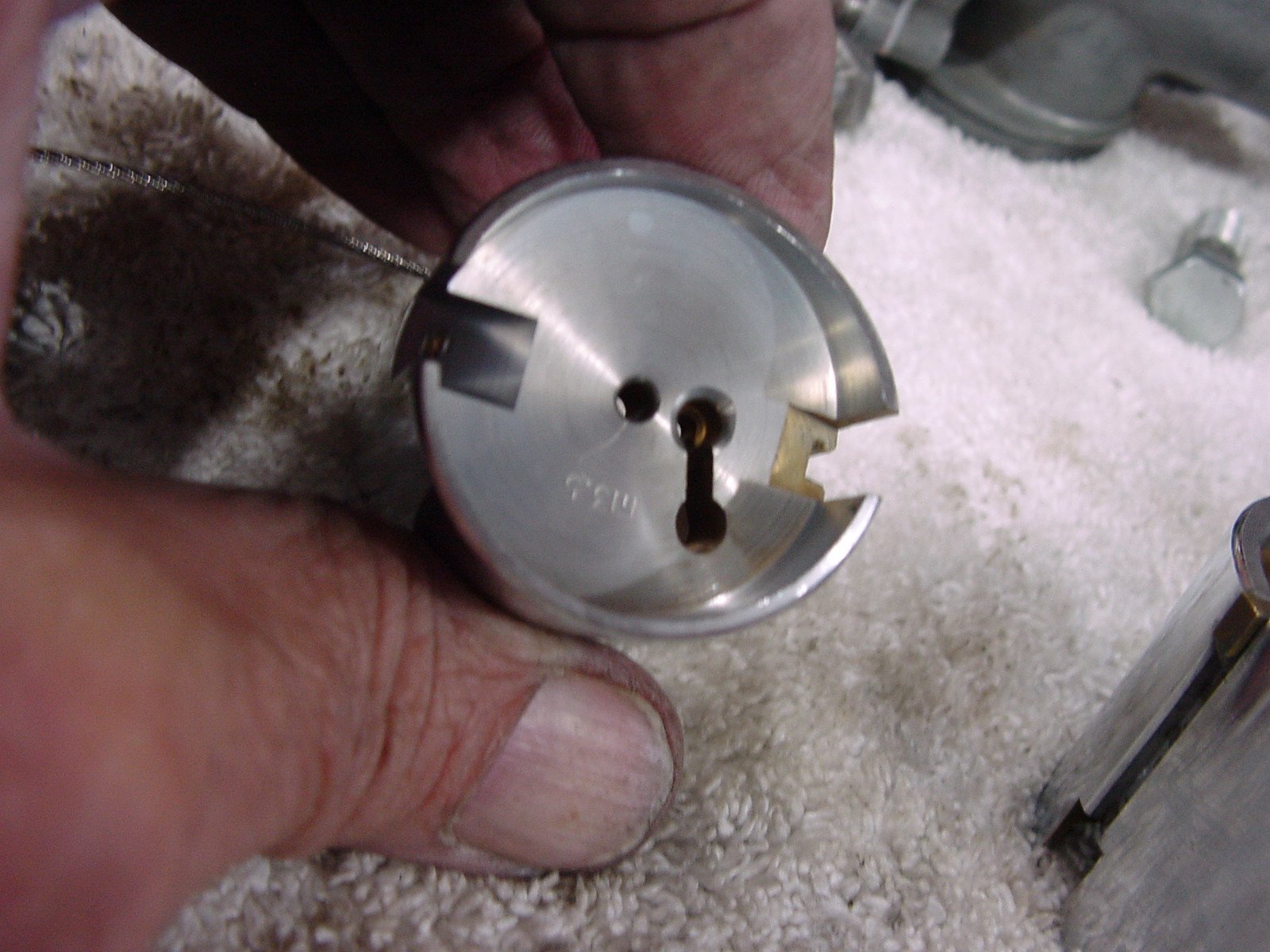
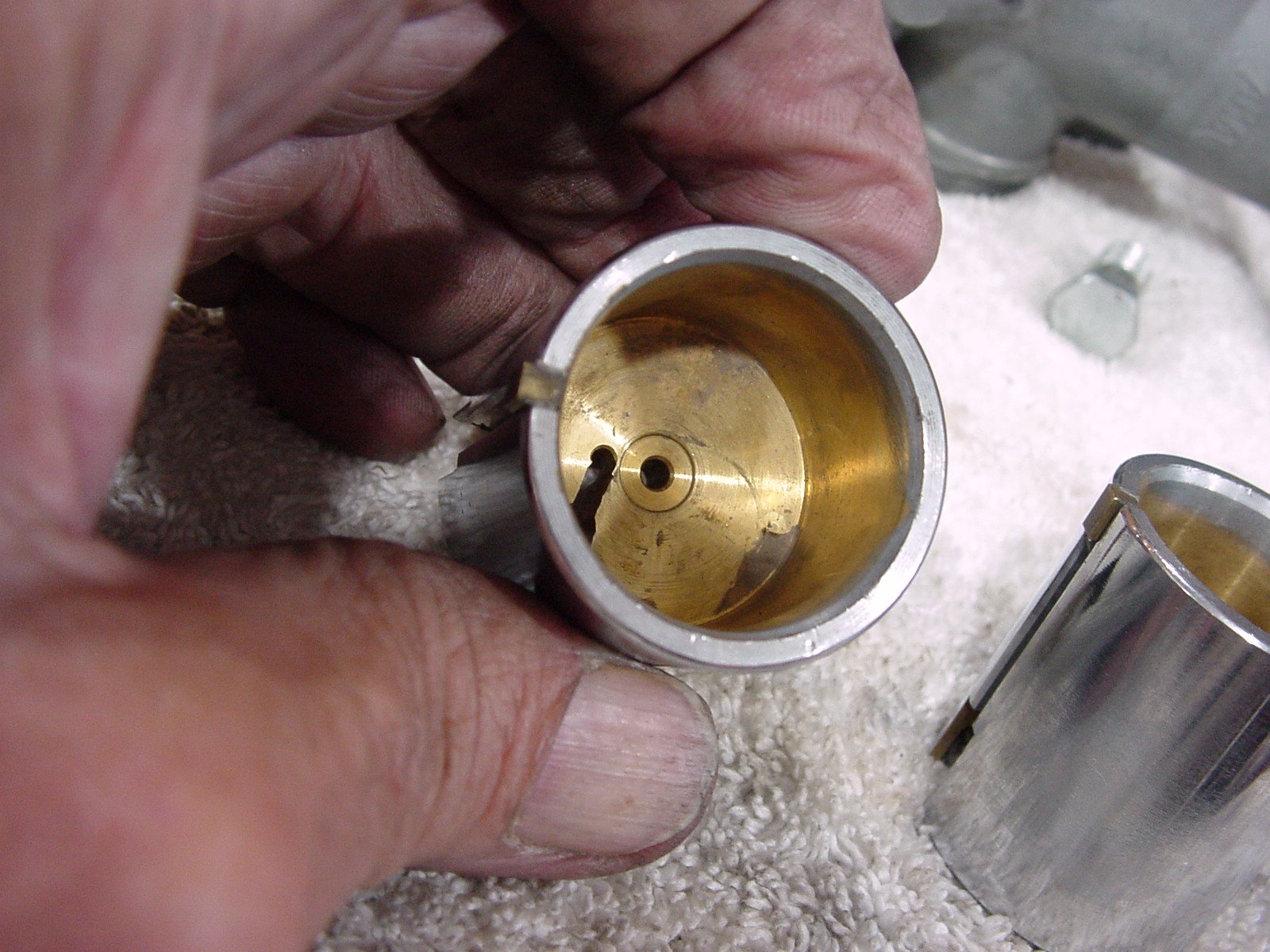
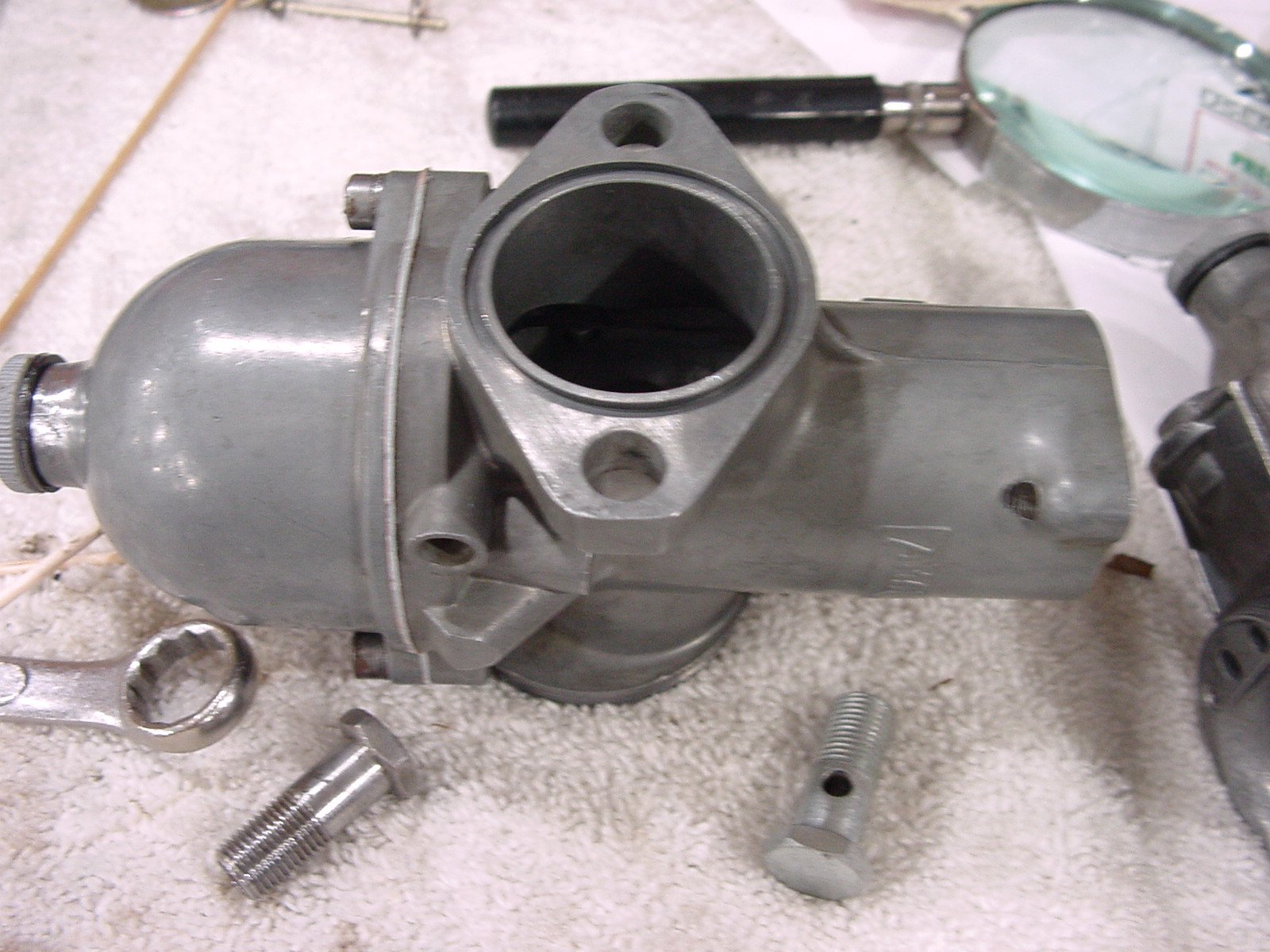
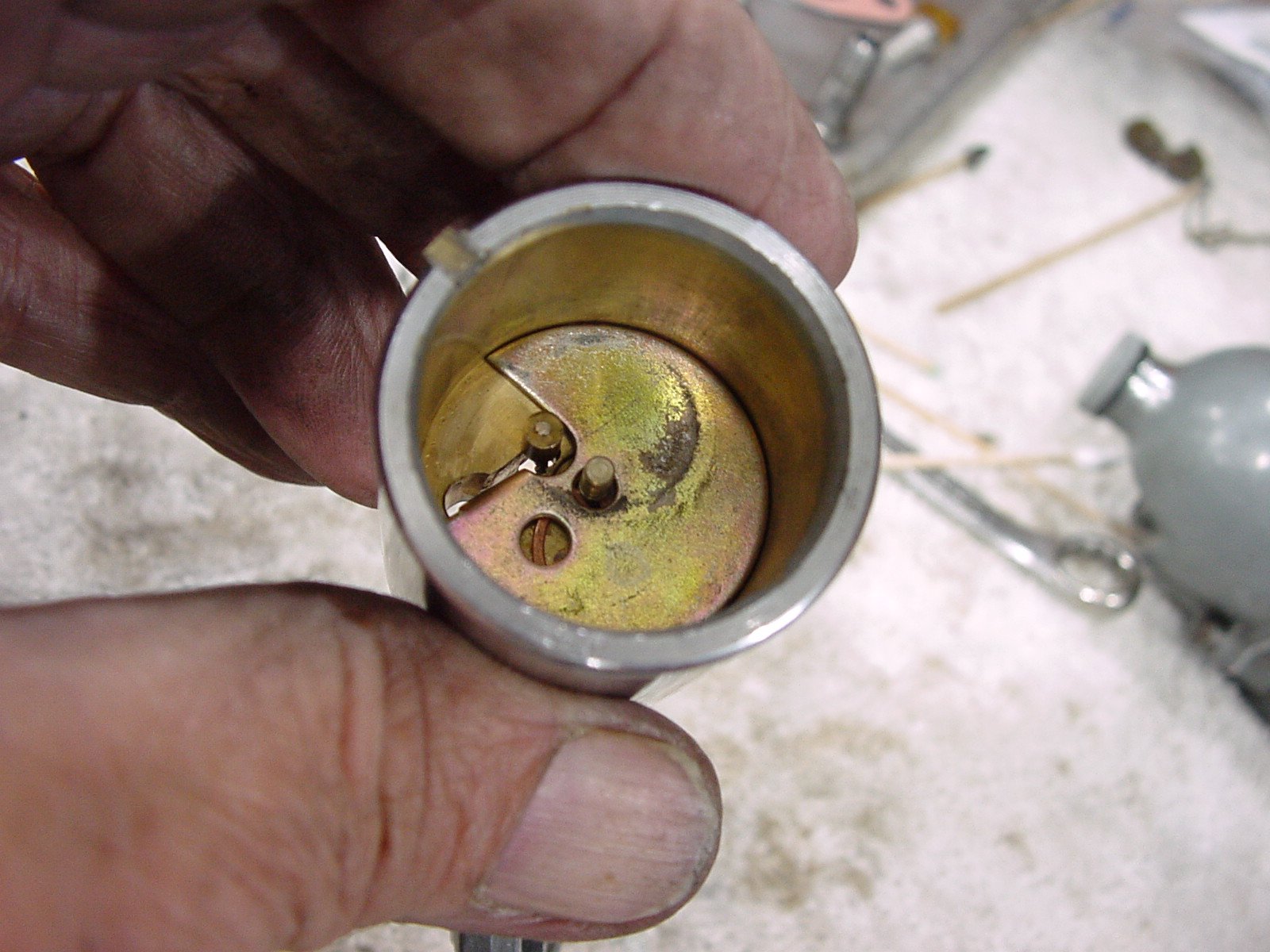
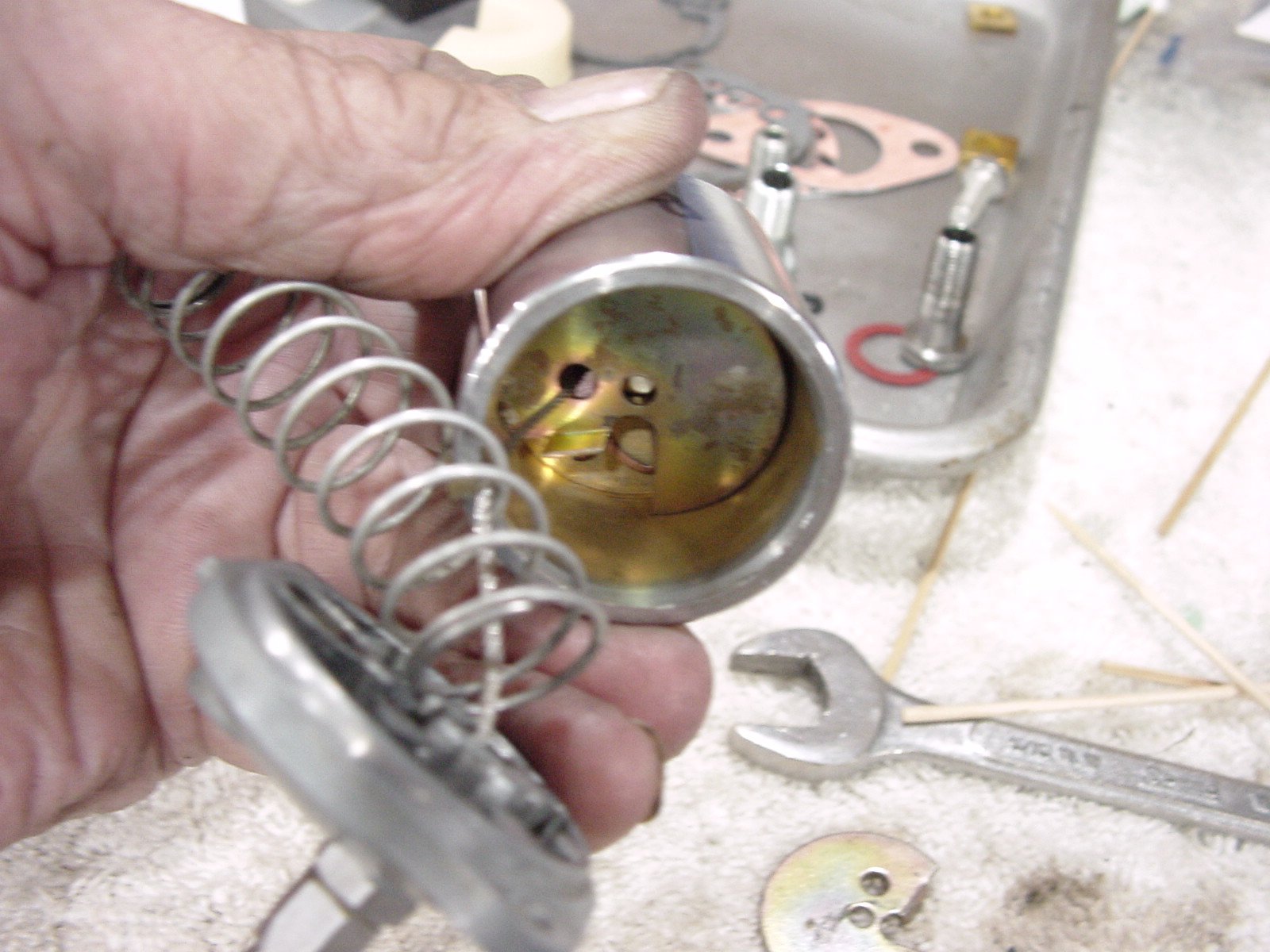
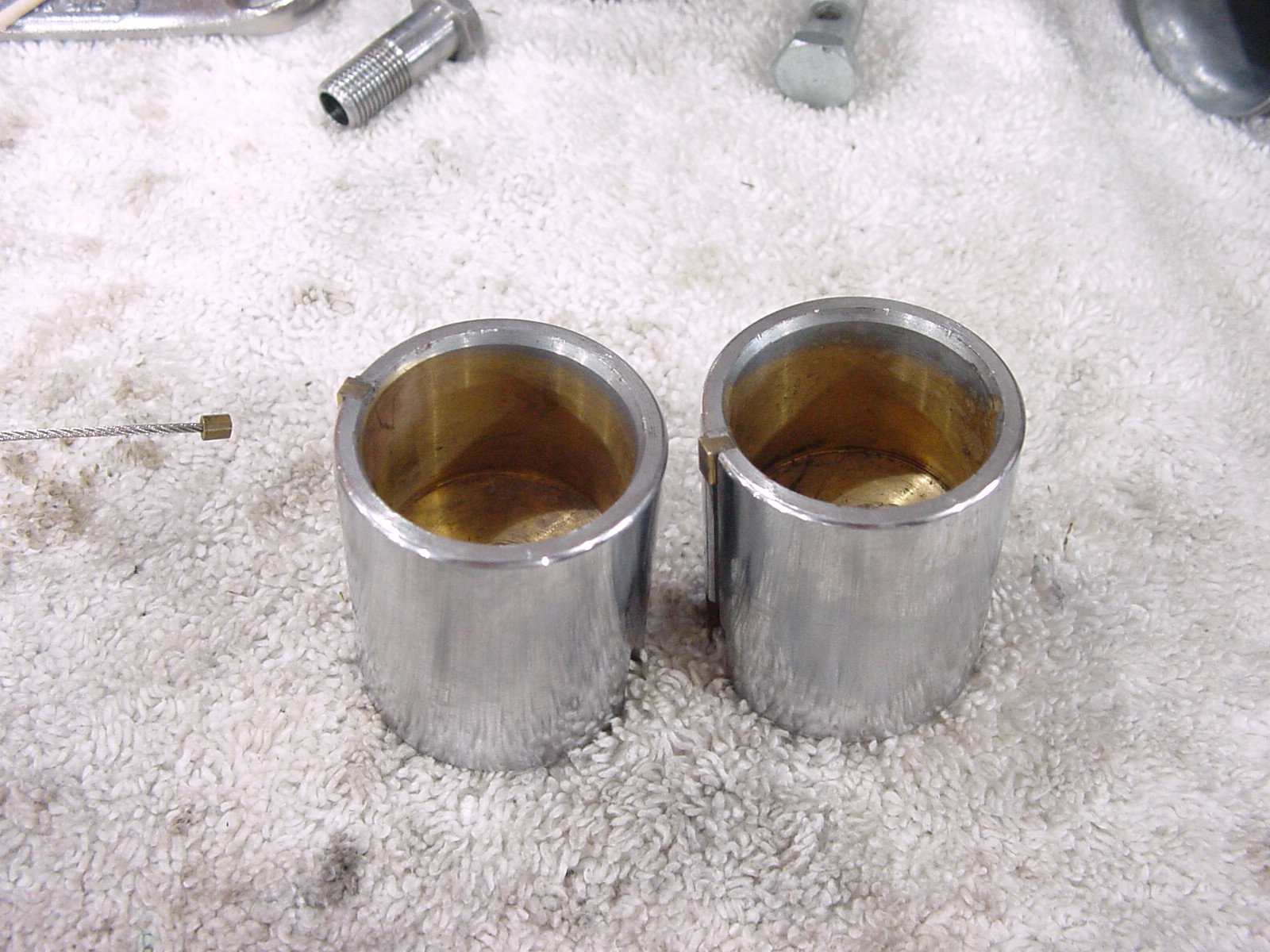
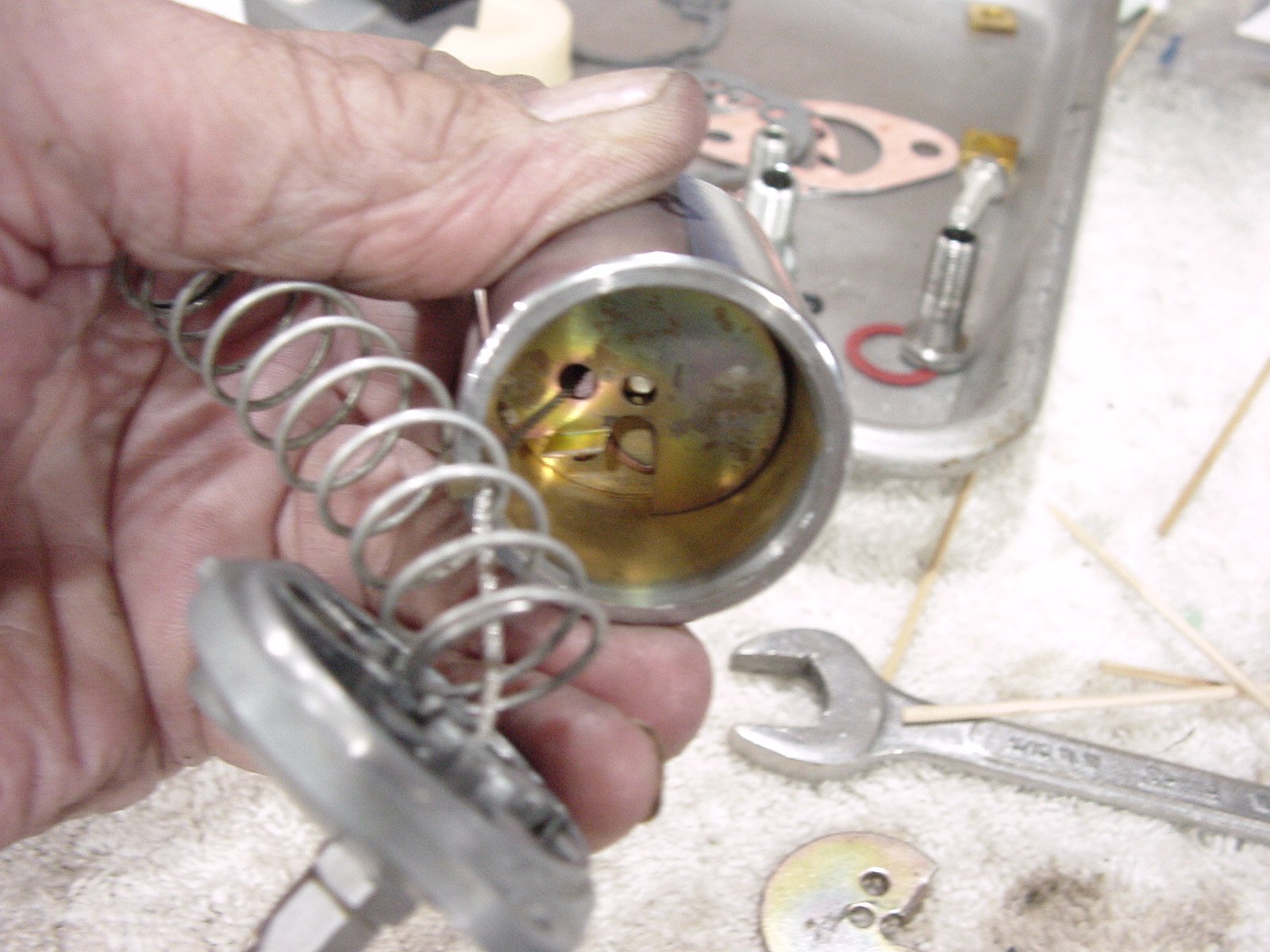
fitting these carbs I had lying around, and I don't remember where I got them. But the slides and bodies are very nice. Mikuni slides modified?


DSC06929.JPG
DSC06930.JPG
DSC06931.JPG
DSC06932.JPG
DSC06934.JPG
DSC06935.JPG
Carburetor Leakage Measured
 
Back
Top